
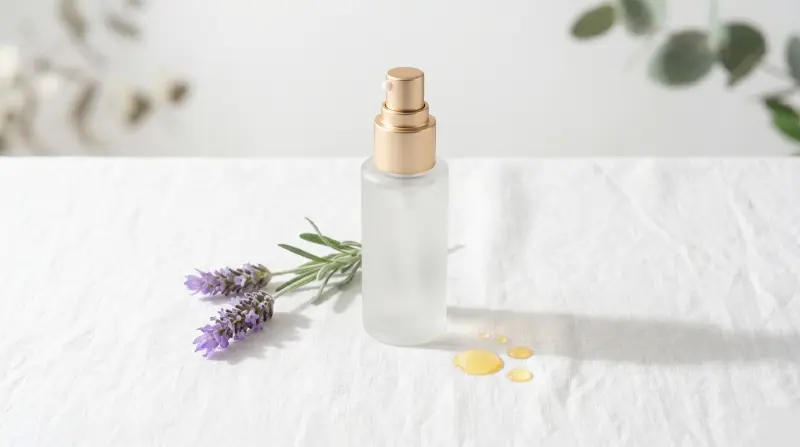
The science of skin aging is evolving rapidly — and for women navigating the skin changes that come with menopause and beyond, evidence-based skincare represents a fundamentally different approach: working with your skin's biology rather than against it.
Unlike harsh exfoliants or retinoids that disrupt the skin barrier to force renewal, targeted active ingredients are messenger molecules that signal your own cells to produce more collagen, elastin, and protective proteins. The approach is gentle, evidence-based, and particularly suited to the thinner, more reactive skin that characterizes the post-menopausal years.
The 5 Biological Changes Behind Age-Related Dryness
The progressive dryness that accompanies aging isn't a single process — it's the convergence of five distinct biological changes, each contributing to the cumulative moisture deficit that makes mature skin feel perpetually parched. Understanding these mechanisms transforms dry skin management from futile surface moisturizing to targeted intervention at each level of the problem.[1]
Change #1: Ceramide depletion. Ceramides constitute 50% of the stratum corneum's lipid barrier. After age 40, ceramide synthesis decreases approximately 1% per year, accelerating during menopause to create a 30-40% total deficit by age 55. The result: the 'mortar' between skin cells crumbles, creating microscopic gaps through which moisture escapes continuously. Change #2: Sebum decline. Oil glands produce progressively less sebum after 40, with a dramatic drop during menopause as hormonal stimulation decreases. Sebum provides the skin's natural occlusive film — without it, even moisturized skin dries within hours as the protective seal is absent.
Clinical research confirms that change #3: Reduced Natural Moisturizing Factor (NMF). NMF — a mixture of amino acids, urea, lactate, and minerals within corneocytes — provides intrinsic hydration at the cellular level. NMF production decreases with age as keratinocyte metabolism slows, reducing each cell's water-holding capacity. Change #4: Epidermal thinning. Thinner epidermis means less total water-holding capacity in the skin's outermost layers. Where young skin has 15-20 layers of corneocytes providing a thick moisture reservoir, aged skin may have 8-12 layers — a significant reduction in total hydration storage volume.
Change #5: Reduced blood flow. Dermal microvasculature decreases with age, reducing nutrient and water delivery to the epidermis from below. The skin relies on both external hydration (humidity, topical products) and internal hydration (dermal blood supply). When internal delivery declines, external sources become more critical — but the barrier that should retain externally applied moisture is simultaneously compromised. The comprehensive solution addresses all five changes: ceramide cream (barrier repair), occlusive ingredients (sebum replacement), urea or NMF-containing products (intracellular hydration), peptides (epidermal thickness support through collagen stimulation), and adequate water intake plus humidified environment (supporting internal hydration delivery).
Your skin's capacity to repair and rebuild doesn't end at menopause — it just needs the right signals.
— Dr. Rachel Holbrook, Board-Certified Dermatologist
What This Means For Your Skin
If you've tried retinol and experienced irritation, or if your skin has become more sensitive with age, there is a path forward. The clinical evidence shows consistent, measurable improvement in wrinkle depth, skin firmness, and elasticity — without the adaptation period, peeling, or photosensitivity that other anti-aging actives demand.
Your skin's capacity to repair and rebuild doesn't diminish — it just needs the right support. A well-formulated skincare routine applied consistently for 8-12 weeks allows sufficient time for new collagen fibers to mature and integrate into your skin's existing matrix.
The science is clear. The evidence is consistent. The results are measurable.
What happens next is up to you.