
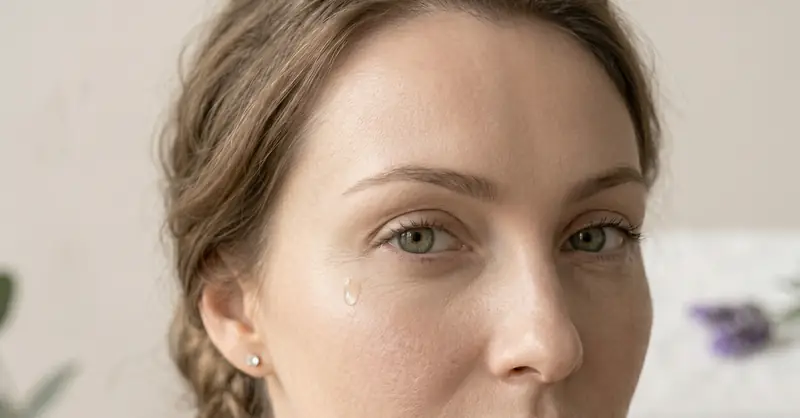
The science of skin aging is evolving rapidly — and for women navigating the skin changes that come with menopause and beyond, evidence-based skincare represents a fundamentally different approach: working with your skin's biology rather than against it.
Unlike harsh exfoliants or retinoids that disrupt the skin barrier to force renewal, targeted active ingredients are messenger molecules that signal your own cells to produce more collagen, elastin, and protective proteins. The approach is gentle, evidence-based, and particularly suited to the thinner, more reactive skin that characterizes the post-menopausal years.
How Signal Peptides Rebuild Collagen Where Lines Form
Peptide serums have become the cornerstone of non-invasive wrinkle treatment because they address the structural cause of forehead lines — collagen depletion — through a mechanism that's both gentle and cumulative. Signal peptides are short chains of amino acids that mimic the fragments released when collagen breaks down naturally. When applied topically, they trick fibroblasts into detecting 'collagen damage' and responding by producing new collagen. It's cellular communication in a bottle — telling your skin's repair machinery to activate without any actual damage occurring.[1]
The peptides with strongest clinical evidence for forehead wrinkles: (1) Palmitoyl pentapeptide-4 (Matrixyl) — the most studied cosmetic peptide, shown to stimulate collagen I, III, and IV synthesis. A controlled study demonstrated 27% reduction in wrinkle depth after 12 weeks of twice-daily application. (2) Palmitoyl tripeptide-1 + palmitoyl tetrapeptide-7 (Matrixyl 3000) — the advanced generation that combines collagen stimulation with anti-inflammatory activity, reducing the chronic low-grade inflammation that accelerates collagen breakdown in aging skin. (3) Copper peptides (GHK-Cu) — stimulate collagen and elastin synthesis simultaneously while promoting glycosaminoglycan production. Particularly effective for deep lines because they address both the collagen deficit and the elastin fragmentation that prevents skin from springing back.
Clinical research confirms that what separates an effective peptide serum from an ineffective one: concentration and delivery. Many products list peptides but at concentrations too low to trigger fibroblast response — cosmetic decoration rather than functional treatment. An effective peptide serum contains Matrixyl at 3-8% concentration (the range used in clinical studies), uses a delivery vehicle that enhances peptide penetration through the stratum corneum (liposomal or micro-encapsulated), and avoids ingredients that degrade peptides (certain preservatives, extreme pH). The serum texture should be lightweight for penetration — peptides need to reach the dermis, and thick cream vehicles can impede their transit through the epidermis.
The application protocol for maximum peptide efficacy on forehead wrinkles: cleanse, then apply peptide serum to slightly damp skin — the residual moisture enhances peptide penetration. Press (don't rub) the serum into the forehead using upward strokes, concentrating on wrinkle creases. Allow 60 seconds for absorption before layering moisturizer on top. The moisturizer serves as an occlusive seal that keeps the peptide serum in contact with the skin rather than evaporating. For forehead wrinkles specifically, the most effective approach combines peptide serum (morning and evening) with retinol (evening only) — the peptides stimulate collagen through one pathway while retinol stimulates through another, producing additive results that neither achieves alone.
Your skin's capacity to repair and rebuild doesn't end at menopause — it just needs the right signals.
— Dr. Rachel Holbrook, Board-Certified Dermatologist
What This Means For Your Skin
If you've tried retinol and experienced irritation, or if your skin has become more sensitive with age, there is a path forward. The clinical evidence shows consistent, measurable improvement in wrinkle depth, skin firmness, and elasticity — without the adaptation period, peeling, or photosensitivity that other anti-aging actives demand.
Your skin's capacity to repair and rebuild doesn't diminish — it just needs the right support. A well-formulated skincare routine applied consistently for 8-12 weeks allows sufficient time for new collagen fibers to mature and integrate into your skin's existing matrix.
The science is clear. The evidence is consistent. The results are measurable.
What happens next is up to you.