
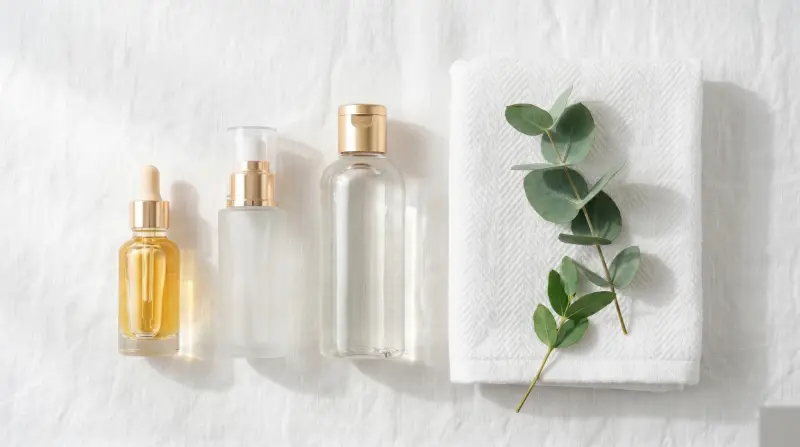
The science of skin aging is evolving rapidly — and for women navigating the skin changes that come with menopause and beyond, evidence-based skincare represents a fundamentally different approach: working with your skin's biology rather than against it.
Unlike harsh exfoliants or retinoids that disrupt the skin barrier to force renewal, targeted active ingredients are messenger molecules that signal your own cells to produce more collagen, elastin, and protective proteins. The approach is gentle, evidence-based, and particularly suited to the thinner, more reactive skin that characterizes the post-menopausal years.
Leveraging the Overnight Repair Window
The nighttime skincare routine for mature skin deserves more attention — and more investment — than the morning routine, because the biological conditions for skin repair are dramatically more favorable during sleep. Growth hormone secretion peaks during deep sleep, directly stimulating fibroblast activity. Cell proliferation rates reach 2-3 times daytime levels. DNA repair enzyme activity surges. And the absence of UV exposure, environmental pollution, and physical activity means applied treatments remain undisturbed on the skin for 7-8 continuous hours — far longer than any daytime product maintains contact before being diluted by activity, sweat, and environmental factors.[1]
The optimal night routine for mature skin has been refined through clinical studies that measured overnight treatment outcomes. The protocol: (1) Double cleanse — oil cleanser to dissolve SPF and makeup (essential because oxidized sunscreen creates free radicals if left overnight), followed by cream cleanser for skin-level cleaning. (2) Active treatment serum — peptide serum applied to damp skin within 60 seconds of cleansing. The damp surface and the skin's naturally increased nocturnal permeability together enhance peptide penetration by up to 50% compared to dry daytime application.
Clinical research confirms that (3) Targeted treatment — retinol (2-3 nights/week) for collagen gene activation through the retinoic acid pathway, complementing the peptide serum's TGF-β pathway activation. On non-retinol nights, a second application of peptide serum or a niacinamide treatment provides alternative stimulation. (4) Eye cream — dedicated periorbital treatment with ring finger application. (5) Night cream or sleeping mask — the richest, most occlusive product in your routine, creating a sealed environment that prevents transepidermal water loss while maintaining prolonged contact between all underlying treatment layers and the skin. Look for night creams containing ceramides, squalane, shea butter, and peptides for dual barrier repair and overnight collagen stimulation.
The chronobiology study published in Skin Pharmacology and Physiology confirmed that anti-aging actives applied at night produced 25% greater improvement in dermal density than identical formulations applied in the morning — holding product quality, concentration, and application technique constant. The only variable was timing. This 25% advantage is free: same products, same routine, simply applied at the biologically optimal moment. For women managing a budget, investing in the best quality products for the evening routine — when they'll work hardest — and using simpler products in the morning is the most cost-effective allocation.
Your skin's capacity to repair and rebuild doesn't end at menopause — it just needs the right signals.
— Dr. Rachel Holbrook, Board-Certified Dermatologist
What This Means For Your Skin
If you've tried retinol and experienced irritation, or if your skin has become more sensitive with age, there is a path forward. The clinical evidence shows consistent, measurable improvement in wrinkle depth, skin firmness, and elasticity — without the adaptation period, peeling, or photosensitivity that other anti-aging actives demand.
Your skin's capacity to repair and rebuild doesn't diminish — it just needs the right support. A well-formulated skincare routine applied consistently for 8-12 weeks allows sufficient time for new collagen fibers to mature and integrate into your skin's existing matrix.
The science is clear. The evidence is consistent. The results are measurable.
What happens next is up to you.