
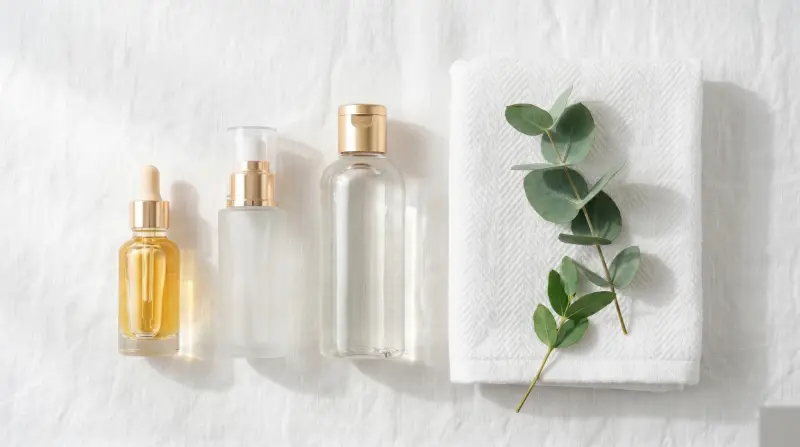
The science of skin aging is evolving rapidly — and for women navigating the skin changes that come with menopause and beyond, evidence-based skincare represents a fundamentally different approach: working with your skin's biology rather than against it.
Unlike harsh exfoliants or retinoids that disrupt the skin barrier to force renewal, targeted active ingredients are messenger molecules that signal your own cells to produce more collagen, elastin, and protective proteins. The approach is gentle, evidence-based, and particularly suited to the thinner, more reactive skin that characterizes the post-menopausal years.
Anti-Aging Without Triggering Inflammation
Sensitive aging skin creates a vicious cycle: the skin most in need of anti-aging treatment is the skin least able to tolerate it. Retinol causes flaking. Glycolic acid stings. Vitamin C at high concentrations triggers flushing. And the inflammation caused by these reactions actually accelerates collagen breakdown — meaning aggressive treatment can worsen the aging it's trying to reverse. Breaking this cycle requires a fundamentally different approach: gentle actives that stimulate repair without triggering the inflammatory response that undermines results.[1]
The sensitive aging skin routine eliminates all common sensitizers: no fragrance (the #1 cause of cosmetic contact dermatitis), no essential oils (lavender, tea tree, and citrus are frequent triggers), no drying alcohols (denatured alcohol, SD alcohol), no strong acids (glycolic, salicylic at high concentrations), and no aggressive physical exfoliants (scrubs, brushes). What remains is a stripped-down routine of calming, barrier-supporting products with gentle but effective anti-aging actives — primarily peptides, which are the only active ingredient class with near-zero irritation potential at therapeutic concentrations.
Clinical research confirms that the sensitive aging skin routine: Morning — rinse with lukewarm water only (no cleanser if your skin is dry — morning cleansing is optional for non-oily mature skin). Apply peptide moisturizer with ceramides, niacinamide, and centella asiatica to damp skin. Apply mineral SPF 30+ (zinc oxide or titanium dioxide — chemical SPF filters can irritate sensitive skin). Evening — cream cleanser with no fragrance or sulfates, rinse with lukewarm water. Apply peptide serum with ring finger patting (never rubbing). Seal with ceramide night cream containing cholesterol and fatty acids.
The key principle for sensitive aging skin: less is more, and consistency beats intensity. A gentle routine maintained daily for 12 weeks will outperform an aggressive routine used intermittently between flare-ups. Peptides deliver 20-37% wrinkle reduction in clinical trials with less than 3% irritation incidence — meaning 97% of women with sensitive skin can use them without reaction. Start with this peptide-ceramide foundation. After 4-6 weeks of stable, calm skin, consider adding a single additional active — bakuchiol (retinol alternative, no irritation) or vitamin C as sodium ascorbyl phosphate (pH-neutral form, minimal sensitivity risk). Add one ingredient at a time, waiting 4 weeks between additions to identify any triggers.
Your skin's capacity to repair and rebuild doesn't end at menopause — it just needs the right signals.
— Dr. Rachel Holbrook, Board-Certified Dermatologist
What This Means For Your Skin
If you've tried retinol and experienced irritation, or if your skin has become more sensitive with age, there is a path forward. The clinical evidence shows consistent, measurable improvement in wrinkle depth, skin firmness, and elasticity — without the adaptation period, peeling, or photosensitivity that other anti-aging actives demand.
Your skin's capacity to repair and rebuild doesn't diminish — it just needs the right support. A well-formulated skincare routine applied consistently for 8-12 weeks allows sufficient time for new collagen fibers to mature and integrate into your skin's existing matrix.
The science is clear. The evidence is consistent. The results are measurable.
What happens next is up to you.