
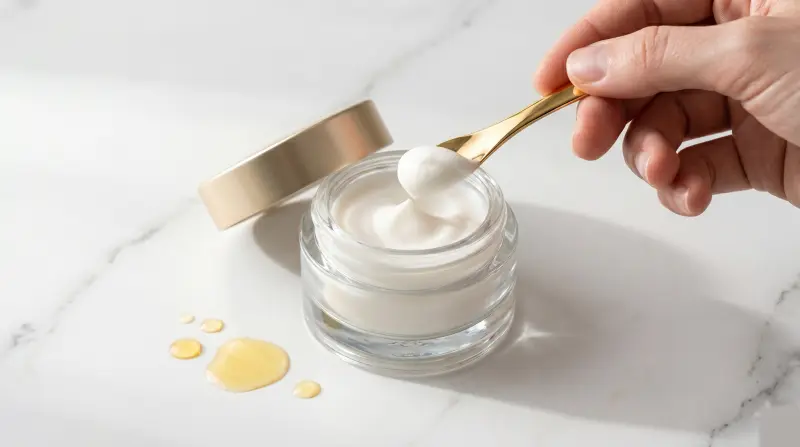
The science of skin aging is evolving rapidly — and for women navigating the skin changes that come with menopause and beyond, evidence-based skincare represents a fundamentally different approach: working with your skin's biology rather than against it.
Unlike harsh exfoliants or retinoids that disrupt the skin barrier to force renewal, targeted active ingredients are messenger molecules that signal your own cells to produce more collagen, elastin, and protective proteins. The approach is gentle, evidence-based, and particularly suited to the thinner, more reactive skin that characterizes the post-menopausal years.
The Vitamin That Stimulates Your Own Ceramide Production
Niacinamide (nicotinamide, vitamin B3) occupies a unique position in barrier repair because it doesn't just supplement ceramides from outside — it stimulates the skin's own ceramide production from inside. A landmark study published in the British Journal of Dermatology demonstrated that 2% topical niacinamide increased endogenous ceramide synthesis by 34% over 4 weeks, while simultaneously boosting free fatty acid and cholesterol production. This makes niacinamide the only widely available ingredient that rebuilds all three components of the stratum corneum lipid matrix through the skin's own biosynthetic machinery.[1]
The mechanism involves niacinamide's role as a precursor to NAD+ and NADP+ — coenzymes essential for ceramide biosynthesis in keratinocytes. As skin ages, NAD+ levels decline, reducing the metabolic energy available for lipid production. Topical niacinamide restores NAD+ availability in the epidermis, reactivating the ceramide synthesis pathways that aging had slowed. This biochemical approach is complementary to topical ceramide supplementation: exogenous ceramides provide immediate barrier repair while niacinamide reboots the production machinery for sustained self-repair.
Clinical research confirms that beyond barrier repair, niacinamide delivers concurrent anti-aging benefits that make it exceptionally efficient for mature skin. It reduces fine wrinkles by 10-15% through increased collagen synthesis (via DHEA pathway stimulation). It reduces hyperpigmentation by 35-68% by inhibiting melanosome transfer (particularly relevant for age spots). It reduces redness and blotchiness by suppressing inflammatory mediators. And it increases skin elasticity by 20% through enhanced glycosaminoglycan synthesis. A single ingredient addressing five visible signs of aging while repairing the barrier makes niacinamide one of the highest-value ingredients in mature skincare.
The practical integration of niacinamide into a ceramide-focused routine: use a niacinamide serum (3-5% concentration) applied after cleansing and before ceramide cream. This layering ensures niacinamide reaches the viable epidermis where it stimulates ceramide biosynthesis, while the subsequent ceramide cream provides immediate lipid supplementation and occlusive protection. For simplified routines, choose a ceramide cream that includes niacinamide in the formulation — combining external lipid replacement with internal lipid production stimulation in a single product. Either approach provides the dual-mechanism barrier repair that aging skin requires.
Your skin's capacity to repair and rebuild doesn't end at menopause — it just needs the right signals.
— Dr. Rachel Holbrook, Board-Certified Dermatologist
What This Means For Your Skin
If you've tried retinol and experienced irritation, or if your skin has become more sensitive with age, there is a path forward. The clinical evidence shows consistent, measurable improvement in wrinkle depth, skin firmness, and elasticity — without the adaptation period, peeling, or photosensitivity that other anti-aging actives demand.
Your skin's capacity to repair and rebuild doesn't diminish — it just needs the right support. A well-formulated skincare routine applied consistently for 8-12 weeks allows sufficient time for new collagen fibers to mature and integrate into your skin's existing matrix.
The science is clear. The evidence is consistent. The results are measurable.
What happens next is up to you.