
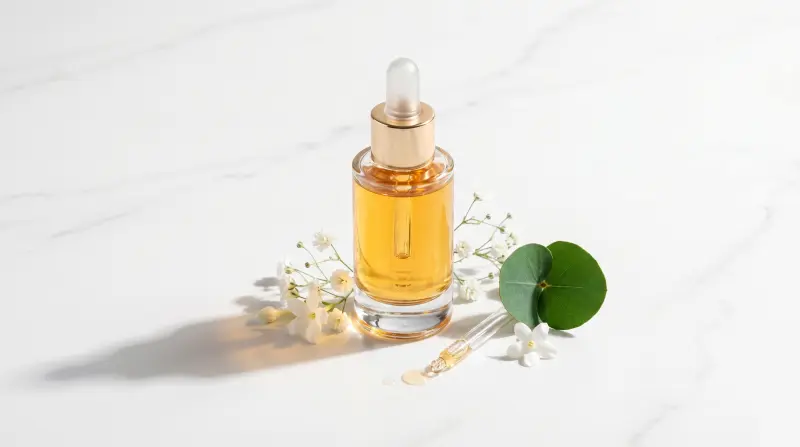
The science of skin aging is evolving rapidly — and for women navigating the skin changes that come with menopause and beyond, evidence-based skincare represents a fundamentally different approach: working with your skin's biology rather than against it.
Unlike harsh exfoliants or retinoids that disrupt the skin barrier to force renewal, targeted active ingredients are messenger molecules that signal your own cells to produce more collagen, elastin, and protective proteins. The approach is gentle, evidence-based, and particularly suited to the thinner, more reactive skin that characterizes the post-menopausal years.
Investing in Tomorrow's Skin Today
Collagen banking is the dermatological strategy of proactively stimulating collagen production before visible aging occurs — building reserves that will sustain skin structure through menopause and beyond. The concept draws from financial planning: investing early generates compound returns. Similarly, collagen stimulated in your 40s creates a structural reserve that buffers the dramatic 30% loss that occurs during menopause. Women who 'banked' collagen through early intervention entered menopause with measurably thicker, more resilient skin than women who waited for visible signs.[1]
A longitudinal study published in the Archives of Dermatology tracked women who began retinoid therapy at age 40 versus age 55. At age 65, the early-start group retained 23% more dermal collagen and had significantly fewer deep wrinkles, despite identical genetics and sun exposure histories. The mechanism is compounding: collagen stimulated early integrates into the dermal matrix, where it both provides structure and signals neighboring fibroblasts to remain active. This creates a positive feedback loop that progressively decelerates with each year of delay.
Clinical research confirms that the collagen banking routine for women over 40 focuses on three pillars: stimulation, protection, and nutrition. Stimulation: morning peptide serum (palmitoyl tripeptide-1 + GHK-Cu) + evening retinol (0.025-0.05%, 3 nights/week, increasing gradually). This dual-pathway approach activates fibroblasts through both TGF-β and retinoic acid receptor pathways simultaneously. Protection: daily SPF 30+ without exception — UV exposure destroys collagen faster than any product can rebuild it, making sun protection the highest-ROI anti-aging measure. Nutrition: 5-10g oral collagen peptides daily + vitamin C-rich diet + adequate protein.
The collagen banking mindset shifts the motivation for skincare from 'fixing problems' to 'building assets.' Each application of peptide serum is a deposit. Each day of sun protection preserves the principal. Each night of retinol use stimulates compound growth. The women who arrive at 60 with remarkably youthful skin didn't find a magic product in their late 50s — they started a consistent, evidence-based routine in their early 40s and let biology compound over two decades. The best time to start banking collagen was 10 years ago. The second best time is today.
Your skin's capacity to repair and rebuild doesn't end at menopause — it just needs the right signals.
— Dr. Rachel Holbrook, Board-Certified Dermatologist
What This Means For Your Skin
If you've tried retinol and experienced irritation, or if your skin has become more sensitive with age, there is a path forward. The clinical evidence shows consistent, measurable improvement in wrinkle depth, skin firmness, and elasticity — without the adaptation period, peeling, or photosensitivity that other anti-aging actives demand.
Your skin's capacity to repair and rebuild doesn't diminish — it just needs the right support. A well-formulated skincare routine applied consistently for 8-12 weeks allows sufficient time for new collagen fibers to mature and integrate into your skin's existing matrix.
The science is clear. The evidence is consistent. The results are measurable.
What happens next is up to you.