
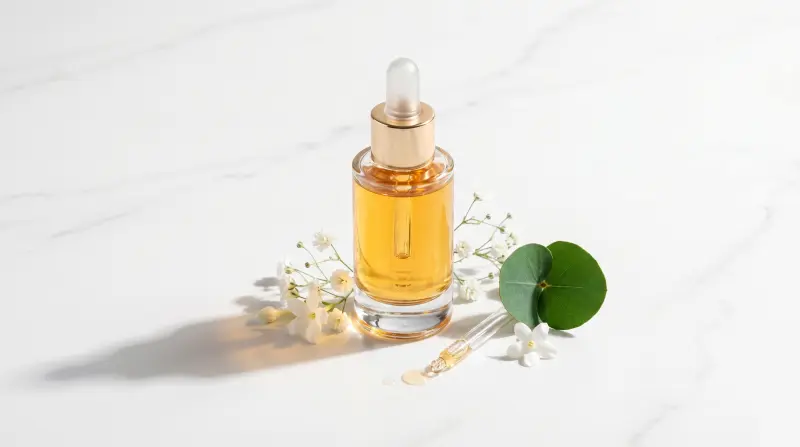
The science of skin aging is evolving rapidly — and for women navigating the skin changes that come with menopause and beyond, evidence-based skincare represents a fundamentally different approach: working with your skin's biology rather than against it.
Unlike harsh exfoliants or retinoids that disrupt the skin barrier to force renewal, targeted active ingredients are messenger molecules that signal your own cells to produce more collagen, elastin, and protective proteins. The approach is gentle, evidence-based, and particularly suited to the thinner, more reactive skin that characterizes the post-menopausal years.
Oral vs Topical — The Clinical Evidence Compared
The supplements-versus-cream debate mirrors the peptides-versus-retinol discussion: it's a false competition between complementary approaches. Oral collagen supplements deliver hydrolyzed collagen peptides through the bloodstream to fibroblasts in the dermis — a systemic, inside-out approach. Topical collagen creams deliver collagen-stimulating signals directly to the skin surface — a targeted, outside-in approach. Clinical evidence supports both, and the strongest results come from using both simultaneously.[1]
Oral collagen peptide supplementation has accumulated substantial clinical evidence. A 2019 meta-analysis in the Journal of Drugs in Dermatology analyzed 11 randomized controlled trials involving 805 participants and found statistically significant improvements in skin elasticity, hydration, and wrinkle depth with oral collagen peptides (typically 2.5-10g daily for 8-12 weeks). The proposed mechanism: hydrolyzed collagen peptides are absorbed intact from the gastrointestinal tract, circulate in the blood, and accumulate in the dermis where they stimulate fibroblast collagen production through matrikine-like signaling.
Clinical research confirms that topical collagen-stimulating creams (containing peptides like Matrixyl, vitamin C, or retinoids) have equally robust evidence. Multiple RCTs demonstrate 20-37% wrinkle reduction over 8-16 weeks with topical peptide formulations. The advantage of topical over oral is targeted delivery: ingredients applied directly to the face reach facial fibroblasts at higher concentrations than systemically circulating peptides, which must distribute across the entire body. The advantage of oral over topical is systemic support: collagen peptides reach not just the face but the entire dermal network, improving skin quality across the body.
The evidence-based answer: use both. A study published in Skin Pharmacology and Physiology found that the combination of oral collagen peptides (5g daily) with topical peptide cream produced 32% greater improvement in facial wrinkle depth than either intervention alone. The oral supplements provide amino acid building blocks and systemic fibroblast stimulation. The topical cream provides concentrated, localized activation signals and immediate hydrating benefits. Think of it as feeding the construction crew (oral) while also giving them the blueprint (topical). Neither alone builds the house as efficiently as both together.
Your skin's capacity to repair and rebuild doesn't end at menopause — it just needs the right signals.
— Dr. Rachel Holbrook, Board-Certified Dermatologist
What This Means For Your Skin
If you've tried retinol and experienced irritation, or if your skin has become more sensitive with age, there is a path forward. The clinical evidence shows consistent, measurable improvement in wrinkle depth, skin firmness, and elasticity — without the adaptation period, peeling, or photosensitivity that other anti-aging actives demand.
Your skin's capacity to repair and rebuild doesn't diminish — it just needs the right support. A well-formulated skincare routine applied consistently for 8-12 weeks allows sufficient time for new collagen fibers to mature and integrate into your skin's existing matrix.
The science is clear. The evidence is consistent. The results are measurable.
What happens next is up to you.