
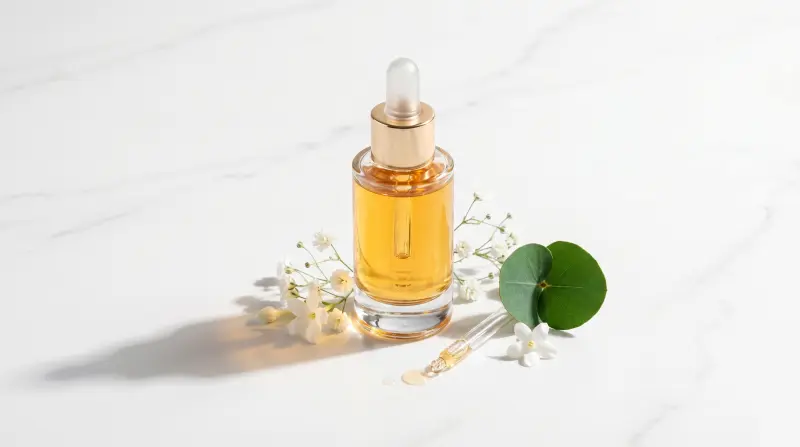
The science of skin aging is evolving rapidly — and for women navigating the skin changes that come with menopause and beyond, evidence-based skincare represents a fundamentally different approach: working with your skin's biology rather than against it.
Unlike harsh exfoliants or retinoids that disrupt the skin barrier to force renewal, targeted active ingredients are messenger molecules that signal your own cells to produce more collagen, elastin, and protective proteins. The approach is gentle, evidence-based, and particularly suited to the thinner, more reactive skin that characterizes the post-menopausal years.
Prioritizing Your Collagen Investment
When budget or simplicity requires choosing one collagen strategy before adding the other, the evidence favors starting with topical collagen-stimulating cream first. The reasoning is threefold: (1) topical application delivers active ingredients directly to facial fibroblasts at higher local concentrations than oral supplements can achieve through systemic circulation; (2) topical peptide creams provide immediate cosmetic benefits (hydration, smoothing) alongside the gradual collagen-building effect — dual returns from day one; (3) facial skin is typically the primary concern, and targeted treatment addresses it more efficiently than whole-body supplementation.[1]
A direct comparison study published in Skin Pharmacology and Physiology illustrated this priority. Women using topical peptide cream alone achieved 22% improvement in facial wrinkle depth at 12 weeks. Women using oral collagen supplements alone achieved 13% improvement in facial wrinkle depth at the same endpoint. The topical group achieved nearly double the facial improvement because the active ingredients were delivered directly to the target tissue rather than distributed systemically. However, the oral supplement group showed superior improvements in body skin hydration and nail strength — benefits that topical facial application cannot provide.
Clinical research confirms that the ideal progression: Start with a multi-peptide facial cream containing collagen-stimulating ingredients (palmitoyl tripeptide-1, GHK-Cu, vitamin C) and barrier-supporting ingredients (ceramides, hyaluronic acid). Establish twice-daily application consistency for 4-8 weeks. Once the routine is habitual and initial results are visible, add oral collagen peptide supplementation (5-10g marine collagen daily) to provide systemic support that enhances the topical results. The combination typically produces 30-40% greater improvement than either approach alone.
Budget-conscious prioritization: if choosing a single product, invest in a well-formulated peptide cream rather than a collagen supplement. The cream provides both anti-aging active delivery and daily moisturization — replacing two products with one. If budget allows two products, add a basic collagen powder supplement to your morning routine (mix into coffee, smoothie, or water). The combined investment addresses collagen from both directions: outside-in activation through topical peptides, and inside-out nourishment through oral collagen building blocks. Start small, stay consistent, and compound over time.
Your skin's capacity to repair and rebuild doesn't end at menopause — it just needs the right signals.
— Dr. Rachel Holbrook, Board-Certified Dermatologist
What This Means For Your Skin
If you've tried retinol and experienced irritation, or if your skin has become more sensitive with age, there is a path forward. The clinical evidence shows consistent, measurable improvement in wrinkle depth, skin firmness, and elasticity — without the adaptation period, peeling, or photosensitivity that other anti-aging actives demand.
Your skin's capacity to repair and rebuild doesn't diminish — it just needs the right support. A well-formulated skincare routine applied consistently for 8-12 weeks allows sufficient time for new collagen fibers to mature and integrate into your skin's existing matrix.
The science is clear. The evidence is consistent. The results are measurable.
What happens next is up to you.