
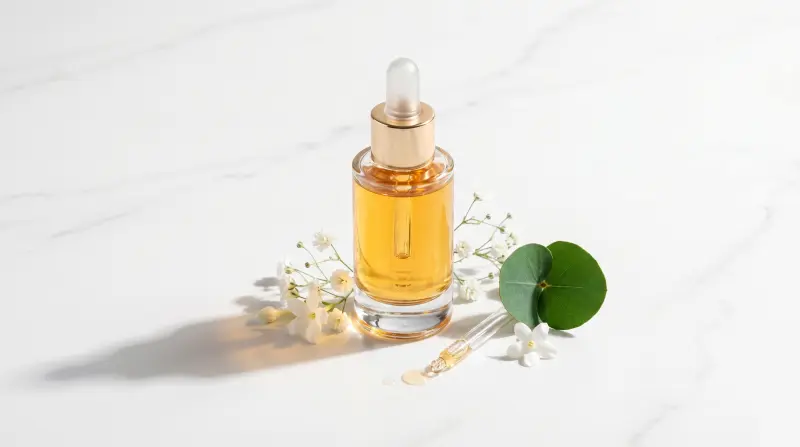
The science of skin aging is evolving rapidly — and for women navigating the skin changes that come with menopause and beyond, evidence-based skincare represents a fundamentally different approach: working with your skin's biology rather than against it.
Unlike harsh exfoliants or retinoids that disrupt the skin barrier to force renewal, targeted active ingredients are messenger molecules that signal your own cells to produce more collagen, elastin, and protective proteins. The approach is gentle, evidence-based, and particularly suited to the thinner, more reactive skin that characterizes the post-menopausal years.
The Real Timeline Based on Clinical Trials
The results timeline for collagen cream follows the biology of collagen synthesis — a process with defined stages that cannot be artificially accelerated. Any product claiming visible collagen results in days is describing hydration effects (real but temporary), not structural collagen rebuilding (the meaningful anti-aging outcome). Understanding the timeline prevents both premature disappointment and premature product switching — the two most common reasons women fail to achieve the results that clinical trials consistently demonstrate.[1]
The results cascade documented across clinical studies: Days 1-7 — improved skin feel, softness, and hydration. This is the moisturizing effect of the cream base (ceramides, hyaluronic acid, squalane), not yet the collagen-stimulating effect. Weeks 2-4 — subtle improvement in skin texture and radiance as early collagen synthesis begins and glycosaminoglycan production increases water retention in the dermis. Fine lines may appear slightly softer. Weeks 4-8 — measurable changes begin. Early collagen fibers mature and integrate into the existing matrix. Firmness improves. Fine lines reduce visibly. Skin thickness begins to increase.
Clinical research confirms that weeks 8-12 — the clinical threshold for meaningful results. This is the endpoint used in virtually all published peptide and retinoid trials because it allows sufficient time for collagen fiber maturation and cross-linking. At this stage, instrument-measured wrinkle depth reduction of 20-37% is documented across multiple RCTs. Skin firmness improves by 15-24%. Elasticity increases measurably. These are not subjective impressions — they are profilometry, ultrasound, and elastometry measurements. Months 3-6 — continued progressive improvement as sustained fibroblast stimulation produces cumulative collagen deposition. Results plateau at approximately 6 months for most ingredients.
The critical variables that determine where on this timeline an individual will fall: (1) Product quality — therapeutic peptide concentration versus decorative amounts determines whether the 8-12 week threshold produces real results or mere hydration. (2) Application consistency — twice-daily application without interruption is the standard used in clinical trials. Skipping days extends the timeline proportionally. (3) Skin condition — more sun-damaged skin has more collagen deficit to rebuild, potentially requiring longer for visible improvement. (4) Complementary measures — SPF protection, adequate sleep, and nutritional support accelerate results by reducing opposing forces (UV degradation, cortisol-mediated breakdown, nutrient deficiency).
Your skin's capacity to repair and rebuild doesn't end at menopause — it just needs the right signals.
— Dr. Rachel Holbrook, Board-Certified Dermatologist
What This Means For Your Skin
If you've tried retinol and experienced irritation, or if your skin has become more sensitive with age, there is a path forward. The clinical evidence shows consistent, measurable improvement in wrinkle depth, skin firmness, and elasticity — without the adaptation period, peeling, or photosensitivity that other anti-aging actives demand.
Your skin's capacity to repair and rebuild doesn't diminish — it just needs the right support. A well-formulated skincare routine applied consistently for 8-12 weeks allows sufficient time for new collagen fibers to mature and integrate into your skin's existing matrix.
The science is clear. The evidence is consistent. The results are measurable.
What happens next is up to you.