
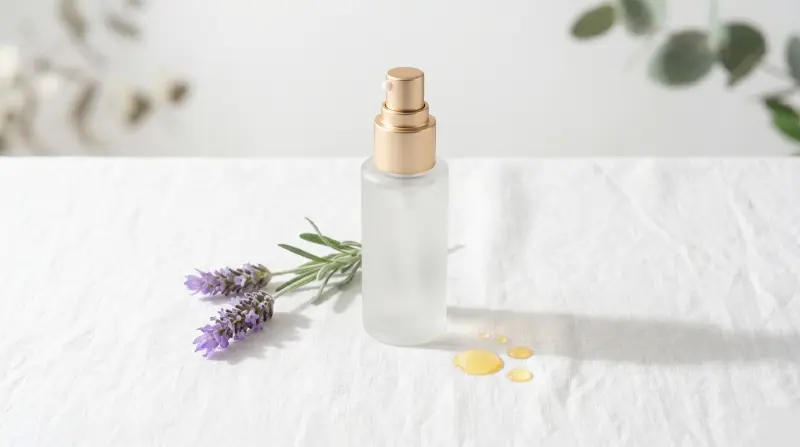
The science of skin aging is evolving rapidly — and for women navigating the skin changes that come with menopause and beyond, evidence-based skincare represents a fundamentally different approach: working with your skin's biology rather than against it.
Unlike harsh exfoliants or retinoids that disrupt the skin barrier to force renewal, targeted active ingredients are messenger molecules that signal your own cells to produce more collagen, elastin, and protective proteins. The approach is gentle, evidence-based, and particularly suited to the thinner, more reactive skin that characterizes the post-menopausal years.
Understanding the Two Mechanisms That Combat Dryness
The humectant-versus-occlusive distinction is the most important concept in dry skin management, yet most women unknowingly use one without the other — creating a half-solution that explains why their skin remains dry despite 'always moisturizing.' Humectants (hyaluronic acid, glycerin, urea) are water-attracting molecules that draw moisture from the environment and deeper skin layers into the epidermis. Occlusives (squalane, petrolatum, shea butter, dimethicone) are film-forming substances that create a physical barrier on the skin surface, preventing water from evaporating. Using humectants without occlusives pulls water to the surface where it evaporates — potentially worsening dryness. Using occlusives without humectants seals in whatever moisture exists but doesn't add any.[1]
For aging dry skin specifically, the occlusive component becomes disproportionately important because the natural occlusive system (sebum production) has declined. Young skin can tolerate humectant-only products because its sebum provides the occlusive seal automatically. Post-menopausal skin that applies a hyaluronic acid serum without sealing it with a cream or oil will experience the 'osmotic pull' phenomenon: in dry environments (below 40% humidity), HA draws water FROM the deeper dermis rather than from the air, actually accelerating internal dehydration while temporarily plumping the surface.
Clinical research confirms that a clinical study quantified the importance of combination approach: humectant alone (HA serum) improved surface hydration by 28% at 2 hours but returned to baseline by 8 hours. Occlusive alone (petrolatum) maintained existing hydration for 12+ hours but added no new moisture — skin started dry and stayed dry, just more slowly. The combination (HA serum followed by ceramide cream with squalane) improved hydration by 52% with persistence beyond 24 hours — humectant attracted water, emollient (ceramides) integrated it into the barrier structure, and occlusive (squalane) prevented its escape.
The practical layering for aging dry skin: apply humectant products (HA serum, glycerin-containing toner) to damp skin immediately after cleansing — the water on the skin surface provides the moisture that humectants will draw in and hold. Within 60 seconds, apply emollient (ceramide cream) to integrate the attracted water into the barrier structure. Within 60 seconds more, apply occlusive (squalane oil or rich night cream) to seal everything in place. This 3-layer approach — attract, integrate, seal — addresses dry aging skin through all three moisturizing mechanisms simultaneously. Skip any layer and the system underperforms.
Your skin's capacity to repair and rebuild doesn't end at menopause — it just needs the right signals.
— Dr. Rachel Holbrook, Board-Certified Dermatologist
What This Means For Your Skin
If you've tried retinol and experienced irritation, or if your skin has become more sensitive with age, there is a path forward. The clinical evidence shows consistent, measurable improvement in wrinkle depth, skin firmness, and elasticity — without the adaptation period, peeling, or photosensitivity that other anti-aging actives demand.
Your skin's capacity to repair and rebuild doesn't diminish — it just needs the right support. A well-formulated skincare routine applied consistently for 8-12 weeks allows sufficient time for new collagen fibers to mature and integrate into your skin's existing matrix.
The science is clear. The evidence is consistent. The results are measurable.
What happens next is up to you.