
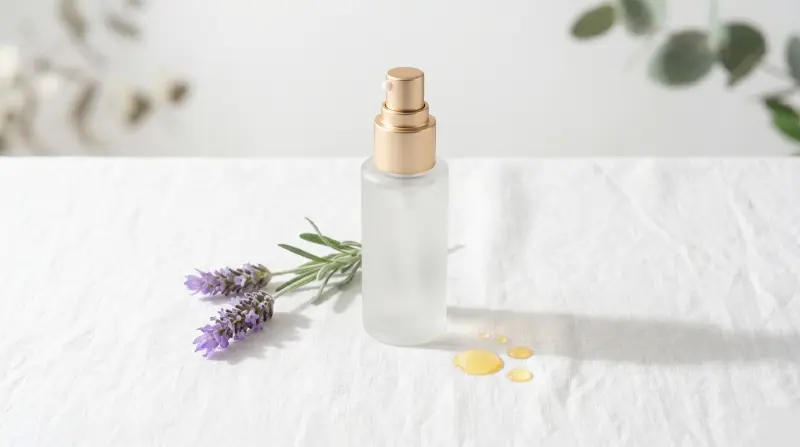
The science of skin aging is evolving rapidly — and for women navigating the skin changes that come with menopause and beyond, evidence-based skincare represents a fundamentally different approach: working with your skin's biology rather than against it.
Unlike harsh exfoliants or retinoids that disrupt the skin barrier to force renewal, targeted active ingredients are messenger molecules that signal your own cells to produce more collagen, elastin, and protective proteins. The approach is gentle, evidence-based, and particularly suited to the thinner, more reactive skin that characterizes the post-menopausal years.
From Basic Hydration to Multi-Functional Skin Repair
The moisturizer you used at 30 is almost certainly inadequate at 50 — not because it stopped working, but because your skin's needs have fundamentally changed. Premenopausal skin needs supplemental hydration. Post-menopausal skin needs structural repair. The lightweight lotion that kept 30-year-old skin comfortable provides surface hydration that evaporates through the now-depleted barrier within hours, leaving mature skin as dry as if nothing had been applied. Upgrading to a moisturizer designed for post-menopausal biology is one of the highest-impact routine changes a woman over 50 can make.[1]
The five characteristics that define an effective moisturizer for women over 50: (1) Rich cream texture — not lotion, not gel. The thicker vehicle provides occlusive protection that the reduced sebum production can no longer maintain. (2) Ceramides + cholesterol + fatty acids — structural barrier repair, not just surface hydration. (3) Peptides — transforming the moisturizer from passive hydration to active anti-aging treatment. A peptide-containing moisturizer rebuilds collagen while it moisturizes — dual function from a single product. (4) Multi-weight hyaluronic acid — for immediate plumping at the surface and sustained hydration at depth. (5) Fragrance-free — mature skin is significantly more reactive, and fragrance is the most common trigger.
Clinical research confirms that the clinical difference between a basic moisturizer and a mature-skin-optimized moisturizer was quantified in a head-to-head trial. Women aged 50-65 used either a standard moisturizer (glycerin + petrolatum) or an advanced formulation (ceramides + peptides + HA + squalane) for 12 weeks. The advanced formulation group showed: 52% improvement in skin hydration (vs 28% for basic), 22% improvement in wrinkle depth (vs 4% for basic), and 34% improvement in barrier function (vs 12% for basic). The basic moisturizer provided comfort. The advanced moisturizer provided treatment.
The practical moisturizer upgrade for women over 50: retire lightweight lotions and gel creams. Invest in a peptide-rich cream containing ceramides, hyaluronic acid, and squalane as your primary daily product — applied morning (under SPF) and evening (as the occlusive final step). This single product replaces the need for separate hydrating serum, barrier cream, and basic moisturizer. For women with very dry skin, layer a hyaluronic acid serum underneath the cream for additional hydration boost. The moisturizer is no longer a passive step in your routine — at 50+, it's your primary barrier repair and anti-aging delivery vehicle.
Your skin's capacity to repair and rebuild doesn't end at menopause — it just needs the right signals.
— Dr. Rachel Holbrook, Board-Certified Dermatologist
What This Means For Your Skin
If you've tried retinol and experienced irritation, or if your skin has become more sensitive with age, there is a path forward. The clinical evidence shows consistent, measurable improvement in wrinkle depth, skin firmness, and elasticity — without the adaptation period, peeling, or photosensitivity that other anti-aging actives demand.
Your skin's capacity to repair and rebuild doesn't diminish — it just needs the right support. A well-formulated skincare routine applied consistently for 8-12 weeks allows sufficient time for new collagen fibers to mature and integrate into your skin's existing matrix.
The science is clear. The evidence is consistent. The results are measurable.
What happens next is up to you.