
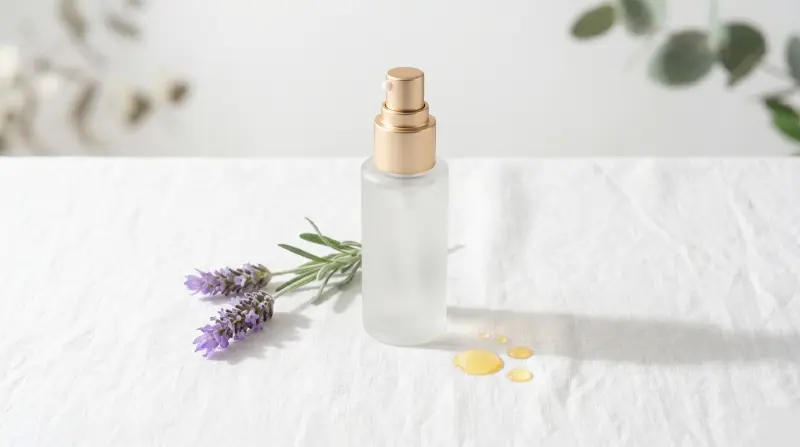
The science of skin aging is evolving rapidly — and for women navigating the skin changes that come with menopause and beyond, evidence-based skincare represents a fundamentally different approach: working with your skin's biology rather than against it.
Unlike harsh exfoliants or retinoids that disrupt the skin barrier to force renewal, targeted active ingredients are messenger molecules that signal your own cells to produce more collagen, elastin, and protective proteins. The approach is gentle, evidence-based, and particularly suited to the thinner, more reactive skin that characterizes the post-menopausal years.
How HA Works Differently on Aging Skin
Hyaluronic acid (HA) is the most popular hydrating ingredient in skincare — but its behavior on mature skin differs significantly from how it works on younger skin, and misunderstanding these differences leads to frustration and sometimes worsened dryness. HA is a glycosaminoglycan naturally present in the dermis, where it holds water and provides the plump, hydrated cushion that gives young skin its bounce. Dermal HA decreases by approximately 50% between ages 20 and 60, contributing to the volume loss and dehydration that characterize aging skin. Topical HA supplementation can address this deficit — but only when applied correctly.[1]
The critical factor for HA effectiveness on mature skin is molecular weight. High-molecular-weight HA (>1,000 kDa) cannot penetrate the stratum corneum — it sits on the surface, forming a moisture-trapping film that provides immediate but temporary plumping. Low-molecular-weight HA (50-100 kDa) penetrates into the epidermis and upper dermis, providing deeper, more sustained hydration. For mature skin, formulations combining both weights are optimal: the low MW HA delivers depth hydration while high MW HA creates the surface seal. A study found that dual-weight HA formulations produced 60% greater hydration than either weight alone.
Clinical research confirms that the humidity paradox is critically important for mature skin: in humid environments (>50% relative humidity), HA draws moisture from the air into the skin — beneficial. In dry environments (<40% humidity — common in heated/air-conditioned buildings), HA draws moisture from the deeper dermis instead, potentially accelerating internal dehydration. For mature skin with an already-compromised barrier, this osmotic pull can worsen dryness rather than improve it. The solution: always seal HA with an occlusive product (ceramide cream, squalane) immediately after application, trapping the attracted moisture before it can evaporate.
The optimized HA protocol for mature dry skin: (1) Apply HA serum to damp skin — the water on the surface provides the immediate moisture source that HA needs. Never apply HA to dry skin in a dry environment. (2) Use within 60 seconds of cleansing, while skin is still naturally moist. (3) Within 60 seconds of HA application, layer ceramide cream on top — sealing the HA-attracted moisture in place. (4) In very dry environments, add squalane oil as an additional seal over the ceramide cream. This layered approach ensures HA works as intended — drawing water IN and keeping it there — rather than the reverse effect that occurs when HA is left unsealed on barrier-compromised mature skin.
Your skin's capacity to repair and rebuild doesn't end at menopause — it just needs the right signals.
— Dr. Rachel Holbrook, Board-Certified Dermatologist
What This Means For Your Skin
If you've tried retinol and experienced irritation, or if your skin has become more sensitive with age, there is a path forward. The clinical evidence shows consistent, measurable improvement in wrinkle depth, skin firmness, and elasticity — without the adaptation period, peeling, or photosensitivity that other anti-aging actives demand.
Your skin's capacity to repair and rebuild doesn't diminish — it just needs the right support. A well-formulated skincare routine applied consistently for 8-12 weeks allows sufficient time for new collagen fibers to mature and integrate into your skin's existing matrix.
The science is clear. The evidence is consistent. The results are measurable.
What happens next is up to you.