
The science of skin aging is evolving rapidly — and for women navigating the skin changes that come with menopause and beyond, evidence-based skincare represents a fundamentally different approach: working with your skin's biology rather than against it.
Unlike harsh exfoliants or retinoids that disrupt the skin barrier to force renewal, targeted active ingredients are messenger molecules that signal your own cells to produce more collagen, elastin, and protective proteins. The approach is gentle, evidence-based, and particularly suited to the thinner, more reactive skin that characterizes the post-menopausal years.
The Multi-Approach Protocol for the Most Visible Fine Lines
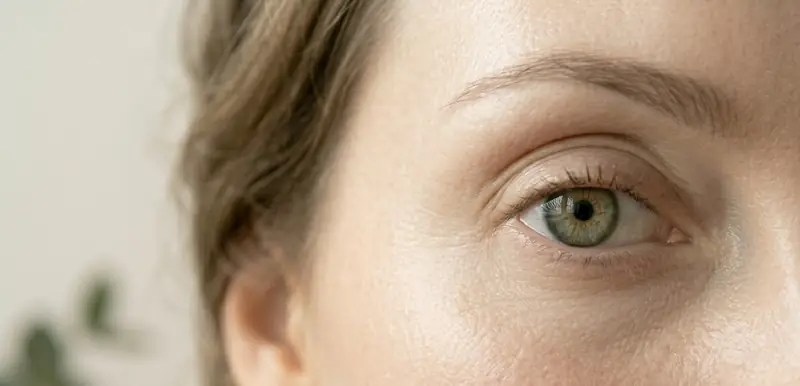
Under-eye wrinkles at 50+ are predominantly a combination of two wrinkle types: dynamic lines (from orbicularis oculi contraction during blinking and squinting) that have transitioned to static lines (visible at rest due to cumulative collagen loss in the ultra-thin under-eye dermis). The treatment must address both the structural deficit (rebuilding collagen) and the dehydration that amplifies wrinkle visibility (the thin, oil-gland-free under-eye skin dehydrates faster than any other facial zone, making wrinkles appear 20-30% deeper when dry).[1]
The three-component treatment protocol: Component 1 — Hydration (immediate improvement): multi-weight HA eye cream or serum provides instant plumping that reduces under-eye wrinkle visibility within 15 minutes. The thin under-eye skin responds dramatically to hydration because there's so little dermal cushion — even modest plumping produces proportionally large visual improvement. Apply to damp skin and seal with eye cream for sustained hydration. Component 2 — Collagen stimulation (long-term improvement): peptide eye cream (Matrixyl + copper peptides) applied morning and evening provides the collagen-building signals that thin periorbital fibroblasts need. Results begin at 8-12 weeks as new collagen incrementally thickens the dermis beneath wrinkle creases.
Clinical research confirms that component 3 — Protection (preventing worsening): sunglasses daily (preventing both UV damage and squinting contraction), gentle product removal (preventing mechanical stretching), silk pillowcase (reducing overnight friction on the thin under-eye skin). This prevention component ensures that the collagen being rebuilt by peptides isn't simultaneously being destroyed by ongoing damage.
The advanced add-ons for stubborn under-eye wrinkles: (1) Retinol eye cream (0.1%) — used 2-3 nights per week, retinol provides additional collagen stimulation through retinoid receptor activation. Use the sandwich method (HA eye cream → retinol eye cream → HA eye cream) to buffer irritation on the thin skin. (2) Microneedling (0.25mm only) — gentle derma-rolling of the under-eye area followed by peptide serum creates micro-channels that enhance peptide penetration. Use extreme caution — the thin skin requires minimal pressure and the shortest needle length available. (3) At-home LED red light — 630-660nm light stimulates fibroblast activity through photobiomodulation, complementing topical peptide treatment. Hold the device 2-3 inches from the under-eye area for 3-5 minutes per side, 3-4 times per week. Combined protocol timeline: immediate improvement from hydration (day 1), reduced puffiness from caffeine (week 1), texture improvement from accelerated renewal (weeks 4-6), measurable wrinkle reduction from collagen rebuilding (weeks 8-12), sustained improvement with continued treatment (months 6-12+).
Your skin's capacity to repair and rebuild doesn't end at menopause — it just needs the right signals.
— Dr. Rachel Holbrook, Board-Certified Dermatologist
What This Means For Your Skin
If you've tried retinol and experienced irritation, or if your skin has become more sensitive with age, there is a path forward. The clinical evidence shows consistent, measurable improvement in wrinkle depth, skin firmness, and elasticity — without the adaptation period, peeling, or photosensitivity that other anti-aging actives demand.
Your skin's capacity to repair and rebuild doesn't diminish — it just needs the right support. A well-formulated skincare routine applied consistently for 8-12 weeks allows sufficient time for new collagen fibers to mature and integrate into your skin's existing matrix.
The science is clear. The evidence is consistent. The results are measurable.
What happens next is up to you.