
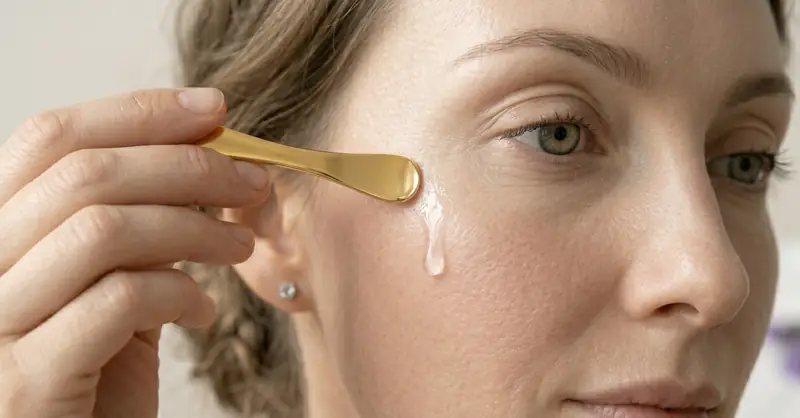
The science of skin aging is evolving rapidly — and for women navigating the skin changes that come with menopause and beyond, evidence-based skincare represents a fundamentally different approach: working with your skin's biology rather than against it.
Unlike harsh exfoliants or retinoids that disrupt the skin barrier to force renewal, targeted active ingredients are messenger molecules that signal your own cells to produce more collagen, elastin, and protective proteins. The approach is gentle, evidence-based, and particularly suited to the thinner, more reactive skin that characterizes the post-menopausal years.
The Correct Sequence for Maximum Benefit From Both
Hyaluronic acid and retinol are the two most commonly used anti-aging ingredients — and they're highly complementary when layered correctly. HA provides hydration that reduces retinol's irritation potential, while retinol provides structural collagen stimulation that HA cannot achieve. The question of which goes first depends on your retinol tolerance level and the specific products you're using.[1]
For retinol beginners (first 8 weeks): HA serum BEFORE retinol. Apply HA serum to damp skin first — this creates a hydrated buffer layer that moderates retinol penetration, reducing irritation by 25-30%. Wait 2 minutes for the HA to absorb, then apply retinol over it. The HA layer serves the same buffering function as the sandwich method — it doesn't prevent retinol from reaching the dermis but slows the penetration rate, reducing the peak concentration spike that triggers irritation. Finish with ceramide cream over both layers.
Clinical research confirms that for retinol-tolerant users (8+ weeks of consistent use): retinol BEFORE HA serum. Apply retinol to clean, dry skin first — direct skin contact provides maximum penetration for established tolerance. Wait 5 minutes for retinol to absorb. Then apply HA serum — the HA provides post-retinol hydration that counteracts retinol's drying effect while the retinol has already penetrated past where the HA layer would otherwise slow it. Finish with ceramide cream. This sequence provides maximum retinol efficacy plus maximum hydration support.
The synergy explained: retinol accelerates cell turnover, which temporarily thins the stratum corneum and increases transepidermal water loss. HA counteracts this by providing the water-binding capacity that the thinned stratum corneum needs. Meanwhile, retinol stimulates collagen synthesis in the dermis — a process that requires adequate dermal hydration to operate efficiently. HA ensures that hydration is maintained at the dermal level, supporting the collagen production that retinol stimulates. Without HA, retinol-treated skin can become so dehydrated that collagen synthesis is impaired — the retinol provides the signal but the dehydrated environment can't execute. With HA, the hydration environment is optimized for the collagen synthesis that retinol demands. They're not just compatible — they're synergistic.
Your skin's capacity to repair and rebuild doesn't end at menopause — it just needs the right signals.
— Dr. Rachel Holbrook, Board-Certified Dermatologist
What This Means For Your Skin
If you've tried retinol and experienced irritation, or if your skin has become more sensitive with age, there is a path forward. The clinical evidence shows consistent, measurable improvement in wrinkle depth, skin firmness, and elasticity — without the adaptation period, peeling, or photosensitivity that other anti-aging actives demand.
Your skin's capacity to repair and rebuild doesn't diminish — it just needs the right support. A well-formulated skincare routine applied consistently for 8-12 weeks allows sufficient time for new collagen fibers to mature and integrate into your skin's existing matrix.
The science is clear. The evidence is consistent. The results are measurable.
What happens next is up to you.