
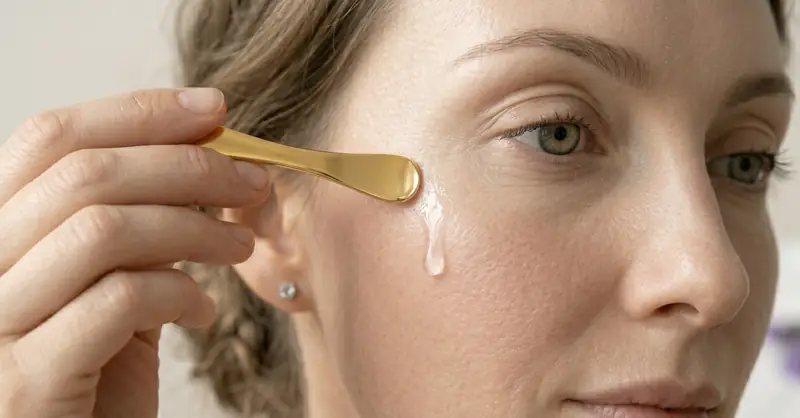
The science of skin aging is evolving rapidly — and for women navigating the skin changes that come with menopause and beyond, evidence-based skincare represents a fundamentally different approach: working with your skin's biology rather than against it.
Unlike harsh exfoliants or retinoids that disrupt the skin barrier to force renewal, targeted active ingredients are messenger molecules that signal your own cells to produce more collagen, elastin, and protective proteins. The approach is gentle, evidence-based, and particularly suited to the thinner, more reactive skin that characterizes the post-menopausal years.
The Common Errors That Make HA Ineffective or Counterproductive
Hyaluronic acid is one of the most forgiving skincare ingredients — it's difficult to cause harm with it — but it's easy to use it ineffectively. The mistakes below don't damage skin but they prevent HA from delivering its full hydrating potential, leaving women underwhelmed by an ingredient that, used correctly, provides immediately visible improvement in skin plumpness, texture, and fine line depth.[1]
Mistake 1 — Applying HA to dry skin: HA needs water to bind. Applying HA to dry skin in a dry environment forces it to draw water from deeper skin layers (the humidity paradox). Fix: always apply HA to damp skin — splash water on your face or mist with a hydrating toner before HA application. Mistake 2 — Not sealing HA with a cream or oil: HA attracts water to the skin surface, but without an occlusive seal, that moisture evaporates — especially in dry environments. Fix: apply ceramide cream within 60 seconds of HA application to lock the moisture in place. Mistake 3 — Using HA as your only moisturizer: HA is a humectant, not a moisturizer. It attracts water but provides no barrier repair (ceramides) or occlusion (squalane/shea butter). Fix: use HA as a STEP in your routine (after cleansing, before cream), not as a complete routine.
Clinical research confirms that mistake 4 — Choosing the wrong molecular weight: for mature skin with wrinkles, single-weight high MW HA provides only surface hydration. Fix: choose multi-weight HA products that include low MW HA for deeper penetration. Mistake 5 — Expecting structural anti-aging results: HA provides hydration and plumping — real and valuable benefits — but it doesn't rebuild collagen, tighten skin, or reverse wrinkles structurally. Expecting HA to replace retinol or peptides leads to disappointment. Fix: use HA alongside retinol and peptides, not instead of them. HA optimizes the hydration environment where structural treatments work best. Mistake 6 — Applying too much product: a thin layer of HA serum (3-4 drops for the entire face) provides optimal hydration. Excessive HA creates a sticky film that impedes subsequent product absorption and can pill under makeup. Fix: use a pea-sized amount, spread thinly and evenly.
The corrected HA protocol: cleanse → apply HA serum (3-4 drops) to damp skin → wait 60 seconds → apply ceramide cream → apply SPF (morning) or squalane oil (evening). This simple sequence eliminates all 6 common mistakes and ensures HA delivers its full hydrating, plumping, and skin-supportive potential. The difference between correct and incorrect HA use is often the difference between 'HA doesn't work for me' and 'HA is my favorite skincare step.'
Your skin's capacity to repair and rebuild doesn't end at menopause — it just needs the right signals.
— Dr. Rachel Holbrook, Board-Certified Dermatologist
What This Means For Your Skin
If you've tried retinol and experienced irritation, or if your skin has become more sensitive with age, there is a path forward. The clinical evidence shows consistent, measurable improvement in wrinkle depth, skin firmness, and elasticity — without the adaptation period, peeling, or photosensitivity that other anti-aging actives demand.
Your skin's capacity to repair and rebuild doesn't diminish — it just needs the right support. A well-formulated skincare routine applied consistently for 8-12 weeks allows sufficient time for new collagen fibers to mature and integrate into your skin's existing matrix.
The science is clear. The evidence is consistent. The results are measurable.
What happens next is up to you.