
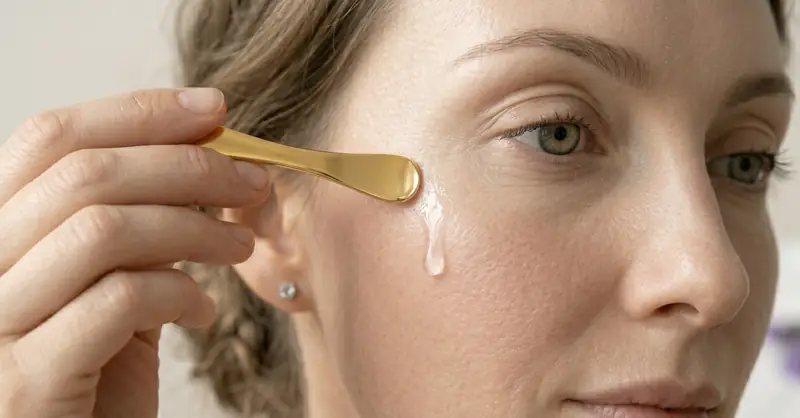
The science of skin aging is evolving rapidly — and for women navigating the skin changes that come with menopause and beyond, evidence-based skincare represents a fundamentally different approach: working with your skin's biology rather than against it.
Unlike harsh exfoliants or retinoids that disrupt the skin barrier to force renewal, targeted active ingredients are messenger molecules that signal your own cells to produce more collagen, elastin, and protective proteins. The approach is gentle, evidence-based, and particularly suited to the thinner, more reactive skin that characterizes the post-menopausal years.
The Humidity Paradox That Explains HA's Counterintuitive Effect
The experience of HA making skin feel drier — counterintuitive for a hydrating ingredient — is one of the most common skincare complaints, and it has a straightforward scientific explanation. Hyaluronic acid is a humectant: it attracts water from its surroundings and binds it. In a humid environment (>50% relative humidity), HA draws moisture from the air into the skin — the intended beneficial effect. In a dry environment (<40% humidity), there's insufficient atmospheric moisture to draw from. Instead, HA draws water from the nearest available source: the deeper layers of your own skin.[1]
The result: HA applied in a dry environment (heated home in winter, air-conditioned office, airplane cabin, arid climate) pulls moisture from the dermis and lower epidermis upward to the skin surface, where it evaporates into the dry air. The surface temporarily feels hydrated (the HA has brought moisture there), but the deeper skin is progressively dehydrated. Within 2-4 hours, the overall effect is net moisture LOSS — the skin feels drier than before HA application. For mature skin with a compromised barrier, this effect is amplified because the barrier gaps allow even faster evaporation of the HA-attracted moisture.
Clinical research confirms that the fix is simple and immediately effective: ALWAYS seal HA with an occlusive product. Apply HA serum to damp skin (providing an external water source). Within 60 seconds — before the HA begins drawing from deeper skin layers — apply ceramide cream on top. The cream's lipid matrix creates a physical barrier that prevents the HA-attracted moisture from evaporating. The water stays in the epidermis where HA holds it, and the deeper dermis isn't depleted. For extra protection in very dry environments, add 2-3 drops of squalane oil over the cream.
Additional fixes for the HA-drying paradox: (1) Use a humidifier — maintaining 40-60% indoor humidity provides the atmospheric moisture source that HA is designed to draw from. This eliminates the paradox entirely. (2) Apply HA only to damp skin — pat your face with water before HA application, providing an immediate external moisture source. (3) Choose HA products with built-in occlusives — some HA moisturizers already contain squalane, shea butter, or dimethicone that provide the occlusive seal. These are inherently less likely to cause the paradox than standalone HA serums. (4) In extremely dry conditions, skip HA serum entirely and rely on HA-containing ceramide cream — the cream's lipid matrix provides built-in moisture retention that prevents the paradox effect.
Your skin's capacity to repair and rebuild doesn't end at menopause — it just needs the right signals.
— Dr. Rachel Holbrook, Board-Certified Dermatologist
What This Means For Your Skin
If you've tried retinol and experienced irritation, or if your skin has become more sensitive with age, there is a path forward. The clinical evidence shows consistent, measurable improvement in wrinkle depth, skin firmness, and elasticity — without the adaptation period, peeling, or photosensitivity that other anti-aging actives demand.
Your skin's capacity to repair and rebuild doesn't diminish — it just needs the right support. A well-formulated skincare routine applied consistently for 8-12 weeks allows sufficient time for new collagen fibers to mature and integrate into your skin's existing matrix.
The science is clear. The evidence is consistent. The results are measurable.
What happens next is up to you.