
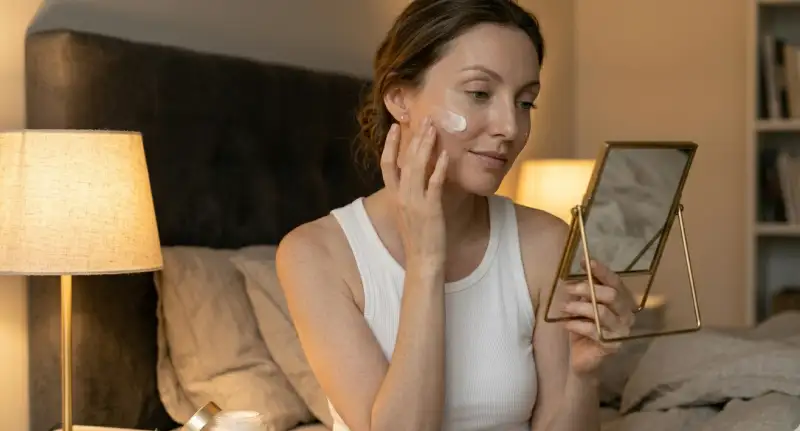
The science of skin aging is evolving rapidly — and for women navigating the skin changes that come with menopause and beyond, evidence-based skincare represents a fundamentally different approach: working with your skin's biology rather than against it.
Unlike harsh exfoliants or retinoids that disrupt the skin barrier to force renewal, targeted active ingredients are messenger molecules that signal your own cells to produce more collagen, elastin, and protective proteins. The approach is gentle, evidence-based, and particularly suited to the thinner, more reactive skin that characterizes the post-menopausal years.
The Science Behind Adhesive Wrinkle-Smoothing Patches
Wrinkle patches — adhesive patches applied to wrinkle-prone areas before bed — work through two distinct mechanisms, both of which are legitimate but temporary. Mechanism 1: Physical immobilization. The patch holds the skin in a smooth, unfolded position for 6-8 hours, preventing the repetitive compression and expression movements that deepen wrinkles during sleep. For expression-driven wrinkles (forehead lines, crow's feet, frown lines), this immobilization provides a rest period that allows the skin's natural overnight repair to occur without ongoing mechanical stress. Mechanism 2: Occlusive hydration. The patch creates a sealed microenvironment that traps moisture against the skin, intensely hydrating the dermis beneath the patch. Hydrated skin appears smoother because water plumps the dermal matrix, pushing fine wrinkle creases outward.[1]
What wrinkle patches actually achieve overnight: the morning after using a wrinkle patch, the treated area will appear visibly smoother than the surrounding untreated skin. Fine lines beneath the patch will be softer or temporarily invisible. The skin will appear plumper and more hydrated. This result is real and reproducible — it's not placebo. However, the duration of the effect is limited: the physical smoothing from immobilization fades within 1-2 hours as normal facial expression resumes. The hydration-based plumping lasts 4-8 hours as the trapped moisture gradually normalizes through TEWL.
Clinical research confirms that the types of wrinkle patches available: (1) Silicone patches — medical-grade silicone sheets that adhere without adhesive chemicals. These are the gold standard for scar treatment (extensive evidence for keloid and hypertrophic scar flattening through sustained pressure and occlusion). For wrinkles, they provide strong immobilization and excellent occlusion. Reusable for 15-30 applications. (2) Hydrogel patches — water-based gel patches often infused with active ingredients (peptides, HA, retinol). These provide hydration-based plumping plus active ingredient delivery under occlusion. Single-use but deliver actives more effectively. (3) Microneedle patches — patches with dissolving hyaluronic acid microneedles that physically penetrate the epidermis, delivering HA directly into the dermal layer beneath the wrinkle. These provide the deepest hydration of any patch type.
The honest assessment: wrinkle patches are an effective COSMETIC tool for temporary wrinkle smoothing — excellent before events, photos, or days when you want your skin to look its best. However, they are not a structural anti-aging treatment. The immobilization and hydration effects are temporary and do not stimulate collagen production or reverse dermal thinning. For long-term wrinkle reduction, peptide cream and retinol remain essential. The smartest approach: use patches as a weekly intensive supplement to your nightly peptide/retinol routine — apply the patch OVER your active ingredients to create extended occlusion that enhances their overnight penetration. This combines the immediate cosmetic smoothing of the patch with the long-term collagen-building benefit of the actives beneath it.
Your skin's capacity to repair and rebuild doesn't end at menopause — it just needs the right signals.
— Dr. Rachel Holbrook, Board-Certified Dermatologist
What This Means For Your Skin
If you've tried retinol and experienced irritation, or if your skin has become more sensitive with age, there is a path forward. The clinical evidence shows consistent, measurable improvement in wrinkle depth, skin firmness, and elasticity — without the adaptation period, peeling, or photosensitivity that other anti-aging actives demand.
Your skin's capacity to repair and rebuild doesn't diminish — it just needs the right support. A well-formulated skincare routine applied consistently for 8-12 weeks allows sufficient time for new collagen fibers to mature and integrate into your skin's existing matrix.
The science is clear. The evidence is consistent. The results are measurable.
What happens next is up to you.