
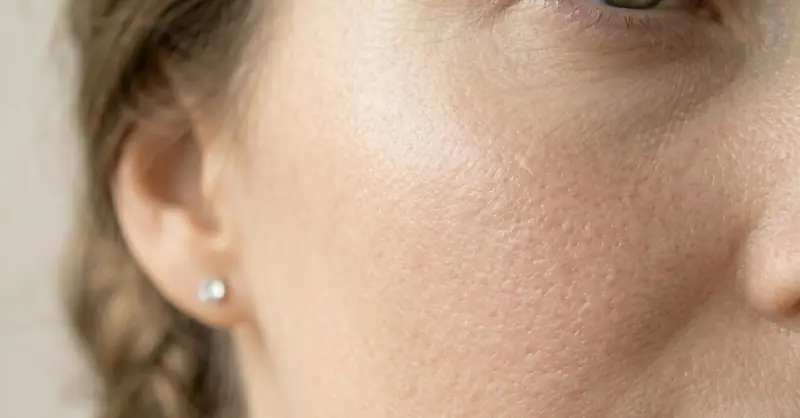
The science of skin aging is evolving rapidly — and for women navigating the skin changes that come with menopause and beyond, evidence-based skincare represents a fundamentally different approach: working with your skin's biology rather than against it.
Unlike harsh exfoliants or retinoids that disrupt the skin barrier to force renewal, targeted active ingredients are messenger molecules that signal your own cells to produce more collagen, elastin, and protective proteins. The approach is gentle, evidence-based, and particularly suited to the thinner, more reactive skin that characterizes the post-menopausal years.
The 2-4 Week Recovery Protocol for Compromised Skin
Repairing a damaged skin barrier is conceptually simple but requires discipline: stop damaging it, provide the building materials it needs, and wait. The barrier's lipid matrix regenerates through a natural process — keratinocytes in the stratum granulosum continuously produce ceramides, cholesterol, and fatty acids that self-assemble into the lamellar structures between corneocytes. When the barrier is damaged, this production machinery is intact but overwhelmed — it can't produce lipids fast enough to replace what's being lost through ongoing damage (harsh cleansers, actives, environmental exposure). The fastest repair comes from eliminating the damage sources while supplementing the lipids topically.[1]
The fast barrier repair protocol: Phase 1 (Days 1-7) — ELIMINATE all barrier stressors. Stop ALL active ingredients: retinol, AHAs, BHAs, vitamin C, niacinamide at high concentrations, physical scrubs. Switch to a cream or oil cleanser only. Remove foaming cleansers entirely. Reduce cleansing to once daily (evening only; rinse with lukewarm water in the morning). Apply a ceramide cream containing cholesterol and fatty acids (the physiological 3:1:1 ratio) twice daily as your only skincare product. Add SPF 30+ in the morning. This stripped-down routine stops the bleeding — the barrier is no longer being assaulted while it tries to repair.
Clinical research confirms that phase 2 (Days 8-21) — REBUILD with targeted lipid supplementation. Continue the simplified routine from Phase 1. Add a hyaluronic acid serum under the ceramide cream — HA draws moisture into the repairing barrier. In the evening, add 2-3 drops of squalane oil over the ceramide cream as an occlusive seal — this prevents the TEWL that slows recovery by mimicking the natural sebum film. Use a humidifier at night (40-60% humidity) to reduce environmental moisture demands on the healing barrier. By the end of Phase 2, most barrier damage symptoms should be significantly improved: sensitivity reduced, dryness controlled, redness fading.
Phase 3 (Days 22-28+) — REINTRODUCE actives cautiously. Begin reintroducing one active ingredient at a time, starting with the gentlest (niacinamide 2-5%), waiting 1 week between new additions. Reintroduce retinol last, at a lower concentration than previously used, with the sandwich method. If any reintroduced product triggers sensitivity, remove it and wait another week. The complete barrier repair timeline: mild damage (sensitivity, slight dryness) resolves in 2 weeks. Moderate damage (persistent redness, rough texture, reactive breakouts) resolves in 3-4 weeks. Severe damage (from over-exfoliation, chemical burns, or prolonged barrier assault) may take 6-8 weeks. The key insight: patience during recovery is faster than impatience — reintroducing actives before the barrier is ready simply restarts the damage cycle.
Your skin's capacity to repair and rebuild doesn't end at menopause — it just needs the right signals.
— Dr. Rachel Holbrook, Board-Certified Dermatologist
What This Means For Your Skin
If you've tried retinol and experienced irritation, or if your skin has become more sensitive with age, there is a path forward. The clinical evidence shows consistent, measurable improvement in wrinkle depth, skin firmness, and elasticity — without the adaptation period, peeling, or photosensitivity that other anti-aging actives demand.
Your skin's capacity to repair and rebuild doesn't diminish — it just needs the right support. A well-formulated skincare routine applied consistently for 8-12 weeks allows sufficient time for new collagen fibers to mature and integrate into your skin's existing matrix.
The science is clear. The evidence is consistent. The results are measurable.
What happens next is up to you.