
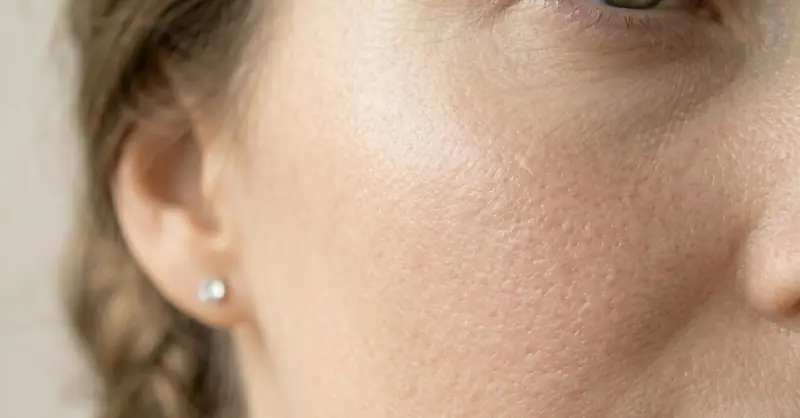
The science of skin aging is evolving rapidly — and for women navigating the skin changes that come with menopause and beyond, evidence-based skincare represents a fundamentally different approach: working with your skin's biology rather than against it.
Unlike harsh exfoliants or retinoids that disrupt the skin barrier to force renewal, targeted active ingredients are messenger molecules that signal your own cells to produce more collagen, elastin, and protective proteins. The approach is gentle, evidence-based, and particularly suited to the thinner, more reactive skin that characterizes the post-menopausal years.
The Recovery Timeline Based on Damage Severity
The barrier repair timeline depends on three variables: the severity of the damage, the quality of the repair protocol, and the individual's baseline barrier production capacity (which declines with age). Mild barrier damage in a 25-year-old with robust ceramide production may resolve in 1 week. The same damage in a 55-year-old post-menopausal woman with 30-40% reduced ceramide synthesis may take 3-4 weeks. Understanding your specific timeline prevents both premature reintroduction of actives (which restarts the damage cycle) and unnecessary prolonged restriction (which delays return to anti-aging treatment).[1]
Mild barrier damage (timeline: 1-2 weeks): caused by a single harsh product, temporary over-exfoliation, or environmental exposure (extreme cold, dry airplane cabin). Symptoms: temporary sensitivity, mild dryness, slight tightness. Recovery: the lipid matrix has minor gaps but is structurally intact. Simplified routine with ceramide cream restores full function quickly. Signs of completion: water no longer stings, moisturizer absorbs at normal rate, morning dryness resolves.
Clinical research confirms that moderate barrier damage (timeline: 2-4 weeks): caused by prolonged use of harsh cleansers, cumulative over-exfoliation, aggressive retinol introduction, or untreated menopausal ceramide depletion. Symptoms: persistent dryness despite moisturizing, reactive breakouts, visible redness, products that previously worked now irritate. Recovery: the lipid matrix has significant disruption requiring new ceramide incorporation through multiple stratum corneum turnover cycles (~14-28 days). Full ceramide cream + squalane protocol needed. Signs of completion: all previously comfortable products are comfortable again, skin feels resilient rather than reactive.
Severe barrier damage (timeline: 4-8 weeks): caused by chemical burns (high-concentration acid peels), prolonged aggressive treatment without barrier support, or compounding damage from multiple sources. Symptoms: skin stings with plain water, visible raw areas, inability to tolerate any product including moisturizer initially, sheet-like peeling, significant redness. Recovery: the stratum corneum may need near-complete regeneration through multiple cell turnover cycles. Begin with only squalane oil or petrolatum (even ceramide cream may sting initially). Introduce ceramide cream after 3-5 days when basic tolerance returns. Full recovery requires 6-8 weeks of strict simplified routine. For all severity levels: the barrier is fully repaired when your skin feels the way it did before the damage occurred — comfortable, resilient, non-reactive, and able to tolerate your previous product routine without any sensitivity.
Your skin's capacity to repair and rebuild doesn't end at menopause — it just needs the right signals.
— Dr. Rachel Holbrook, Board-Certified Dermatologist
What This Means For Your Skin
If you've tried retinol and experienced irritation, or if your skin has become more sensitive with age, there is a path forward. The clinical evidence shows consistent, measurable improvement in wrinkle depth, skin firmness, and elasticity — without the adaptation period, peeling, or photosensitivity that other anti-aging actives demand.
Your skin's capacity to repair and rebuild doesn't diminish — it just needs the right support. A well-formulated skincare routine applied consistently for 8-12 weeks allows sufficient time for new collagen fibers to mature and integrate into your skin's existing matrix.
The science is clear. The evidence is consistent. The results are measurable.
What happens next is up to you.