
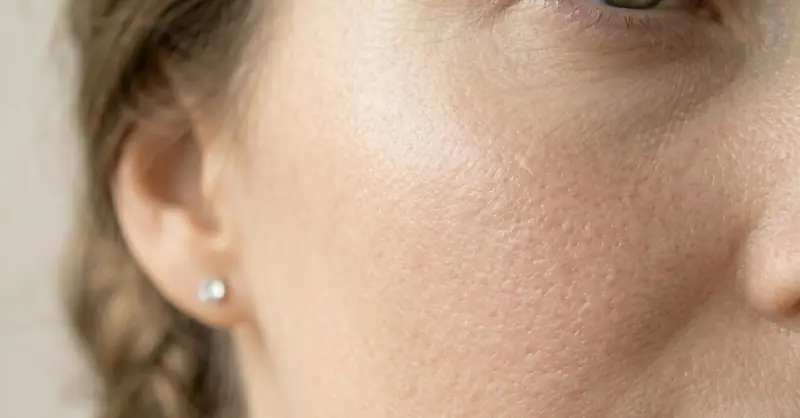
The science of skin aging is evolving rapidly — and for women navigating the skin changes that come with menopause and beyond, evidence-based skincare represents a fundamentally different approach: working with your skin's biology rather than against it.
Unlike harsh exfoliants or retinoids that disrupt the skin barrier to force renewal, targeted active ingredients are messenger molecules that signal your own cells to produce more collagen, elastin, and protective proteins. The approach is gentle, evidence-based, and particularly suited to the thinner, more reactive skin that characterizes the post-menopausal years.
The Recovery Protocol for Acid and Scrub Damage
Over-exfoliation is one of the most common causes of acute barrier damage — and one of the most misunderstood. The pursuit of 'smooth, glowing skin' leads many women to combine AHAs, BHAs, retinol, physical scrubs, and enzyme masks in routines that progressively strip the stratum corneum faster than it can regenerate. The tipping point arrives when the protective lipid barrier is completely disrupted: suddenly, every product stings, the skin turns red and raw, and the 'glow' transforms into an inflamed, compromised surface that's more vulnerable to aging than it was before any exfoliation began.[1]
The signs of over-exfoliated skin: skin that stings with plain water, visible redness that doesn't resolve within hours, a shiny-tight feeling (the surface has been stripped to a glossy, lipid-depleted state), increased sensitivity to temperature changes, and paradoxical breakouts (the damaged barrier allows bacteria to penetrate while the skin overproduces sebum in a desperate attempt to replace stripped lipids). If you experience 3 or more of these signs, you're over-exfoliated — and continuing to exfoliate will worsen the damage exponentially.
Clinical research confirms that the over-exfoliation recovery protocol: WEEK 1 — Complete cessation of all actives and exfoliants. Cleanse with micellar water or plain lukewarm water only (no cleanser). Apply a heavy ceramide cream 3-4 times daily — yes, multiple applications. The barrier is so depleted that a single application is insufficient. Sleep with a thick layer of ceramide cream sealed under squalane oil. Avoid all sun exposure or use mineral SPF only (chemical SPF ingredients sting on compromised skin). WEEKS 2-3 — Add a gentle cream cleanser (once daily, evening only). Continue ceramide cream twice daily. Introduce hyaluronic acid serum under the cream if tolerated. The stinging should subside by the end of week 2.
WEEK 4 — If sensitivity has resolved, cautiously reintroduce ONE active at a time. Start with niacinamide 2% (barrier-supportive, anti-inflammatory). Wait one full week before adding anything else. Retinol should be the LAST active reintroduced, at a lower concentration than previously used, no earlier than week 6. The critical lesson: after recovery, establish an exfoliation limit that prevents recurrence. For most women over 40, the maximum safe exfoliation frequency is chemical exfoliant (AHA/BHA) 2x per week OR retinol nightly — not both. The barrier at 40+ takes longer to regenerate between exfoliation sessions, and the ceramide deficit from aging means less lipid is available to rebuild. Respecting this biological limit prevents the over-exfoliation cycle from repeating.
Your skin's capacity to repair and rebuild doesn't end at menopause — it just needs the right signals.
— Dr. Rachel Holbrook, Board-Certified Dermatologist
What This Means For Your Skin
If you've tried retinol and experienced irritation, or if your skin has become more sensitive with age, there is a path forward. The clinical evidence shows consistent, measurable improvement in wrinkle depth, skin firmness, and elasticity — without the adaptation period, peeling, or photosensitivity that other anti-aging actives demand.
Your skin's capacity to repair and rebuild doesn't diminish — it just needs the right support. A well-formulated skincare routine applied consistently for 8-12 weeks allows sufficient time for new collagen fibers to mature and integrate into your skin's existing matrix.
The science is clear. The evidence is consistent. The results are measurable.
What happens next is up to you.