
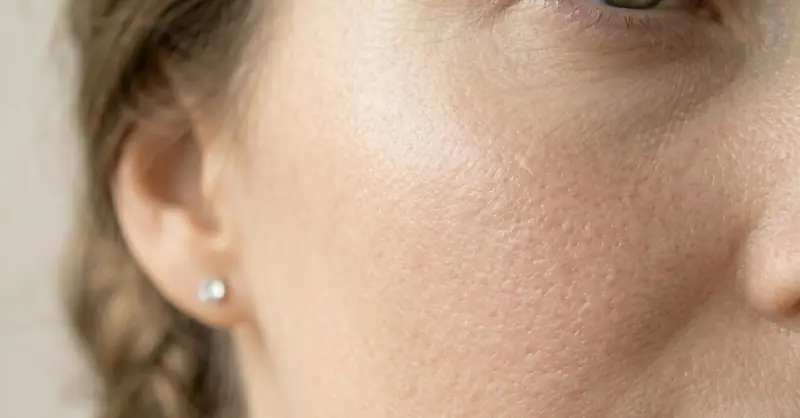
The science of skin aging is evolving rapidly — and for women navigating the skin changes that come with menopause and beyond, evidence-based skincare represents a fundamentally different approach: working with your skin's biology rather than against it.
Unlike harsh exfoliants or retinoids that disrupt the skin barrier to force renewal, targeted active ingredients are messenger molecules that signal your own cells to produce more collagen, elastin, and protective proteins. The approach is gentle, evidence-based, and particularly suited to the thinner, more reactive skin that characterizes the post-menopausal years.
The 7 Signs That Your Barrier Is Compromised
The skin barrier — the stratum corneum's lipid matrix of ceramides, cholesterol, and fatty acids — is the single most important determinant of skin health, appearance, and aging rate. When this barrier is intact, skin retains moisture, resists irritants, and maintains the stable internal environment that collagen-producing fibroblasts need to function. When compromised, every aspect of skin health deteriorates simultaneously: moisture escapes, irritants penetrate, inflammation rises, and the cellular machinery that maintains youthful skin structure breaks down. Recognizing barrier damage early prevents the cascade of problems that follow.[1]
The 7 symptoms of a damaged skin barrier, from earliest to most severe: (1) Increased sensitivity — products that previously felt comfortable now sting or tingle. This is the earliest and most reliable sign: the barrier has developed microscopic gaps that allow product ingredients to reach nerve endings in the deeper epidermis. (2) Persistent dryness — moisturizer no longer holds. The barrier gaps allow transepidermal water loss (TEWL) to exceed the skin's ability to retain moisture, creating chronic dryness regardless of how much moisturizer is applied. (3) Visible redness — low-grade inflammation from environmental irritants penetrating the compromised barrier creates a persistent pink or red undertone, particularly on the cheeks.
Clinical research confirms that (4) Rough, flaky texture — the stratum corneum's organized cell layers become disordered when the lipid mortar between them breaks down, creating an uneven surface that catches light differently and feels rough to touch. (5) Reactive breakouts — a paradoxical symptom: barrier damage can trigger both dryness AND breakouts simultaneously, as the skin overproduces sebum to compensate for lipid loss while bacteria penetrate the compromised barrier. (6) Increased wrinkle visibility — dehydrated, barrier-compromised skin shows wrinkles 20-30% deeper than the same skin when properly hydrated. The wrinkles haven't actually deepened — the lack of surface hydration and barrier plumping makes existing structural lines more visible. (7) Delayed healing — minor blemishes, scratches, or irritation take noticeably longer to resolve because the barrier's protective and regenerative functions are impaired.
The assessment protocol: if you identify 3 or more of these symptoms, barrier damage is likely the underlying cause — not the individual symptoms themselves. The critical mistake most women make is treating each symptom separately (anti-redness cream for redness, acne treatment for breakouts, heavy moisturizer for dryness) when the root cause is barrier compromise. Treating individual symptoms without repairing the barrier is like mopping a floor while the faucet is still running. The solution: simplify the routine to cleanser + ceramide cream + SPF for 2-4 weeks, allowing the barrier to rebuild before reintroducing any active treatments.
Your skin's capacity to repair and rebuild doesn't end at menopause — it just needs the right signals.
— Dr. Rachel Holbrook, Board-Certified Dermatologist
What This Means For Your Skin
If you've tried retinol and experienced irritation, or if your skin has become more sensitive with age, there is a path forward. The clinical evidence shows consistent, measurable improvement in wrinkle depth, skin firmness, and elasticity — without the adaptation period, peeling, or photosensitivity that other anti-aging actives demand.
Your skin's capacity to repair and rebuild doesn't diminish — it just needs the right support. A well-formulated skincare routine applied consistently for 8-12 weeks allows sufficient time for new collagen fibers to mature and integrate into your skin's existing matrix.
The science is clear. The evidence is consistent. The results are measurable.
What happens next is up to you.