
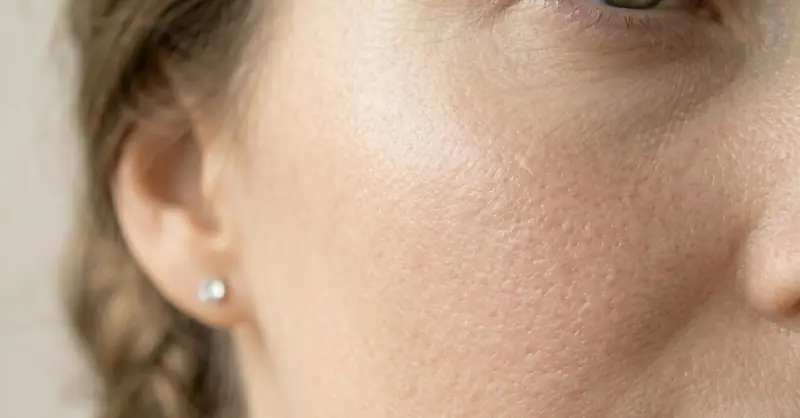
The science of skin aging is evolving rapidly — and for women navigating the skin changes that come with menopause and beyond, evidence-based skincare represents a fundamentally different approach: working with your skin's biology rather than against it.
Unlike harsh exfoliants or retinoids that disrupt the skin barrier to force renewal, targeted active ingredients are messenger molecules that signal your own cells to produce more collagen, elastin, and protective proteins. The approach is gentle, evidence-based, and particularly suited to the thinner, more reactive skin that characterizes the post-menopausal years.
The Multi-Functional Vitamin That Strengthens Barrier From Within
Niacinamide (vitamin B3, nicotinamide) has emerged as one of the most versatile and well-tolerated active ingredients in skincare — and its barrier-strengthening properties make it uniquely valuable for aging skin. Unlike exogenous ceramides (applied from outside), niacinamide stimulates the skin's own ceramide synthesis machinery, increasing endogenous ceramide production by up to 34% at 2% concentration. This makes niacinamide a barrier-building ingredient rather than a barrier-supplementing one: it trains the skin to produce more of its own protective lipids, providing sustained barrier improvement that persists even between applications.[1]
The mechanism: niacinamide is a precursor to NAD+ (nicotinamide adenine dinucleotide), a coenzyme essential for hundreds of cellular processes including lipid synthesis. When applied topically, niacinamide is absorbed into keratinocytes, converted to NAD+, and used to fuel the enzymatic pathways that produce ceramides, cholesterol, and fatty acids. A clinical study found that topical niacinamide 2% applied twice daily for 4 weeks increased free fatty acid levels by 67% and ceramide levels by 34% in the stratum corneum — measurable barrier strengthening from a single ingredient.
Clinical research confirms that niacinamide's additional benefits that complement barrier repair: (1) Anti-inflammatory — reduces IL-6 and TNF-α, calming the chronic inflammation that accompanies barrier damage. (2) Collagen stimulation — increases collagen production by 54% at 5% concentration, providing anti-aging treatment alongside barrier repair. (3) Hyperpigmentation reduction — inhibits melanosome transfer, reducing dark spots that often accompany post-inflammatory hyperpigmentation from barrier damage. (4) Sebum regulation — normalizes sebum production, addressing the paradoxical oiliness-plus-dryness that barrier damage creates. (5) Pore refinement — reduces the appearance of enlarged pores through improved cell turnover and reduced sebum. This multi-functionality means niacinamide provides anti-aging treatment WHILE repairing the barrier — unlike retinol, which provides anti-aging treatment but temporarily WEAKENS the barrier.
The practical niacinamide protocol for barrier health: for active barrier repair, use a ceramide cream containing 2-5% niacinamide as your primary product. The niacinamide stimulates internal ceramide production while the exogenous ceramides in the cream provide immediate external repair — a dual approach that accelerates barrier recovery. For ongoing barrier maintenance (post-repair), continue a niacinamide-containing moisturizer daily to maintain the elevated ceramide production. Niacinamide is compatible with virtually every other skincare ingredient (retinol, vitamin C, AHAs, peptides) and can be incorporated into any routine stage without pH concerns or interaction issues. Concentration sweet spot: 2-5% provides full barrier and anti-aging benefits. Above 5%, no additional barrier benefit is observed but irritation risk increases in sensitive skin.
Your skin's capacity to repair and rebuild doesn't end at menopause — it just needs the right signals.
— Dr. Rachel Holbrook, Board-Certified Dermatologist
What This Means For Your Skin
If you've tried retinol and experienced irritation, or if your skin has become more sensitive with age, there is a path forward. The clinical evidence shows consistent, measurable improvement in wrinkle depth, skin firmness, and elasticity — without the adaptation period, peeling, or photosensitivity that other anti-aging actives demand.
Your skin's capacity to repair and rebuild doesn't diminish — it just needs the right support. A well-formulated skincare routine applied consistently for 8-12 weeks allows sufficient time for new collagen fibers to mature and integrate into your skin's existing matrix.
The science is clear. The evidence is consistent. The results are measurable.
What happens next is up to you.