
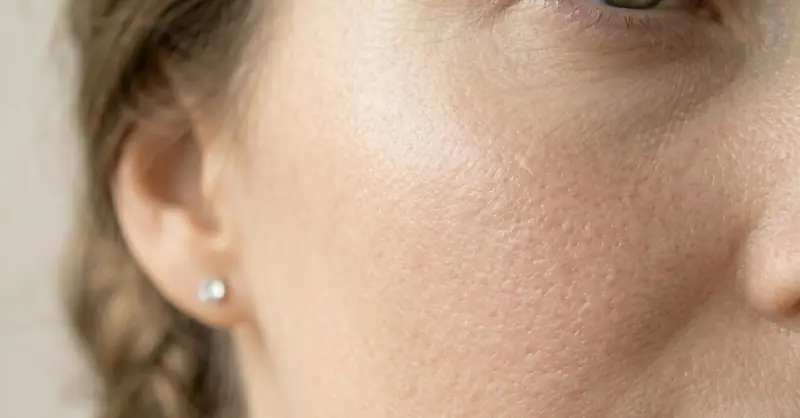
The science of skin aging is evolving rapidly — and for women navigating the skin changes that come with menopause and beyond, evidence-based skincare represents a fundamentally different approach: working with your skin's biology rather than against it.
Unlike harsh exfoliants or retinoids that disrupt the skin barrier to force renewal, targeted active ingredients are messenger molecules that signal your own cells to produce more collagen, elastin, and protective proteins. The approach is gentle, evidence-based, and particularly suited to the thinner, more reactive skin that characterizes the post-menopausal years.
The Ingredients That Actually Rebuild the Lipid Matrix
The term 'barrier repair' has become a marketing buzzword applied to products that may or may not actually repair the skin barrier. The distinction matters: a moisturizer provides temporary hydration and occlusion. A barrier repair cream provides the structural lipids (ceramides, cholesterol, fatty acids) that integrate into the stratum corneum's lipid matrix, rebuilding the mortar between skin cells at a structural level. The difference is like the difference between putting a tarp over a damaged roof (moisturizer) versus replacing the shingles (barrier repair cream). Both provide temporary protection, but only one fixes the underlying problem.[1]
The three essential ingredients in a genuine barrier repair cream: (1) Ceramides — specifically ceramide NP, AP, and EOP, which are the dominant ceramide species in human stratum corneum. Ceramides constitute 50% of the barrier's lipid matrix and are the most critical structural component. (2) Cholesterol — constitutes 25% of the barrier lipids and is essential for the proper formation of lamellar structures. Products containing ceramides WITHOUT cholesterol produce inferior barrier repair because the lipid organization is incomplete. (3) Free fatty acids — particularly palmitic acid, stearic acid, and linoleic acid — constitute the remaining 25%. They complete the lipid trio needed for the barrier's crystalline lamellar structure to form properly.
Clinical research confirms that the physiological ratio matters: the barrier's natural lipid composition is approximately 3:1:1 (ceramides:cholesterol:fatty acids by weight). Barrier repair creams formulated at this ratio integrate into the existing barrier more efficiently than those with different proportions. A clinical study comparing barrier repair creams at the physiological ratio versus non-physiological ratios found that the 3:1:1 formulation restored barrier function 37% faster and maintained improvement 48% longer. This ratio is the gold standard for barrier repair — and many commercial 'ceramide creams' do not contain all three components at the correct ratio.
Additional ingredients that enhance barrier repair cream efficacy: (1) Niacinamide (2-5%) — stimulates the skin's own ceramide synthesis, complementing the exogenous ceramides in the cream. (2) Panthenol (provitamin B5) — improves barrier function and reduces TEWL through a complementary mechanism to ceramides. (3) Hyaluronic acid — provides the hydration that the repairing barrier needs to retain. (4) Squalane — provides additional occlusion and mimics natural sebum. Ingredients to AVOID in a barrier repair cream: fragrance (common irritant that can exacerbate barrier damage), alcohol denat (strips lipids), essential oils (contain sensitizing compounds), and strong surfactants. The ideal barrier repair cream feels rich, absorbs within 2-3 minutes, and leaves a barely detectable protective film that persists for hours.
Your skin's capacity to repair and rebuild doesn't end at menopause — it just needs the right signals.
— Dr. Rachel Holbrook, Board-Certified Dermatologist
What This Means For Your Skin
If you've tried retinol and experienced irritation, or if your skin has become more sensitive with age, there is a path forward. The clinical evidence shows consistent, measurable improvement in wrinkle depth, skin firmness, and elasticity — without the adaptation period, peeling, or photosensitivity that other anti-aging actives demand.
Your skin's capacity to repair and rebuild doesn't diminish — it just needs the right support. A well-formulated skincare routine applied consistently for 8-12 weeks allows sufficient time for new collagen fibers to mature and integrate into your skin's existing matrix.
The science is clear. The evidence is consistent. The results are measurable.
What happens next is up to you.