
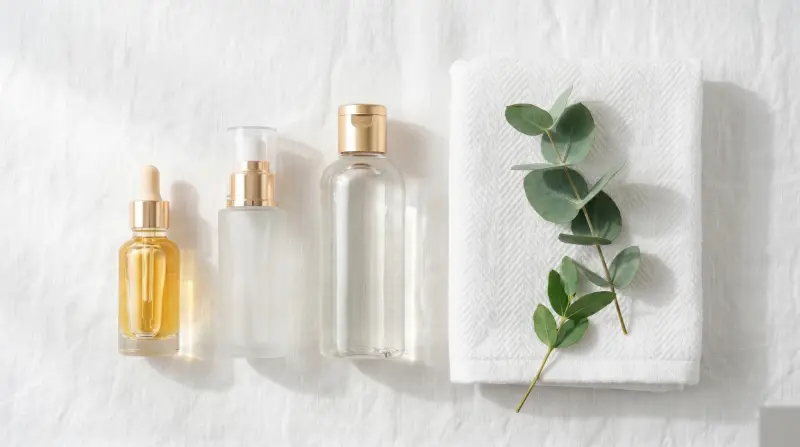
The science of skin aging is evolving rapidly — and for women navigating the skin changes that come with menopause and beyond, evidence-based skincare represents a fundamentally different approach: working with your skin's biology rather than against it.
Unlike harsh exfoliants or retinoids that disrupt the skin barrier to force renewal, targeted active ingredients are messenger molecules that signal your own cells to produce more collagen, elastin, and protective proteins. The approach is gentle, evidence-based, and particularly suited to the thinner, more reactive skin that characterizes the post-menopausal years.
When Two Products Beat One — and When They Don't
The serum-versus-cream question has a nuanced answer for aging skin: ideally both, but a well-formulated cream alone can deliver most of the benefit. Understanding the functional difference clarifies when the combination matters. Serums are water-based vehicles with small molecules designed for penetration — they deliver active ingredients (peptides, vitamin C, hyaluronic acid) into the dermis where fibroblasts and collagen reside. Creams are emulsion-based vehicles with larger molecules designed for occlusion — they seal the skin surface, preventing moisture loss and maintaining prolonged contact between earlier-applied treatments and the skin.[1]
For aging skin specifically, the serum + cream combination outperforms either alone because post-menopausal skin has two simultaneous deficits that require different vehicle types to address. Deficit one: insufficient collagen production — corrected by peptide serums that penetrate to dermal fibroblasts. Deficit two: compromised barrier function — corrected by ceramide creams that rebuild the stratum corneum lipid matrix. A serum alone delivers actives but doesn't protect the barrier. A cream alone protects the barrier but delivers actives less efficiently. The combination addresses both deficits in one routine.
Clinical research confirms that a comparative study in the Journal of Cosmetic Dermatology tested three groups: peptide serum only, ceramide cream only, and serum followed by cream. After 8 weeks, the combination group showed 41% improvement in wrinkle depth versus 22% for serum alone and 18% for cream alone. The cream amplified serum results by nearly double because it sealed the serum's active ingredients against the skin for prolonged contact — preventing evaporation and creating the occluded environment where peptide penetration is maximized.
The practical answer: if budget allows two products, use peptide serum (applied first to damp skin) followed by ceramide cream (applied second to seal). If budget requires one product, choose a well-formulated peptide cream that combines both active delivery and barrier protection in a single step — this provides approximately 70% of the two-product benefit with half the cost and complexity. The one-product approach is preferable to a serum without cream follow-up, because an unprotected barrier undermines even the best serum's efficacy through evaporation and moisture loss.
Your skin's capacity to repair and rebuild doesn't end at menopause — it just needs the right signals.
— Dr. Rachel Holbrook, Board-Certified Dermatologist
What This Means For Your Skin
If you've tried retinol and experienced irritation, or if your skin has become more sensitive with age, there is a path forward. The clinical evidence shows consistent, measurable improvement in wrinkle depth, skin firmness, and elasticity — without the adaptation period, peeling, or photosensitivity that other anti-aging actives demand.
Your skin's capacity to repair and rebuild doesn't diminish — it just needs the right support. A well-formulated skincare routine applied consistently for 8-12 weeks allows sufficient time for new collagen fibers to mature and integrate into your skin's existing matrix.
The science is clear. The evidence is consistent. The results are measurable.
What happens next is up to you.