
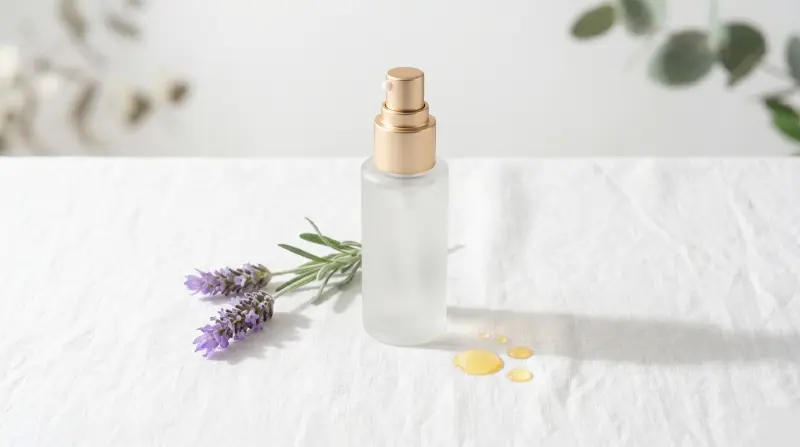
The science of skin aging is evolving rapidly — and for women navigating the skin changes that come with menopause and beyond, evidence-based skincare represents a fundamentally different approach: working with your skin's biology rather than against it.
Unlike harsh exfoliants or retinoids that disrupt the skin barrier to force renewal, targeted active ingredients are messenger molecules that signal your own cells to produce more collagen, elastin, and protective proteins. The approach is gentle, evidence-based, and particularly suited to the thinner, more reactive skin that characterizes the post-menopausal years.
Why Your Cleanser Matters More Than Your Moisturizer
The cleanser is the most underestimated product in any dry skin routine — and paradoxically, it may be the product causing the most damage. Every cleanse strips some ceramides and natural oils from the skin surface. With young, sebum-rich skin, these lipids are replenished within hours. With aging, ceramide-depleted skin, each cleanse removes lipids that may take days to replace — creating a daily deficit that even the best moisturizer struggles to overcome. A dermatological principle states: the cleanser determines the floor of your skin's hydration. The moisturizer determines the ceiling. A harsh cleanser lowers the floor so far that no moisturizer can compensate.[1]
The cleansing agents that damage aging dry skin: sodium lauryl sulfate (SLS) and sodium laureth sulfate (SLES) — the foaming agents in most cleansers — are anionic surfactants that dissolve lipids indiscriminately. A study in the Journal of Investigative Dermatology measured a 25% increase in transepidermal water loss after a single wash with SLS-containing cleanser, requiring 6+ hours for barrier function to return to baseline. For post-menopausal skin that's already 30-40% ceramide-depleted, this daily stripping cycle is devastating. The 'clean' feeling after a foaming wash is literally the sensation of your barrier being stripped.
Clinical research confirms that the cleanser categories ranked for aging dry skin, from best to worst: (1) Oil cleansers — dissolve impurities and SPF using lipids that supplement rather than strip the barrier. The gold standard for dry aging skin. (2) Cream/milk cleansers — gentle emulsion-based cleansers that contain ceramides, glycerin, or oils that deposit moisture while cleansing. (3) Micellar water — surfactant micelles lift impurities without water, minimizing barrier disruption. Good for morning cleanse when skin isn't dirty. (4) Gel cleansers — may contain mild surfactants acceptable for combination skin but often too stripping for dry mature skin. (5) Foaming cleansers — the worst choice. Every foam is generated by surfactants that strip barrier lipids. Avoid entirely.
The practical cleansing protocol for aging dry skin: Morning — rinse with lukewarm water only, or use micellar water on a cotton pad. The face isn't dirty in the morning — it only has overnight sebum and treatment residue, which a gentle rinse can handle without surfactant. Evening — oil cleanse first (dissolves SPF and makeup completely), then cream cleanse (removes residual impurities). Pat dry — never rub. Apply serum immediately while skin is still damp. This protocol provides thorough cleansing without the barrier destruction that foaming cleansers inflict — and within 2 weeks of switching, most women notice their moisturizer working dramatically better because the barrier it's trying to repair is no longer being stripped twice daily.
Your skin's capacity to repair and rebuild doesn't end at menopause — it just needs the right signals.
— Dr. Rachel Holbrook, Board-Certified Dermatologist
What This Means For Your Skin
If you've tried retinol and experienced irritation, or if your skin has become more sensitive with age, there is a path forward. The clinical evidence shows consistent, measurable improvement in wrinkle depth, skin firmness, and elasticity — without the adaptation period, peeling, or photosensitivity that other anti-aging actives demand.
Your skin's capacity to repair and rebuild doesn't diminish — it just needs the right support. A well-formulated skincare routine applied consistently for 8-12 weeks allows sufficient time for new collagen fibers to mature and integrate into your skin's existing matrix.
The science is clear. The evidence is consistent. The results are measurable.
What happens next is up to you.