
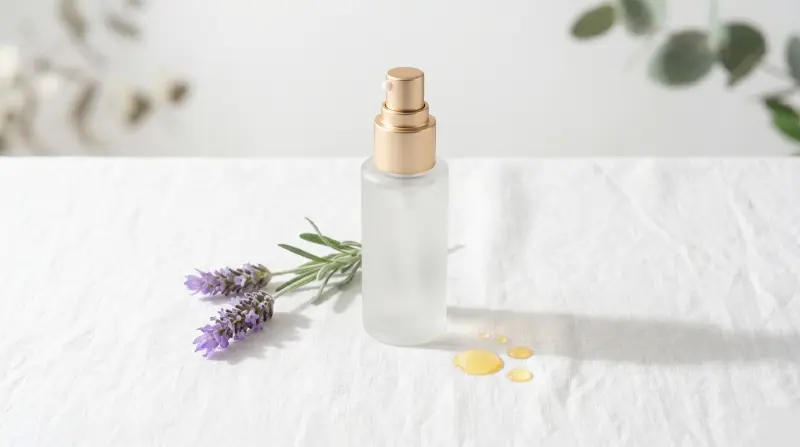
The science of skin aging is evolving rapidly — and for women navigating the skin changes that come with menopause and beyond, evidence-based skincare represents a fundamentally different approach: working with your skin's biology rather than against it.
Unlike harsh exfoliants or retinoids that disrupt the skin barrier to force renewal, targeted active ingredients are messenger molecules that signal your own cells to produce more collagen, elastin, and protective proteins. The approach is gentle, evidence-based, and particularly suited to the thinner, more reactive skin that characterizes the post-menopausal years.
Which Oils Work and Which to Avoid After 50
Facial oils have surged in popularity as natural alternatives to conventional moisturizers, but for aging dry skin, oil selection requires careful consideration. The right oils mimic or supplement the skin's natural lipid composition, supporting barrier function. The wrong oils can disrupt the barrier, trigger inflammation, or create a false sense of hydration while actually accelerating moisture loss. Understanding the difference is essential for women over 50 whose compromised barrier makes oil choice more consequential.[1]
Oils that benefit aging dry skin: (1) Squalane — identical to a component of natural sebum, providing biomimetic occlusion with zero irritation risk. The gold standard facial oil for mature skin. (2) Rosehip seed oil — rich in linoleic acid (an essential fatty acid that aging skin is deficient in) plus natural retinoids (trans-retinoic acid) that provide mild anti-aging activity. A study showed rosehip oil improved skin elasticity by 19% over 12 weeks. (3) Argan oil — oleic acid-rich oil that provides excellent emolliency without pore-clogging. Contains natural vitamin E for antioxidant support. (4) Jojoba oil — technically a wax ester, jojoba mimics sebum composition more closely than any other plant oil, making it ideal for replacing the protective film that menopausal skin no longer produces.
Clinical research confirms that oils to avoid on aging dry skin: (1) Coconut oil — despite popularity, coconut oil is highly comedogenic (pore-clogging) and its lauric acid content can disrupt the delicate balance of ceramides in barrier-compromised skin. (2) Essential oils (lavender, tea tree, eucalyptus, citrus) — contain volatile compounds that cause irritation, photosensitivity, and barrier disruption. A study in Contact Dermatitis found that essential oils caused allergic reactions in 3.5% of tested individuals — far higher than synthetic fragrance alternatives. (3) Castor oil — too thick and occlusive for facial use, can trap irritants against sensitized skin. (4) Mineral oil — while not actively harmful, it provides occlusion without any restorative benefit and can impede absorption of active ingredients applied underneath.
The practical integration of beneficial oils into an aging dry skin routine: use 2-3 drops of squalane or rosehip oil pressed gently onto the face as the final step of the evening routine — after peptide serum and ceramide cream. The oil creates an additional occlusive seal over the ceramide barrier repair, maximizing overnight moisture retention. In the morning, squalane can be mixed with moisturizer (2 drops into the cream in your palm) for enhanced protection under SPF. Do not replace moisturizer with oil alone — oils provide occlusion but lack the humectants and barrier-repair ingredients that cream formulations contain. Oils supplement a complete routine; they don't replace it.
Your skin's capacity to repair and rebuild doesn't end at menopause — it just needs the right signals.
— Dr. Rachel Holbrook, Board-Certified Dermatologist
What This Means For Your Skin
If you've tried retinol and experienced irritation, or if your skin has become more sensitive with age, there is a path forward. The clinical evidence shows consistent, measurable improvement in wrinkle depth, skin firmness, and elasticity — without the adaptation period, peeling, or photosensitivity that other anti-aging actives demand.
Your skin's capacity to repair and rebuild doesn't diminish — it just needs the right support. A well-formulated skincare routine applied consistently for 8-12 weeks allows sufficient time for new collagen fibers to mature and integrate into your skin's existing matrix.
The science is clear. The evidence is consistent. The results are measurable.
What happens next is up to you.