
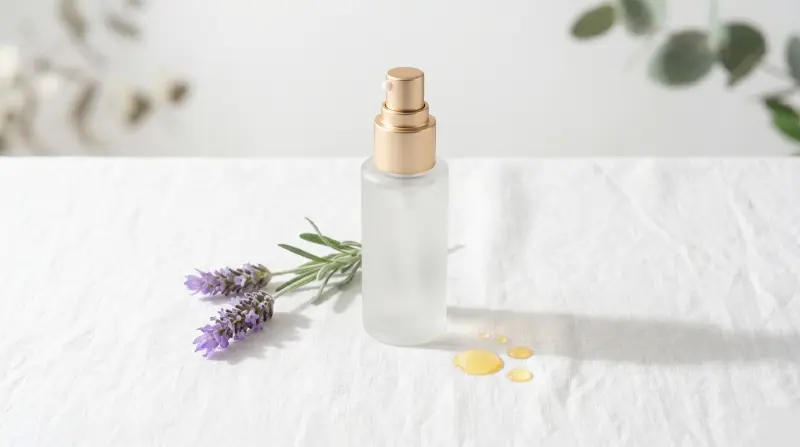
The science of skin aging is evolving rapidly — and for women navigating the skin changes that come with menopause and beyond, evidence-based skincare represents a fundamentally different approach: working with your skin's biology rather than against it.
Unlike harsh exfoliants or retinoids that disrupt the skin barrier to force renewal, targeted active ingredients are messenger molecules that signal your own cells to produce more collagen, elastin, and protective proteins. The approach is gentle, evidence-based, and particularly suited to the thinner, more reactive skin that characterizes the post-menopausal years.
The Clinical Moisturizer Dermatologists Prescribe Most
Urea is arguably the most underutilized moisturizing ingredient in mainstream skincare — despite being the most extensively studied and clinically validated humectant available. A natural component of the skin's own Natural Moisturizing Factor (NMF), urea constitutes approximately 7% of the water-holding compounds within corneocytes. As NMF production declines with age, topical urea supplementation directly replaces what the skin can no longer produce in sufficient quantities. Yet because urea lacks the marketing appeal of hyaluronic acid or the luxury associations of ceramides, it remains a dermatological insider's favorite rather than a consumer bestseller.[1]
Urea functions through multiple mechanisms at different concentrations: at 2-5% (most common in face creams), urea acts as a potent humectant — drawing water into the stratum corneum while improving skin flexibility. At 10%, urea adds mild keratolytic activity — gently loosening dead cell buildup that creates the rough, flaky texture characteristic of dry aging skin. At 20-40% (prescription strength), urea becomes a powerful exfoliant used for severe dryness, calluses, and keratosis. For aging facial skin, the 5-10% range provides optimal hydration with gentle texture improvement.
Clinical research confirms that clinical evidence for urea on aging dry skin is extensive. A randomized trial found that 5% urea cream improved skin hydration by 43% over 4 weeks — outperforming glycerin (29%) and hyaluronic acid (35%) at matched concentrations in the same study. The mechanism: urea's small molecular size allows deep penetration into the stratum corneum, where it binds water within individual corneocytes rather than just on the skin surface. This intracellular hydration produces a more sustained and 'from-within' moisturizing effect that surface humectants cannot match.
The practical integration of urea into an aging dry skin routine: choose a facial moisturizer containing 5% urea combined with ceramides and hyaluronic acid — this combination provides intracellular hydration (urea), intercellular barrier repair (ceramides), and surface plumping (HA) simultaneously. Apply morning and evening. For particularly rough or flaky areas (elbows, heels, shins — common sites of severe dryness in aging skin), use a 10% urea body cream. Note: urea above 10% can sting on facial skin, especially if the barrier is compromised — start at 5% and increase only if tolerated. The slight tingling that some women feel with initial urea application subsides within a week as the barrier strengthens.
Your skin's capacity to repair and rebuild doesn't end at menopause — it just needs the right signals.
— Dr. Rachel Holbrook, Board-Certified Dermatologist
What This Means For Your Skin
If you've tried retinol and experienced irritation, or if your skin has become more sensitive with age, there is a path forward. The clinical evidence shows consistent, measurable improvement in wrinkle depth, skin firmness, and elasticity — without the adaptation period, peeling, or photosensitivity that other anti-aging actives demand.
Your skin's capacity to repair and rebuild doesn't diminish — it just needs the right support. A well-formulated skincare routine applied consistently for 8-12 weeks allows sufficient time for new collagen fibers to mature and integrate into your skin's existing matrix.
The science is clear. The evidence is consistent. The results are measurable.
What happens next is up to you.