
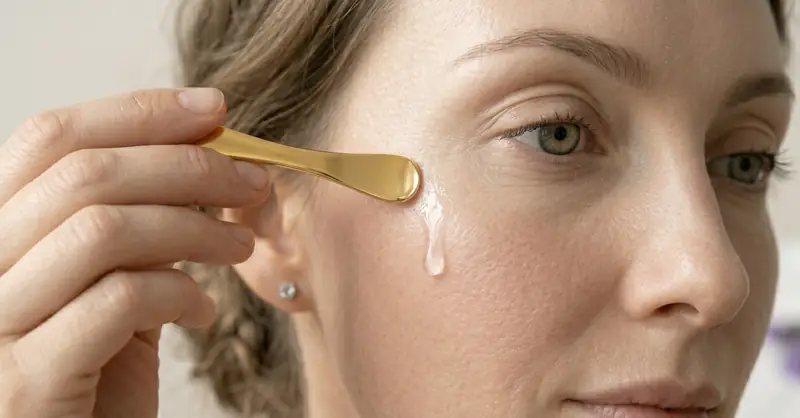
The science of skin aging is evolving rapidly — and for women navigating the skin changes that come with menopause and beyond, evidence-based skincare represents a fundamentally different approach: working with your skin's biology rather than against it.
Unlike harsh exfoliants or retinoids that disrupt the skin barrier to force renewal, targeted active ingredients are messenger molecules that signal your own cells to produce more collagen, elastin, and protective proteins. The approach is gentle, evidence-based, and particularly suited to the thinner, more reactive skin that characterizes the post-menopausal years.
Comparing Two Delivery Routes for Skin Hydration
The oral versus topical HA debate reflects a broader question in skincare: is it better to deliver ingredients from outside (topical) or inside (oral)? For hyaluronic acid specifically, the answer is that both routes provide measurable skin benefits through different mechanisms, and the combination of oral + topical produces superior results to either alone. Understanding the mechanism of each route explains why they're complementary rather than redundant.[1]
Topical HA: applied to the skin surface, HA works through direct physical hydration. High MW HA forms a moisture film on the stratum corneum. Low MW HA penetrates into the epidermis. The effects are localized to the application area, immediate (visible plumping within 30 minutes), and dependent on continued application. When you stop using topical HA, the hydration effect disappears within 24-48 hours as the applied HA is naturally shed with the stratum corneum. Topical HA's strength: immediate, targeted, high-concentration delivery to specific areas.
Clinical research confirms that oral HA supplements: consumed HA is broken down in the gut into fragments (oligosaccharides) that are absorbed into the bloodstream and distributed to tissues throughout the body, including the skin. A meta-analysis of clinical studies found that oral HA supplementation (120-240mg daily for 4-12 weeks) significantly improved skin hydration, elasticity, and wrinkle depth compared to placebo. The mechanism is both direct (HA fragments reach the dermis via blood supply, contributing to dermal hydration) and indirect (HA fragments stimulate fibroblasts to produce more endogenous HA). Oral HA's strength: systemic, sustained, and stimulates the skin's own HA production.
The complementary strategy for mature skin: oral HA (120-240mg daily) provides baseline dermal hydration from within — supporting the deeper moisture reservoir that topical products cannot reach directly. Topical HA serum provides concentrated surface and epidermal hydration — creating immediate plumping and supporting the barrier from outside. Together, they address hydration at every depth: dermis (oral), epidermis (topical low MW), and surface (topical high MW). For women over 50 with significant dermal HA depletion (the 50% reduction that occurs by age 60), the combination approach provides the most comprehensive HA supplementation available without injectable fillers.
Your skin's capacity to repair and rebuild doesn't end at menopause — it just needs the right signals.
— Dr. Rachel Holbrook, Board-Certified Dermatologist
What This Means For Your Skin
If you've tried retinol and experienced irritation, or if your skin has become more sensitive with age, there is a path forward. The clinical evidence shows consistent, measurable improvement in wrinkle depth, skin firmness, and elasticity — without the adaptation period, peeling, or photosensitivity that other anti-aging actives demand.
Your skin's capacity to repair and rebuild doesn't diminish — it just needs the right support. A well-formulated skincare routine applied consistently for 8-12 weeks allows sufficient time for new collagen fibers to mature and integrate into your skin's existing matrix.
The science is clear. The evidence is consistent. The results are measurable.
What happens next is up to you.