
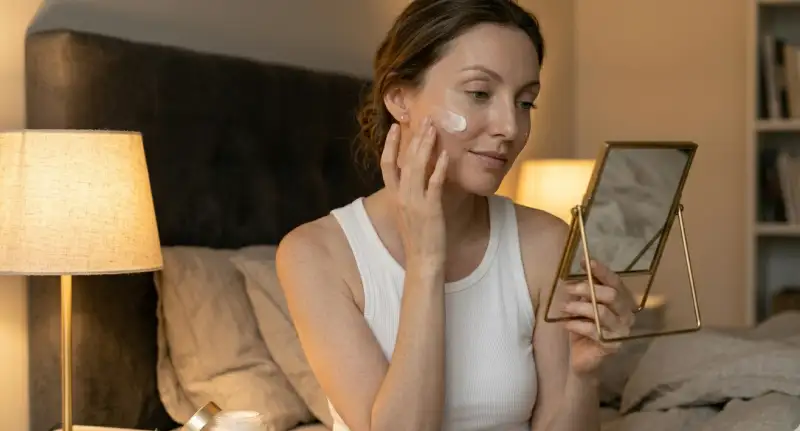
The science of skin aging is evolving rapidly — and for women navigating the skin changes that come with menopause and beyond, evidence-based skincare represents a fundamentally different approach: working with your skin's biology rather than against it.
Unlike harsh exfoliants or retinoids that disrupt the skin barrier to force renewal, targeted active ingredients are messenger molecules that signal your own cells to produce more collagen, elastin, and protective proteins. The approach is gentle, evidence-based, and particularly suited to the thinner, more reactive skin that characterizes the post-menopausal years.
The Active Compounds That Produce Real Overnight Results
The ingredient list of an anti-aging night cream determines whether it provides genuine overnight wrinkle treatment or merely surface hydration marketed as anti-aging. The distinction matters: a cream with the right active ingredients costs the same as one without them, but produces measurably different results over 3-12 months. The ingredients below are listed in order of evidence strength for overnight anti-aging efficacy — the first three are essential, the remaining ones provide complementary benefits.[1]
Essential ingredient 1: Retinol (0.3-0.5%) — the most evidence-based topical anti-aging ingredient in existence. Retinol activates retinoid acid receptors (RAR/RXR) on fibroblasts, directly upregulating the collagen genes COL1A1 and COL3A1. Dozens of clinical trials with skin biopsies have confirmed measurable increases in dermal collagen after 12+ weeks of consistent use. Night application is preferred because retinol photodegrades under UV and because nocturnal fibroblasts are more responsive. Essential ingredient 2: Peptides (Matrixyl 3000 at 3-8%) — signal peptides that stimulate fibroblast collagen production through TGF-β pathways. Peptides provide a collagen production pathway independent of retinol, making them additive rather than redundant. A night cream containing both retinol AND peptides activates two independent collagen pathways simultaneously.
Clinical research confirms that essential ingredient 3: Ceramides (ceramide NP, ceramide AP, ceramide EOP) — with cholesterol and fatty acids in a physiological ratio. Ceramides are not traditional anti-aging actives, but they are essential for overnight barrier repair. The skin barrier loses ceramides during the day (from UV, cleansing, environmental exposure), and overnight is when barrier restoration occurs. Without adequate ceramide delivery, the overnight TEWL dehydrates the dermis, concentrating MMPs and compromising the collagen assembly environment. Ceramides are the foundation that makes every other ingredient work better.
Complementary ingredients: (4) Niacinamide (3-5%) — stimulates endogenous ceramide synthesis, reduces inflammation, and provides mild collagen stimulation through a third pathway. Non-irritating and compatible with all other ingredients. (5) Hyaluronic acid (multi-weight) — humectant that maintains dermal hydration throughout the night, preventing the dehydration that makes morning wrinkles appear deeper. (6) Squalane — plant-derived lipid that mimics the skin's natural sebum, providing occlusive moisture retention that declines with age. (7) Vitamin E (tocopherol) — lipid-soluble antioxidant that protects overnight cell membranes from oxidative damage. Ingredients to AVOID in anti-aging night cream: fragrance (unnecessary sensitization risk during the repair window), alcohol denat (disrupts the barrier you're trying to repair), essential oils at high concentration (potential irritants that trigger inflammation during the repair phase). The ideal night cream formula: retinol + Matrixyl + ceramides + niacinamide + HA + squalane. This combination provides collagen stimulation, barrier repair, hydration, and occlusion — the four pillars of overnight anti-aging treatment.
Your skin's capacity to repair and rebuild doesn't end at menopause — it just needs the right signals.
— Dr. Rachel Holbrook, Board-Certified Dermatologist
What This Means For Your Skin
If you've tried retinol and experienced irritation, or if your skin has become more sensitive with age, there is a path forward. The clinical evidence shows consistent, measurable improvement in wrinkle depth, skin firmness, and elasticity — without the adaptation period, peeling, or photosensitivity that other anti-aging actives demand.
Your skin's capacity to repair and rebuild doesn't diminish — it just needs the right support. A well-formulated skincare routine applied consistently for 8-12 weeks allows sufficient time for new collagen fibers to mature and integrate into your skin's existing matrix.
The science is clear. The evidence is consistent. The results are measurable.
What happens next is up to you.