
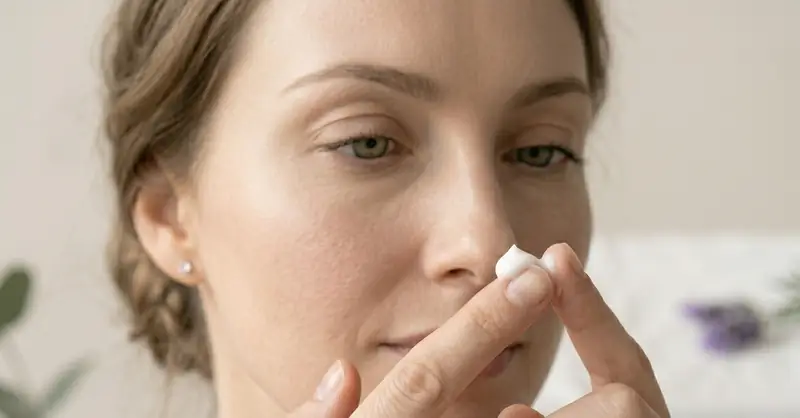
The science of skin aging is evolving rapidly — and for women navigating the skin changes that come with menopause and beyond, evidence-based skincare represents a fundamentally different approach: working with your skin's biology rather than against it.
Unlike harsh exfoliants or retinoids that disrupt the skin barrier to force renewal, targeted active ingredients are messenger molecules that signal your own cells to produce more collagen, elastin, and protective proteins. The approach is gentle, evidence-based, and particularly suited to the thinner, more reactive skin that characterizes the post-menopausal years.
How to Start the Most Proven Anti-Aging Ingredient Safely
Starting retinol after 40 is one of the highest-impact skincare decisions a woman can make — and one of the most commonly botched. The irony is that mature skin needs retinol the most (collagen production has declined 15-25% by this age) but tolerates it the least initially (the barrier is thinner, drier, and more reactive than it was at 25). This paradox explains why so many women over 40 try retinol, experience irritation, and abandon it within 2 weeks — never reaching the 8-12 week threshold where visible collagen rebuilding begins.[1]
The biology of why retinol works differently on 40+ skin: retinol binds to retinoid receptors on fibroblasts, directly stimulating production of collagen I and III — the structural proteins that have been declining since age 25. A landmark study in Archives of Dermatology demonstrated that 0.4% retinol applied for 24 weeks to naturally aged skin produced significant increases in procollagen I expression, reduced wrinkle depth, and improved overall skin appearance. At 40+, fibroblasts are still responsive to retinoid signaling — they simply need the external stimulus that declining natural retinoid metabolism no longer provides.
Clinical research confirms that the 40+ retinol introduction protocol differs from younger skin in three critical ways: (1) Lower starting concentration — begin at 0.25% rather than 0.5%. Mature skin's thinner barrier allows greater penetration, meaning lower concentrations deliver therapeutic doses to the dermis. (2) Buffered application — apply retinol over moisturizer (the 'sandwich method') for the first 4-6 weeks. This reduces irritation by 40% without significantly reducing efficacy, as retinol's small molecular weight allows it to penetrate through the moisturizer layer. (3) Slower frequency escalation — start every third night (not every other night) and increase by one night per two weeks. The 40+ barrier needs more recovery time between applications.
The realistic timeline for retinol results after 40: Weeks 1-3 — retinization period. Expect mild dryness, flaking, and sensitivity as cell turnover accelerates. This is normal and temporary — not a sign of damage. Weeks 4-6 — skin texture improves. Increased cell turnover produces smoother, more refined surface texture. The 'glow' that retinol users describe. Weeks 8-12 — fine line reduction begins. New collagen synthesis starts to fill shallow wrinkles from below. Months 4-6 — significant visible improvement. Friends notice without being able to identify what changed. Month 12+ — sustained structural improvement with ongoing use. The key insight: retinol is a marathon, not a sprint. The women who see the best results are those who introduced it slowly and never stopped.
Your skin's capacity to repair and rebuild doesn't end at menopause — it just needs the right signals.
— Dr. Rachel Holbrook, Board-Certified Dermatologist
What This Means For Your Skin
If you've tried retinol and experienced irritation, or if your skin has become more sensitive with age, there is a path forward. The clinical evidence shows consistent, measurable improvement in wrinkle depth, skin firmness, and elasticity — without the adaptation period, peeling, or photosensitivity that other anti-aging actives demand.
Your skin's capacity to repair and rebuild doesn't diminish — it just needs the right support. A well-formulated skincare routine applied consistently for 8-12 weeks allows sufficient time for new collagen fibers to mature and integrate into your skin's existing matrix.
The science is clear. The evidence is consistent. The results are measurable.
What happens next is up to you.