
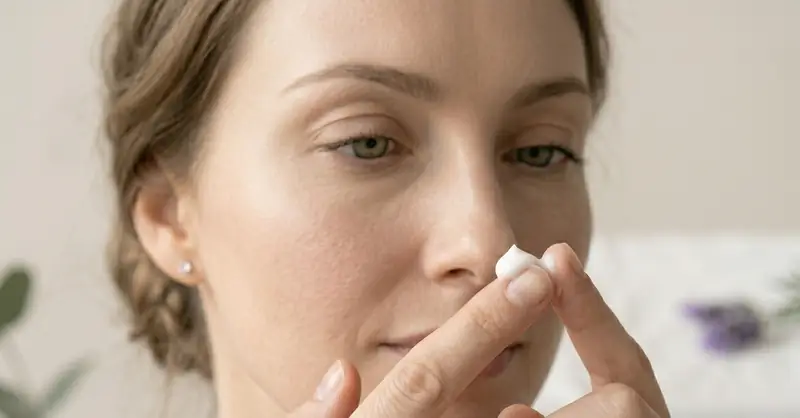
The science of skin aging is evolving rapidly — and for women navigating the skin changes that come with menopause and beyond, evidence-based skincare represents a fundamentally different approach: working with your skin's biology rather than against it.
Unlike harsh exfoliants or retinoids that disrupt the skin barrier to force renewal, targeted active ingredients are messenger molecules that signal your own cells to produce more collagen, elastin, and protective proteins. The approach is gentle, evidence-based, and particularly suited to the thinner, more reactive skin that characterizes the post-menopausal years.
Why Starting Low Is the Fastest Path to Results
Retinol concentration is the single most important variable in determining whether your retinol experience is productive or destructive — yet it's the factor most beginners get wrong. The instinct is to start with the highest concentration available, reasoning that stronger must mean faster results. The clinical reality is the opposite: starting too high triggers severe irritation that damages the barrier, forces weeks of recovery, and delays the collagen-building effects that retinol is supposed to deliver. Starting low and building gradually produces both faster results and better tolerance than the high-dose crash-and-burn approach.[1]
The retinol concentration spectrum and what each level delivers: 0.01-0.03% (cosmetic grade) — minimal retinoid activity. Found in 'contains retinol' marketing products. Unlikely to produce measurable anti-aging effects but also unlikely to cause irritation. 0.1-0.25% (introductory therapeutic) — the ideal starting range for beginners. Sufficient to activate retinoid receptors and initiate cell turnover acceleration, but mild enough for most skin types to tolerate without significant irritation. Clinical studies at 0.1% showed measurable improvement in photoaged skin. 0.3-0.5% (standard therapeutic) — the concentration range used in most clinical studies demonstrating wrinkle reduction. Appropriate after 6-8 weeks of tolerance building at lower concentrations. 0.5-1.0% (high therapeutic) — maximum OTC retinol strength. Produces the most dramatic results but requires established tolerance. Not recommended for beginners under any circumstances.
Clinical research confirms that for women over 40 starting retinol, the evidence-based concentration pathway: Weeks 1-6 — 0.25% retinol, every third night with sandwich method. This concentration activates retinoid receptors sufficiently to initiate collagen synthesis while remaining below the irritation threshold for most mature skin types. Weeks 7-12 — if well tolerated, increase to 0.3-0.5% retinol, every other night. The barrier has adapted to retinoid exposure, and fibroblasts are already responding. The increased concentration amplifies the collagen-stimulating signal. Month 4+ — nightly application at 0.5% if tolerated. Full therapeutic dose with established tolerance. Some women plateau at 0.3% and achieve excellent results without ever reaching 0.5% — concentration is less important than consistency.
The prescription alternative: tretinoin (retinoic acid) is approximately 10-20x more potent than OTC retinol because it doesn't require conversion in the skin. Tretinoin 0.025% is roughly equivalent to retinol 0.5% in terms of receptor activation. For women who've built tolerance to retinol 0.5% and want to accelerate results, a dermatologist can prescribe tretinoin 0.025% — the same mechanism of action at greater efficiency. However, tretinoin also carries greater irritation potential, and the introduction protocol must be equally cautious. For most women, OTC retinol at 0.3-0.5% provides meaningful, visible improvement without the need for prescription products. The key principle: consistent use at a tolerated concentration always outperforms inconsistent use at a higher concentration.
Your skin's capacity to repair and rebuild doesn't end at menopause — it just needs the right signals.
— Dr. Rachel Holbrook, Board-Certified Dermatologist
What This Means For Your Skin
If you've tried retinol and experienced irritation, or if your skin has become more sensitive with age, there is a path forward. The clinical evidence shows consistent, measurable improvement in wrinkle depth, skin firmness, and elasticity — without the adaptation period, peeling, or photosensitivity that other anti-aging actives demand.
Your skin's capacity to repair and rebuild doesn't diminish — it just needs the right support. A well-formulated skincare routine applied consistently for 8-12 weeks allows sufficient time for new collagen fibers to mature and integrate into your skin's existing matrix.
The science is clear. The evidence is consistent. The results are measurable.
What happens next is up to you.