
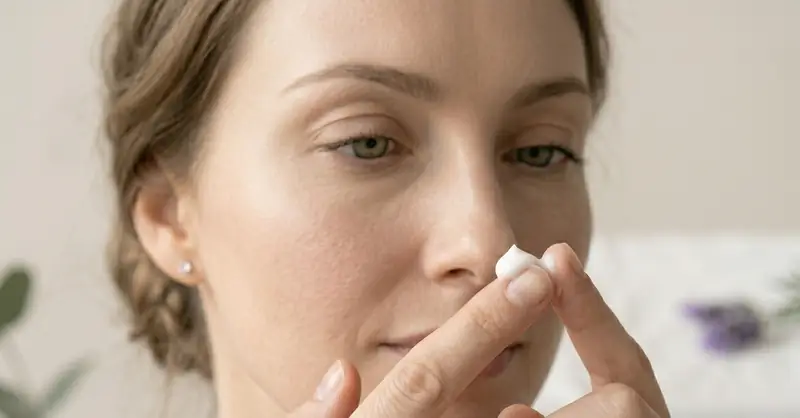
The science of skin aging is evolving rapidly — and for women navigating the skin changes that come with menopause and beyond, evidence-based skincare represents a fundamentally different approach: working with your skin's biology rather than against it.
Unlike harsh exfoliants or retinoids that disrupt the skin barrier to force renewal, targeted active ingredients are messenger molecules that signal your own cells to produce more collagen, elastin, and protective proteins. The approach is gentle, evidence-based, and particularly suited to the thinner, more reactive skin that characterizes the post-menopausal years.
What Changes at 4, 8, 12, and 24 Weeks of Consistent Use
The retinol results timeline is one of the most predictable sequences in skincare — yet most women don't know it, leading to premature abandonment just before visible improvement begins. Clinical studies using serial measurements (silicone replicas, skin biopsies, standardized photography) have mapped the structural changes retinol produces at each stage, providing a reliable roadmap for what to expect and when. Understanding this timeline transforms retinol use from anxious experimentation to informed investment.[1]
Weeks 1-4 — Surface renewal (visible but misleading): the most immediately noticeable change is skin texture. Accelerated cell turnover pushes new, plump keratinocytes to the surface faster, creating a smoother, more refined texture. Skin may appear 'brighter' or 'glowier' — this is the fresh surface cells reflecting light more evenly. Pores may appear temporarily smaller as the new cells are more tightly organized. IMPORTANT: this phase is surface-level only. No structural collagen changes have occurred yet. The improvement, while real, is comparable to a good exfoliation — it's the skin looking newer, not younger. The anti-aging benefits are still weeks away.
Clinical research confirms that weeks 4-12 — Structural rebuilding (the critical patience zone): beneath the surface, fibroblasts have been responding to sustained retinoid receptor activation by increasing collagen I and III production. New collagen fibers are assembling in the dermis beneath wrinkle creases. At week 8, clinical measurements begin detecting reduced wrinkle depth — typically 10-15% improvement as measured by profilometry. By week 12, the improvement reaches 20-30%, and most women can see the difference in photographs even if their daily mirror assessment is ambiguous. Fine lines show the most improvement; deep creases show modest change. This phase is where most abandonment occurs — the purge has passed, the surface glow has normalized, and the structural improvement is happening invisibly beneath the surface.
Weeks 12-24 — Cumulative transformation (visible to others): collagen accumulation becomes substantial enough to produce visible changes in facial contour and wrinkle depth. A 24-week clinical study using 0.4% retinol documented statistically significant improvements in wrinkle depth, skin roughness, overall photodamage score, and collagen density on biopsy. Subjectively, this is when friends ask 'what changed?' without being able to identify it. The skin appears firmer, smoother, more luminous — not in a product-applied way but in a structural, 'she looks younger' way. Month 6-12 and beyond: continued use maintains and extends improvements. Retinol is not a treatment with a finish line — it's a maintenance protocol. Women who use retinol consistently for 2+ years show cumulative improvement that far exceeds the 24-week study results. The before-and-after difference at 2 years is dramatic.
Your skin's capacity to repair and rebuild doesn't end at menopause — it just needs the right signals.
— Dr. Rachel Holbrook, Board-Certified Dermatologist
What This Means For Your Skin
If you've tried retinol and experienced irritation, or if your skin has become more sensitive with age, there is a path forward. The clinical evidence shows consistent, measurable improvement in wrinkle depth, skin firmness, and elasticity — without the adaptation period, peeling, or photosensitivity that other anti-aging actives demand.
Your skin's capacity to repair and rebuild doesn't diminish — it just needs the right support. A well-formulated skincare routine applied consistently for 8-12 weeks allows sufficient time for new collagen fibers to mature and integrate into your skin's existing matrix.
The science is clear. The evidence is consistent. The results are measurable.
What happens next is up to you.