
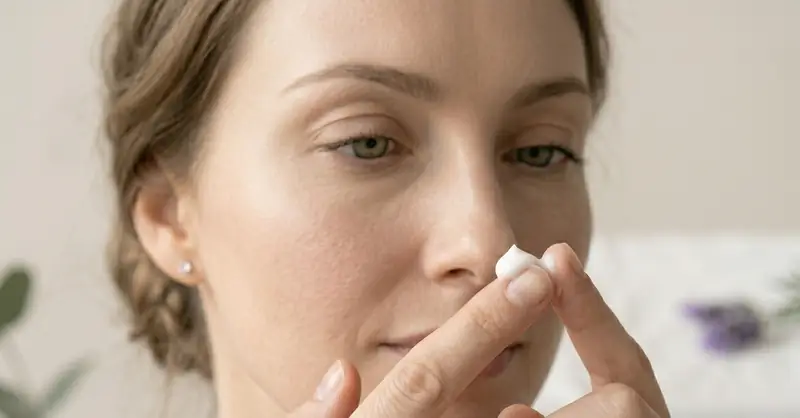
The science of skin aging is evolving rapidly — and for women navigating the skin changes that come with menopause and beyond, evidence-based skincare represents a fundamentally different approach: working with your skin's biology rather than against it.
Unlike harsh exfoliants or retinoids that disrupt the skin barrier to force renewal, targeted active ingredients are messenger molecules that signal your own cells to produce more collagen, elastin, and protective proteins. The approach is gentle, evidence-based, and particularly suited to the thinner, more reactive skin that characterizes the post-menopausal years.
Age Guidelines and Readiness Signals for Retinol Introduction
The question of when to start retinol has a clinical answer that might surprise both the 'start at 20' enthusiasts and the 'only when you see wrinkles' camp. The optimal window for retinol introduction is the late 20s to early 30s for prevention, and immediately for women over 35-40 who haven't started yet. The rationale is biological: collagen production begins declining at approximately age 25, at a rate of roughly 1% per year. By age 35, the cumulative 10% decline is approaching the threshold where visible changes begin. Starting retinol during this window maintains collagen production at near-youthful levels, preventing wrinkles rather than treating them after they've formed.[1]
The prerequisite routine that must be established BEFORE adding retinol: (1) A gentle cleanser — if you're still using a foaming or stripping cleanser, fix this first. Retinol on a barrier already compromised by harsh cleansing guarantees irritation. (2) A moisturizer containing ceramides — the barrier must be healthy enough to tolerate retinol's temporary disruption. If your skin is currently dry, sensitive, or reactive, spend 4-6 weeks strengthening the barrier with ceramide cream before introducing retinol. (3) Daily SPF 30+ — non-negotiable. Retinol increases UV sensitivity, and using retinol without sunscreen accelerates the photodamage it's supposed to prevent. If you're not wearing SPF daily, add that habit first.
Clinical research confirms that readiness signals that indicate your skin is prepared for retinol: your current routine of cleanser + moisturizer + SPF has been stable for at least 4 weeks with no irritation, your skin feels comfortable and not chronically dry or reactive, and you're committed to nightly application and morning SPF consistently. Contraindications for retinol introduction: active eczema or dermatitis (stabilize first), pregnancy or breastfeeding (retinoids are contraindicated), recent facial procedures like chemical peels or laser (wait 2-4 weeks for barrier recovery), or use of prescription acne medications like isotretinoin (consult your dermatologist about timing).
If you're over 40 and have never used retinol, the urgency is real but the approach must be measured. By 40, collagen has declined 15-25%, and the structural damage that creates wrinkles is well underway. Retinol can still stimulate new collagen production — fibroblasts remain responsive to retinoid signaling well into the 60s — but the deficit to overcome is larger. This means two things: (1) starting retinol at 40+ provides proportionally greater visible improvement than starting at 30 (because there's more room for improvement), and (2) the results take slightly longer to manifest because the collagen rebuilding must overcome a larger structural deficit. The practical implication: start now, follow the gradual introduction protocol, and commit to 6-12 months of consistent use. The women who wish they'd started retinol sooner are legion. The women who wish they hadn't started are essentially nonexistent.
Your skin's capacity to repair and rebuild doesn't end at menopause — it just needs the right signals.
— Dr. Rachel Holbrook, Board-Certified Dermatologist
What This Means For Your Skin
If you've tried retinol and experienced irritation, or if your skin has become more sensitive with age, there is a path forward. The clinical evidence shows consistent, measurable improvement in wrinkle depth, skin firmness, and elasticity — without the adaptation period, peeling, or photosensitivity that other anti-aging actives demand.
Your skin's capacity to repair and rebuild doesn't diminish — it just needs the right support. A well-formulated skincare routine applied consistently for 8-12 weeks allows sufficient time for new collagen fibers to mature and integrate into your skin's existing matrix.
The science is clear. The evidence is consistent. The results are measurable.
What happens next is up to you.