
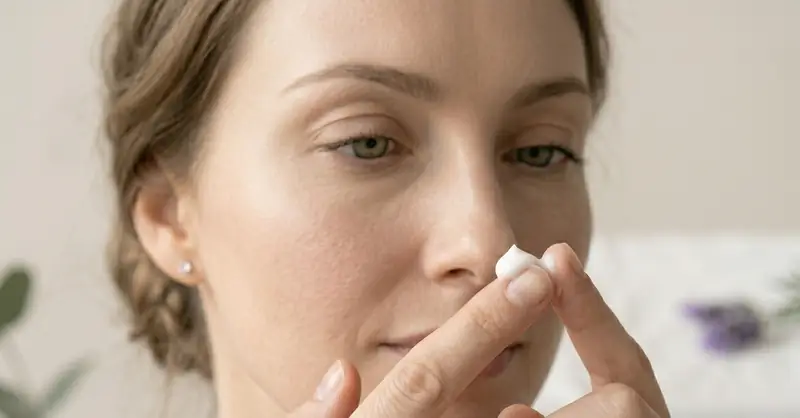
The science of skin aging is evolving rapidly — and for women navigating the skin changes that come with menopause and beyond, evidence-based skincare represents a fundamentally different approach: working with your skin's biology rather than against it.
Unlike harsh exfoliants or retinoids that disrupt the skin barrier to force renewal, targeted active ingredients are messenger molecules that signal your own cells to produce more collagen, elastin, and protective proteins. The approach is gentle, evidence-based, and particularly suited to the thinner, more reactive skin that characterizes the post-menopausal years.
Separating Normal Adaptation From Genuine Irritation
The 'retinol purge' is the most anxiety-inducing phase of retinol introduction — and the most commonly misinterpreted. The term actually describes two distinct phenomena that occur simultaneously during the first 2-6 weeks of retinol use: (1) Accelerated cell turnover pushing existing microcomedones (tiny, invisible clogged pores) to the surface faster than they would naturally emerge, temporarily creating visible breakouts from pre-existing congestion. (2) Retinization — the skin's adaptation to increased retinoid receptor activation, manifesting as dryness, flaking, and sensitivity as the stratum corneum adjusts to its new turnover rate.[1]
The timeline of a normal retinol purge follows a predictable pattern: Days 1-7 — minimal visible change. The retinol is being converted to retinoic acid within the skin and beginning to bind to receptors, but the effects haven't reached the surface yet. Some women feel a subtle tightness. Days 7-14 — the purge begins. Increased cell turnover pushes dead cells and microcomedones to the surface. Mild dryness, fine flaking, and occasionally small breakouts appear. This is the phase where most women panic. Days 14-28 — peak purge. The old skin is actively shedding as new, retinol-adapted cells replace it. Flaking may increase before it decreases. Breakouts from purged microcomedones peak and begin resolving. Days 28-42 — resolution. The new cell turnover rate stabilizes. Flaking subsides. Skin texture begins to improve noticeably. The 'retinol glow' emerges.
Clinical research confirms that the critical distinction between purge and damage: a purge improves over time — each week is slightly better than the last. Damage worsens — each week brings more redness, more sensitivity, more disruption. If your skin is progressively worsening after 3 weeks of retinol use, it's not a purge — it's irritant contact dermatitis from excessive exposure. The appropriate response is to reduce frequency (not stop entirely), ensure proper buffering (sandwich method), and rebuild the barrier with ceramide moisturizer before attempting to increase again. Stopping retinol entirely resets your tolerance, meaning you'll experience the purge again when you restart.
Managing the purge for mature skin specifically: the purge on 40+ skin tends to manifest more as dryness and flaking than as breakouts (hormonal acne drivers are reduced post-menopause). This dryness can temporarily make wrinkles appear deeper — a demoralizing effect that's entirely temporary. Combat this by: (1) applying extra ceramide moisturizer during the purge phase, (2) using a humidifier at night, (3) avoiding all other exfoliants (AHAs, BHAs, scrubs) — retinol provides sufficient exfoliation during the purge phase, and adding more creates barrier damage. The women who successfully navigate the purge describe it as '4 weeks of worse skin followed by the best skin of my life.' The temporary discomfort is an investment in structural improvement that compounds over months and years.
Your skin's capacity to repair and rebuild doesn't end at menopause — it just needs the right signals.
— Dr. Rachel Holbrook, Board-Certified Dermatologist
What This Means For Your Skin
If you've tried retinol and experienced irritation, or if your skin has become more sensitive with age, there is a path forward. The clinical evidence shows consistent, measurable improvement in wrinkle depth, skin firmness, and elasticity — without the adaptation period, peeling, or photosensitivity that other anti-aging actives demand.
Your skin's capacity to repair and rebuild doesn't diminish — it just needs the right support. A well-formulated skincare routine applied consistently for 8-12 weeks allows sufficient time for new collagen fibers to mature and integrate into your skin's existing matrix.
The science is clear. The evidence is consistent. The results are measurable.
What happens next is up to you.