
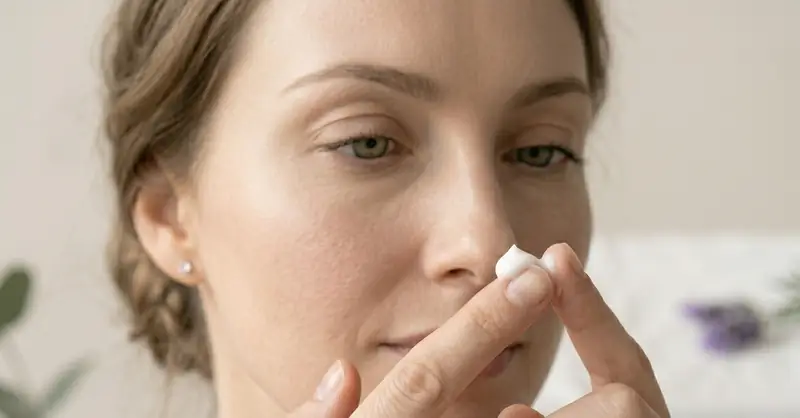
The science of skin aging is evolving rapidly — and for women navigating the skin changes that come with menopause and beyond, evidence-based skincare represents a fundamentally different approach: working with your skin's biology rather than against it.
Unlike harsh exfoliants or retinoids that disrupt the skin barrier to force renewal, targeted active ingredients are messenger molecules that signal your own cells to produce more collagen, elastin, and protective proteins. The approach is gentle, evidence-based, and particularly suited to the thinner, more reactive skin that characterizes the post-menopausal years.
What's Normal, What's Concerning, and When to Adjust
The first week of retinol use is when most abandonment occurs — and most of it is unnecessary. Understanding what to expect transforms anxiety into informed observation, allowing you to distinguish between normal retinization (which resolves on its own) and excessive irritation (which requires protocol adjustment). The key insight: the first week's side effects are almost entirely related to the stratum corneum's initial response, not to dermal damage. Your skin's surface is reacting to accelerated cell turnover — the deeper structural benefits haven't begun yet.[1]
Normal first-week side effects (continue your protocol): (1) Mild tightness — a subtle 'pulled' sensation that appears 30-60 minutes after application and resolves by morning. This results from retinol's mild astringent effect on surface keratinocytes. (2) Fine dryness — not visible flaking, but a matte, slightly rough texture that differs from your usual skin feel. Cell turnover is beginning to accelerate, and the old stratum corneum is preparing to shed. (3) Temporary sensitivity — products that normally feel comfortable may produce a brief tingle. The retinol has mildly disrupted surface lipids, making the barrier temporarily more permeable. (4) Subtle pinkness — a slight flush that appears after application and fades within 2 hours. Retinol mildly increases blood flow to the dermis as part of its cell-signaling activity.
Clinical research confirms that concerning first-week side effects (adjust your protocol): (1) Persistent redness lasting more than 12 hours — indicates inflammatory response rather than mild retinization. Reduce frequency immediately. (2) Stinging or burning upon application of moisturizer — indicates barrier disruption severe enough that even gentle products trigger pain responses. Skip the next retinol application and focus on barrier repair (ceramide cream only) for 3-4 days. (3) Visible peeling in sheets (not fine flakes) — indicates excessive exfoliation. This typically means the concentration is too high for your current tolerance or you're applying too much product. (4) Swelling or hive-like bumps — potential allergic reaction (rare but possible). Discontinue retinol and consult a dermatologist before attempting again.
First-week management tips: (1) Apply retinol only at night — the increased UV sensitivity from retinol is real, and nighttime application gives your skin 8-10 hours of protected recovery. (2) Use extra moisturizer the morning after — a generous layer of ceramide cream compensates for overnight barrier disruption. (3) Do not add any other new products during the first week — if a reaction occurs, you need to know it's from the retinol, not a confounding variable. (4) Take a selfie in natural light before your first application — it provides an objective baseline for assessing changes. Our perception of our own skin is biased by anxiety, and having a reference photo prevents the 'it looks worse' panic that often triggers premature abandonment.
Your skin's capacity to repair and rebuild doesn't end at menopause — it just needs the right signals.
— Dr. Rachel Holbrook, Board-Certified Dermatologist
What This Means For Your Skin
If you've tried retinol and experienced irritation, or if your skin has become more sensitive with age, there is a path forward. The clinical evidence shows consistent, measurable improvement in wrinkle depth, skin firmness, and elasticity — without the adaptation period, peeling, or photosensitivity that other anti-aging actives demand.
Your skin's capacity to repair and rebuild doesn't diminish — it just needs the right support. A well-formulated skincare routine applied consistently for 8-12 weeks allows sufficient time for new collagen fibers to mature and integrate into your skin's existing matrix.
The science is clear. The evidence is consistent. The results are measurable.
What happens next is up to you.