
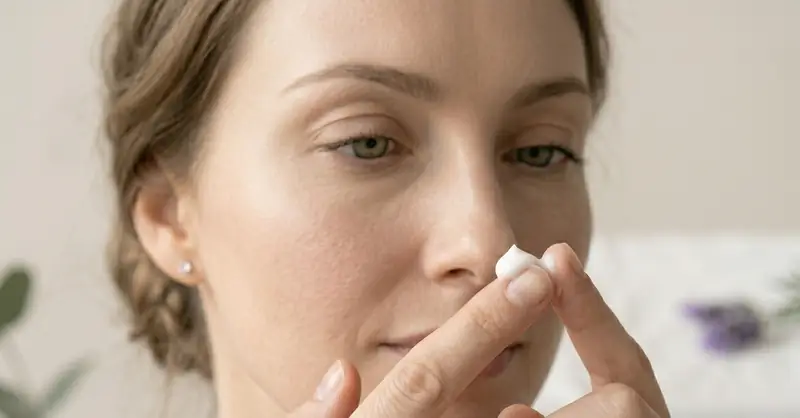
The science of skin aging is evolving rapidly — and for women navigating the skin changes that come with menopause and beyond, evidence-based skincare represents a fundamentally different approach: working with your skin's biology rather than against it.
Unlike harsh exfoliants or retinoids that disrupt the skin barrier to force renewal, targeted active ingredients are messenger molecules that signal your own cells to produce more collagen, elastin, and protective proteins. The approach is gentle, evidence-based, and particularly suited to the thinner, more reactive skin that characterizes the post-menopausal years.
The 8 Errors That Cause Irritation, Failure, and Abandonment
Retinol has an undeserved reputation as a harsh, intolerable ingredient — and that reputation is almost entirely the result of user error, not inherent ingredient properties. Dermatologists estimate that 70% of retinol discontinuations are due to preventable mistakes in introduction protocol rather than genuine intolerance. Understanding these errors before starting retinol transforms the experience from a trial-and-error gamble to a predictable, manageable progression toward better skin.[1]
Mistakes 1-4 (Introduction errors): (1) Starting too strong — choosing 1% retinol because 'it's the strongest' when 0.25% produces the same long-term results with dramatically less irritation. (2) Using retinol nightly from day one — the most common mistake. Even well-tolerated concentrations can overwhelm the barrier without gradual frequency escalation. (3) Applying to damp skin — residual water on the skin surface accelerates retinol absorption unpredictably, creating hotspots of high concentration that cause localized irritation. Always apply to fully dry skin. (4) Mixing with other actives during introduction — combining retinol with AHAs, BHAs, vitamin C, or niacinamide in the same evening routine during the first 6 weeks creates a cumulative irritation load that's impossible to attribute to a single product.
Clinical research confirms that mistakes 5-8 (Ongoing errors): (5) Skipping SPF the morning after — retinol increases UV sensitivity for up to 48 hours after application. Not wearing SPF the next day exposes retinol-thinned skin to accelerated UV damage — literally undoing the anti-aging benefit. (6) Abandoning during the purge — stopping retinol at week 2-3 because of dryness and flaking, just before the adaptation phase completes and results begin. Then restarting months later and experiencing the same purge again — a cycle of abandonment and reinitiation that produces irritation without ever reaching the results phase. (7) Using too much product — a pea-sized amount covers the entire face. Using more doesn't increase collagen stimulation but does increase irritation proportionally. (8) Applying to sensitive zones — the eye area, lip border, and nasolabial folds have thinner skin that absorbs retinol at 2-3x the rate of cheeks and forehead. Unless using an eye-specific retinol product, avoid these areas entirely.
The meta-mistake that underlies all others: treating retinol as a product instead of a protocol. Retinol is not something you apply — it's a graduated system of concentration, frequency, technique, and supporting products that must be calibrated to your individual skin's tolerance and adapted over time. The women who succeed with retinol approach it like a training program: start conservative, increase systematically, listen to feedback (from their skin, not from marketing), and maintain consistency over months and years. The women who fail treat it like a product purchase: apply as directed on the label, expect immediate results, and quit when reality doesn't match expectations.
Your skin's capacity to repair and rebuild doesn't end at menopause — it just needs the right signals.
— Dr. Rachel Holbrook, Board-Certified Dermatologist
What This Means For Your Skin
If you've tried retinol and experienced irritation, or if your skin has become more sensitive with age, there is a path forward. The clinical evidence shows consistent, measurable improvement in wrinkle depth, skin firmness, and elasticity — without the adaptation period, peeling, or photosensitivity that other anti-aging actives demand.
Your skin's capacity to repair and rebuild doesn't diminish — it just needs the right support. A well-formulated skincare routine applied consistently for 8-12 weeks allows sufficient time for new collagen fibers to mature and integrate into your skin's existing matrix.
The science is clear. The evidence is consistent. The results are measurable.
What happens next is up to you.