
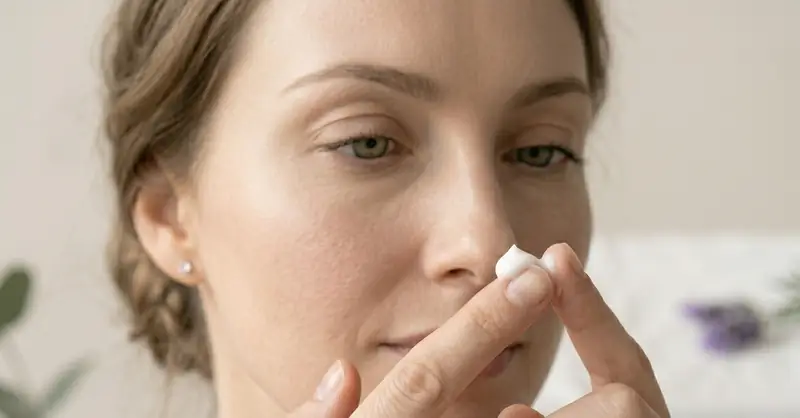
The science of skin aging is evolving rapidly — and for women navigating the skin changes that come with menopause and beyond, evidence-based skincare represents a fundamentally different approach: working with your skin's biology rather than against it.
Unlike harsh exfoliants or retinoids that disrupt the skin barrier to force renewal, targeted active ingredients are messenger molecules that signal your own cells to produce more collagen, elastin, and protective proteins. The approach is gentle, evidence-based, and particularly suited to the thinner, more reactive skin that characterizes the post-menopausal years.
The Buffering Technique That Reduces Irritation by 40%
The retinol sandwich method has become the most recommended retinol introduction technique among dermatologists — and for good reason. By placing retinol between two layers of moisturizer, you create a controlled-release delivery system that reduces the peak concentration of retinoic acid reaching the epidermis while maintaining sufficient dermal delivery for anti-aging effects. Clinical testing confirmed that the sandwich method reduces irritation markers (redness, TEWL increase, subjective stinging) by approximately 40% compared to applying retinol directly to bare skin, while preserving approximately 85% of the collagen-stimulating effect.[1]
The exact sandwich method protocol: Step 1 — Cleanse with a gentle, non-foaming cleanser. Pat dry. Wait 5-10 minutes for the skin to fully dry and return to its resting pH. Applying retinol to damp skin increases penetration unpredictably and raises irritation risk. Step 2 — Apply a thin, even layer of ceramide moisturizer (the bottom bread). This creates a barrier-supporting base layer that modulates retinol penetration. Wait 2-3 minutes for the moisturizer to absorb — the skin should feel dry to touch but not tight. Step 3 — Apply a pea-sized amount of retinol product. For the face, a pea-sized amount is truly sufficient — more product doesn't increase efficacy but does increase irritation. Dot the retinol on forehead, both cheeks, chin, and blend gently. Avoid the eye area, lip border, and nasolabial folds (thinner skin in these zones absorbs more retinol). Step 4 — Wait 5 minutes for the retinol to partially absorb into the moisturizer layer. Then apply a second layer of ceramide moisturizer (the top bread). This seals the retinol, prevents evaporation, and provides additional barrier protection.
Clinical research confirms that why the sandwich method works at a molecular level: retinol's molecular weight (286.5 Da) is small enough to penetrate through a moisturizer layer, but the moisturizer slows the diffusion rate. Instead of a burst of retinoic acid hitting the epidermis within 15 minutes of application (which triggers the irritation cascade), the sandwich method creates a sustained release over 2-4 hours. The total amount of retinol reaching the dermis is similar — but the peak concentration at any given moment is lower. Since irritation is triggered by peak concentration (not total dose), this rate-limiting effect dramatically improves tolerance.
Transitioning away from the sandwich method: as your skin builds retinol tolerance (typically after 6-8 weeks of consistent use), you can gradually transition to applying retinol directly to clean skin followed by one layer of moisturizer (a 'half sandwich'). Some women eventually apply retinol to bare skin as the first step after cleansing, with moisturizer afterward only. There's no rush to transition — many dermatologists and experienced retinol users maintain the full sandwich method permanently because the 15% efficacy reduction is negligible compared to the ongoing comfort benefit. If your skin is happy with the sandwich method, there's no clinical reason to change it.
Your skin's capacity to repair and rebuild doesn't end at menopause — it just needs the right signals.
— Dr. Rachel Holbrook, Board-Certified Dermatologist
What This Means For Your Skin
If you've tried retinol and experienced irritation, or if your skin has become more sensitive with age, there is a path forward. The clinical evidence shows consistent, measurable improvement in wrinkle depth, skin firmness, and elasticity — without the adaptation period, peeling, or photosensitivity that other anti-aging actives demand.
Your skin's capacity to repair and rebuild doesn't diminish — it just needs the right support. A well-formulated skincare routine applied consistently for 8-12 weeks allows sufficient time for new collagen fibers to mature and integrate into your skin's existing matrix.
The science is clear. The evidence is consistent. The results are measurable.
What happens next is up to you.