
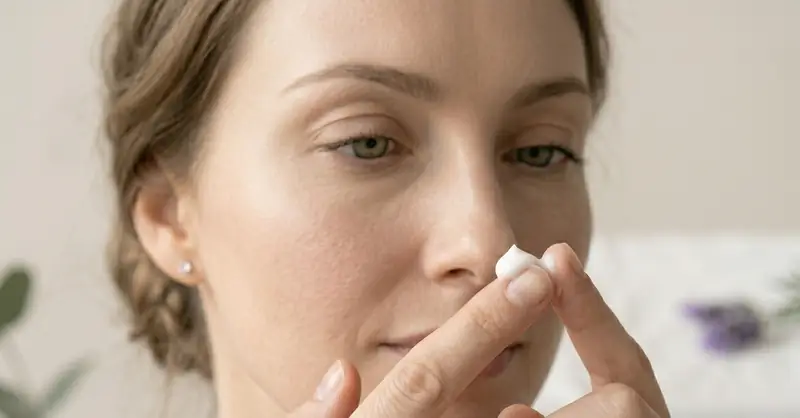
The science of skin aging is evolving rapidly — and for women navigating the skin changes that come with menopause and beyond, evidence-based skincare represents a fundamentally different approach: working with your skin's biology rather than against it.
Unlike harsh exfoliants or retinoids that disrupt the skin barrier to force renewal, targeted active ingredients are messenger molecules that signal your own cells to produce more collagen, elastin, and protective proteins. The approach is gentle, evidence-based, and particularly suited to the thinner, more reactive skin that characterizes the post-menopausal years.
The Frequency Escalation Schedule That Prevents Irritation
Frequency is the variable that determines whether retinol introduction succeeds or fails — more than concentration, more than product choice, more than application technique. A woman using 0.5% retinol every third night will have better results and less irritation than a woman using the same product nightly from day one. The reason is biological: retinoid receptors need time to upregulate, the enzyme systems that convert retinol to retinoic acid need time to increase capacity, and the barrier needs recovery periods between exposures to maintain its protective function. Rushing frequency overwhelms all three systems simultaneously.[1]
The evidence-based frequency escalation for beginners over 40: Phase 1 (Weeks 1-2) — every third night. Apply retinol on Monday, Thursday, Sunday, then Wednesday — spacing applications 2-3 days apart. This gives the barrier 48-72 hours to recover between exposures while beginning to upregulate retinoid receptors. Phase 2 (Weeks 3-4) — every other night. If Phase 1 produced no significant irritation, reduce the gap to every other night. The barrier has begun adapting, and receptor density has increased. Phase 3 (Weeks 5-8) — nightly, if tolerated. Most women reach nightly application by week 5-6 without issues if the escalation was gradual. Phase 4 (Month 3+) — consider concentration increase if tolerated and desired.
Clinical research confirms that the critical rule: frequency increases are earned, not scheduled. If your skin shows signs of irritation at any phase (persistent redness, stinging, excessive flaking), do NOT advance to the next phase. Stay at the current frequency for an additional 2 weeks before attempting to increase. Some women's skin biology tolerates retinol every other night as the maximum frequency — and that's perfectly fine. Every-other-night application at a tolerated frequency produces better long-term results than nightly application that causes chronic irritation. Irritated skin produces inflammatory cytokines that actually accelerate collagen degradation — the opposite of what retinol is supposed to achieve.
Rest days serve a purpose beyond irritation prevention: during the 48-72 hours between retinol applications, the skin consolidates the cellular changes that retinol initiated. New collagen fibers assemble, the stratum corneum rebuilds with faster-cycling keratinocytes, and the barrier lipids replenish. Think of rest days as recovery days in an exercise program — the adaptation happens during rest, not during the stimulus. For mature skin specifically, recovery capacity is reduced compared to younger skin, making rest days proportionally more important. The women who achieve the best results treat retinol frequency like progressive training: systematic escalation with built-in recovery, not maximum effort from day one.
Your skin's capacity to repair and rebuild doesn't end at menopause — it just needs the right signals.
— Dr. Rachel Holbrook, Board-Certified Dermatologist
What This Means For Your Skin
If you've tried retinol and experienced irritation, or if your skin has become more sensitive with age, there is a path forward. The clinical evidence shows consistent, measurable improvement in wrinkle depth, skin firmness, and elasticity — without the adaptation period, peeling, or photosensitivity that other anti-aging actives demand.
Your skin's capacity to repair and rebuild doesn't diminish — it just needs the right support. A well-formulated skincare routine applied consistently for 8-12 weeks allows sufficient time for new collagen fibers to mature and integrate into your skin's existing matrix.
The science is clear. The evidence is consistent. The results are measurable.
What happens next is up to you.