
The science of skin aging is evolving rapidly — and for women navigating the skin changes that come with menopause and beyond, evidence-based skincare represents a fundamentally different approach: working with your skin's biology rather than against it.
Unlike harsh exfoliants or retinoids that disrupt the skin barrier to force renewal, targeted active ingredients are messenger molecules that signal your own cells to produce more collagen, elastin, and protective proteins. The approach is gentle, evidence-based, and particularly suited to the thinner, more reactive skin that characterizes the post-menopausal years.
Emergency Recovery When Your Barrier Is Broken
A damaged skin barrier is more than uncomfortable — it's an aging accelerator. When the stratum corneum's ceramide-cholesterol-fatty acid matrix is disrupted (from over-exfoliation, harsh products, environmental stress, or menopausal depletion), a cascade of harmful events follows: transepidermal water loss increases 40-100%, inflammatory cytokines are released as an immune response to barrier breach, and those cytokines activate metalloproteinase enzymes that degrade dermal collagen. In other words, a broken barrier doesn't just cause dryness and stinging — it actively speeds up wrinkle formation until the barrier is restored.[1]
Signs of a damaged barrier are distinct from normal dryness: stinging or burning when applying products that previously caused no reaction, persistent redness that doesn't resolve, skin feeling tight and dry despite heavy moisturizer application, increased sensitivity to temperature changes and wind, and visible rough patches or flaking that moisturizer doesn't resolve. If you experience three or more of these symptoms simultaneously, barrier damage — not product inadequacy — is the likely cause. The solution is not stronger products but barrier-focused recovery.
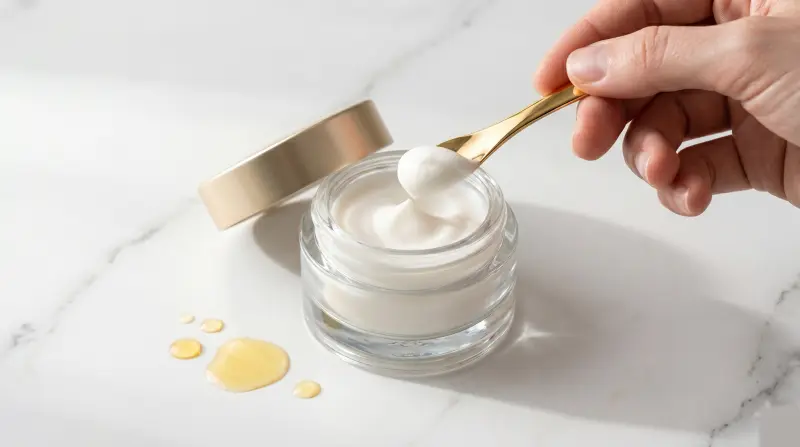
Clinical research confirms that the ceramide barrier repair protocol: (1) Immediately stop all active ingredients — retinol, vitamin C, AHAs, BHAs, and any product containing fragrance or alcohol. Active ingredients penetrate damaged barrier more aggressively, causing further irritation. Continue only gentle cleanser, ceramide repair cream, and mineral SPF. (2) Apply ceramide cream containing the physiological lipid ratio (ceramides + cholesterol + fatty acids) morning and evening — generously, without rubbing. Pat onto skin with flat palms. (3) Consider adding a thin layer of plain petrolatum over the ceramide cream at night — this 'slug' creates complete occlusion that accelerates barrier recovery by 30%.
The recovery timeline for barrier damage depends on severity. Mild barrier compromise (stinging with some products, mild dryness) typically resolves in 1-2 weeks of ceramide-focused care. Moderate damage (persistent redness, multiple product sensitivities, flaking) requires 3-4 weeks. Severe damage (from aggressive peel, retinol overuse, or prolonged neglect) may require 6-8 weeks. Do not reintroduce active ingredients until ALL symptoms of barrier damage have resolved for a full week. Then reintroduce one active at a time, starting at the lowest frequency, with 2-week intervals between additions. The patience invested in proper barrier recovery pays compound returns — every anti-aging product works dramatically better on intact skin.
Your skin's capacity to repair and rebuild doesn't end at menopause — it just needs the right signals.
— Dr. Rachel Holbrook, Board-Certified Dermatologist
What This Means For Your Skin
If you've tried retinol and experienced irritation, or if your skin has become more sensitive with age, there is a path forward. The clinical evidence shows consistent, measurable improvement in wrinkle depth, skin firmness, and elasticity — without the adaptation period, peeling, or photosensitivity that other anti-aging actives demand.
Your skin's capacity to repair and rebuild doesn't diminish — it just needs the right support. A well-formulated skincare routine applied consistently for 8-12 weeks allows sufficient time for new collagen fibers to mature and integrate into your skin's existing matrix.
The science is clear. The evidence is consistent. The results are measurable.
What happens next is up to you.