
The science of skin aging is evolving rapidly — and for women navigating the skin changes that come with menopause and beyond, evidence-based skincare represents a fundamentally different approach: working with your skin's biology rather than against it.
Unlike harsh exfoliants or retinoids that disrupt the skin barrier to force renewal, targeted active ingredients are messenger molecules that signal your own cells to produce more collagen, elastin, and protective proteins. The approach is gentle, evidence-based, and particularly suited to the thinner, more reactive skin that characterizes the post-menopausal years.
The Recovery Protocol When You've Gone Too Far
Over-exfoliation is the most common self-inflicted barrier injury in skincare — and it's become epidemic among women over 50 who've been told that exfoliation is essential for anti-aging. The truth is more nuanced: while gentle exfoliation can benefit aging skin by removing dead cell buildup, aggressive or frequent exfoliation strips ceramides from the intercellular matrix faster than the skin can replace them. The result is a vicious cycle: stripped barrier → increased dryness → skin appears rougher → woman exfoliates more → barrier damage worsens.[1]
Signs of over-exfoliation are often mistaken for the skin conditions that prompted exfoliation in the first place: persistent tightness and dryness despite heavy moisturizer use, skin that stings when applying products that previously caused no reaction, redness that doesn't resolve within hours, shiny or 'glassy' appearance (the stratum corneum has been thinned beyond the point of normal light scattering), increased sensitivity to temperature and wind, and paradoxically worse texture despite more exfoliation. If you recognize three or more of these signs, stop all exfoliation immediately.
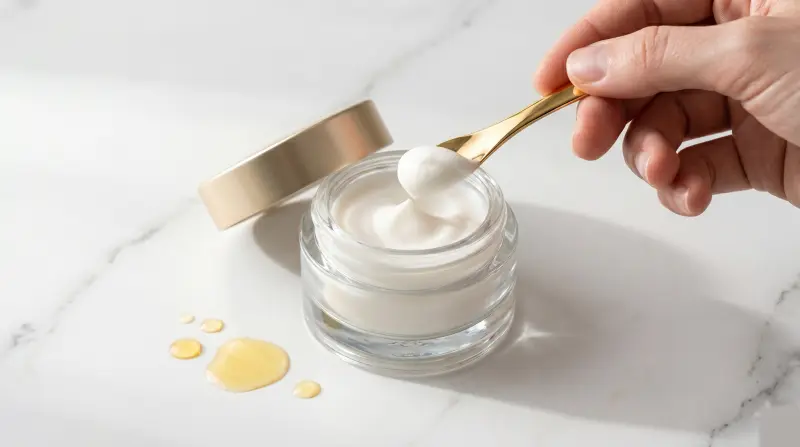
Clinical research confirms that the ceramide recovery protocol for over-exfoliated skin: Week 1-2 (emergency repair) — stop ALL actives including retinol, vitamin C, AHAs, BHAs, and any exfoliating product. Use only gentle cream cleanser (lukewarm water), ceramide repair cream (applied generously morning and evening), and mineral SPF. Optional: apply plain petrolatum over ceramide cream at night for enhanced occlusion. Week 3-4 (consolidation) — continue the minimal routine. Skin should feel progressively less tight, reactive, and dry. Do not rush to reintroduce actives. The barrier needs full structural recovery, not just symptom improvement.
Week 5+ (gradual reintroduction) — once skin is no longer reactive to the basic cleanser-ceramide-SPF routine for a full 7 days, reintroduce ONE active ingredient at the lowest frequency. Recommended first reintroduction: peptide serum (lowest irritation risk), used every other evening for 2 weeks. If tolerated, increase to nightly. Wait 2 more weeks before introducing a second active. Never reintroduce the exfoliant that caused the damage — or if exfoliation is desired, switch to the gentlest possible form (enzyme exfoliant or low-concentration PHA) used no more than once weekly. The ceramide cream remains a permanent part of the routine going forward — it's not a temporary fix but an ongoing barrier maintenance essential.
Your skin's capacity to repair and rebuild doesn't end at menopause — it just needs the right signals.
— Dr. Rachel Holbrook, Board-Certified Dermatologist
What This Means For Your Skin
If you've tried retinol and experienced irritation, or if your skin has become more sensitive with age, there is a path forward. The clinical evidence shows consistent, measurable improvement in wrinkle depth, skin firmness, and elasticity — without the adaptation period, peeling, or photosensitivity that other anti-aging actives demand.
Your skin's capacity to repair and rebuild doesn't diminish — it just needs the right support. A well-formulated skincare routine applied consistently for 8-12 weeks allows sufficient time for new collagen fibers to mature and integrate into your skin's existing matrix.
The science is clear. The evidence is consistent. The results are measurable.
What happens next is up to you.