
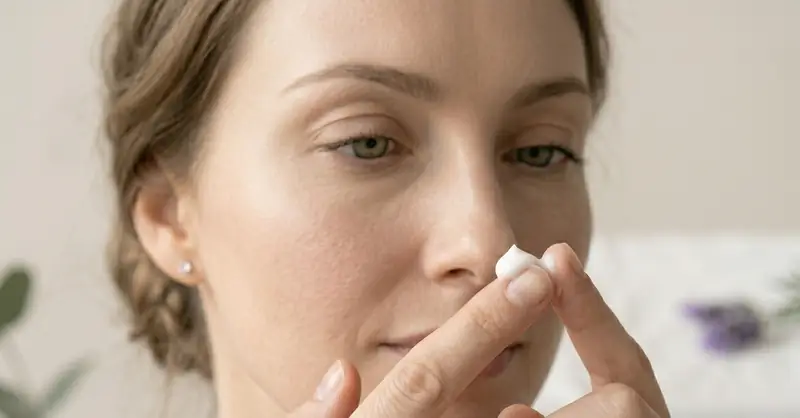
The science of skin aging is evolving rapidly — and for women navigating the skin changes that come with menopause and beyond, evidence-based skincare represents a fundamentally different approach: working with your skin's biology rather than against it.
Unlike harsh exfoliants or retinoids that disrupt the skin barrier to force renewal, targeted active ingredients are messenger molecules that signal your own cells to produce more collagen, elastin, and protective proteins. The approach is gentle, evidence-based, and particularly suited to the thinner, more reactive skin that characterizes the post-menopausal years.
One Ingredient That Addresses Both Concerns Simultaneously
Retinol's ability to simultaneously treat wrinkles and dark spots makes it uniquely valuable for women over 40, who typically experience both concerns concurrently. Most skincare ingredients address one or the other — hydroquinone lightens spots but doesn't build collagen; peptides stimulate collagen but don't affect pigmentation. Retinol operates through two independent mechanisms that happen to coexist in the same molecule: it stimulates dermal collagen synthesis (anti-wrinkle) while regulating melanocyte activity and accelerating melanin-containing cell turnover (anti-spot). One product, two problems solved.[1]
The anti-dark-spot mechanism: retinol reduces hyperpigmentation through three pathways. (1) It inhibits tyrosinase — the enzyme that catalyzes melanin production in melanocytes. Reduced tyrosinase activity means less melanin is produced to replace what's naturally shed. (2) It accelerates keratinocyte turnover — the cells that contain and display melanin on the skin surface are replaced faster, reducing the time each pigmented cell remains visible. (3) It disperses melanosomes — the melanin-containing packages within keratinocytes become smaller and more evenly distributed, reducing the appearance of concentrated spots. The combined effect: existing spots fade faster while new spot formation is suppressed.
Clinical research confirms that a clinical study comparing retinol versus hydroquinone 4% (the gold standard prescription skin lightener) for facial hyperpigmentation in women over 40 found that retinol produced equivalent lightening at 24 weeks compared to hydroquinone at 12 weeks — slower onset but comparable endpoint. Critically, retinol also improved wrinkle depth (which hydroquinone does not) and had fewer side effects (hydroquinone can cause paradoxical darkening with prolonged use). For women dealing with both wrinkles and dark spots — which is nearly all women over 40 with significant sun exposure history — retinol provides a single-product solution that hydroquinone cannot match.
The protocol for using retinol to target both wrinkles and dark spots: follow the standard retinol introduction (start at 0.25%, sandwich method, gradual frequency escalation). For dark spots specifically, apply extra retinol product directly to each spot after the overall facial application — this creates localized higher concentration at the spots that need it most. Combine with daily SPF 50 (critical: UV exposure triggers new melanin production that counteracts retinol's lightening effect — every day without SPF undoes days of retinol's anti-spot work). Add a vitamin C serum in the morning for complementary tyrosinase inhibition and UV protection. Expected timeline for dark spot improvement: initial fading visible by week 6-8, significant improvement by week 12-16, near-complete resolution of superficial spots by week 24. Deep, dermal pigmentation (melasma) improves but rarely resolves completely with topical retinol alone.
Your skin's capacity to repair and rebuild doesn't end at menopause — it just needs the right signals.
— Dr. Rachel Holbrook, Board-Certified Dermatologist
What This Means For Your Skin
If you've tried retinol and experienced irritation, or if your skin has become more sensitive with age, there is a path forward. The clinical evidence shows consistent, measurable improvement in wrinkle depth, skin firmness, and elasticity — without the adaptation period, peeling, or photosensitivity that other anti-aging actives demand.
Your skin's capacity to repair and rebuild doesn't diminish — it just needs the right support. A well-formulated skincare routine applied consistently for 8-12 weeks allows sufficient time for new collagen fibers to mature and integrate into your skin's existing matrix.
The science is clear. The evidence is consistent. The results are measurable.
What happens next is up to you.