
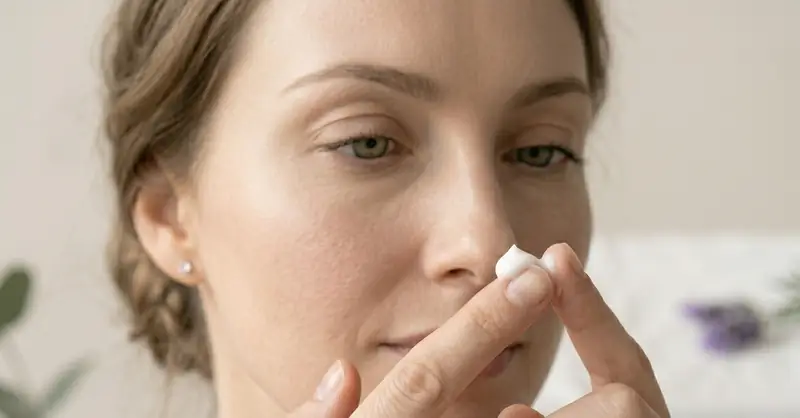
The science of skin aging is evolving rapidly — and for women navigating the skin changes that come with menopause and beyond, evidence-based skincare represents a fundamentally different approach: working with your skin's biology rather than against it.
Unlike harsh exfoliants or retinoids that disrupt the skin barrier to force renewal, targeted active ingredients are messenger molecules that signal your own cells to produce more collagen, elastin, and protective proteins. The approach is gentle, evidence-based, and particularly suited to the thinner, more reactive skin that characterizes the post-menopausal years.
Extending Anti-Aging Treatment Below the Jawline Safely
The neck and chest (décolleté) are the most neglected areas in anti-aging skincare — and the most likely to reveal a woman's true age when her face has been well maintained. The skin on the neck is 2-3x thinner than facial skin, has fewer oil glands (reducing natural occlusive protection), and has been exposed to cumulative UV damage often without the SPF protection that the face receives. The décolleté is even thinner, with very sparse sebaceous glands and decades of sun exposure from V-neck necklines. These areas show wrinkles, crepiness, and sun spots that can be 10-15 years 'older' than a well-treated face.[1]
Retinol can treat neck and chest wrinkles — but the approach must be significantly modified from facial protocols. The thinner skin absorbs retinol faster and more completely, meaning the same concentration that your face tolerates can cause severe irritation on the neck. A clinical study found that neck skin showed 2x the irritation response (redness, TEWL increase) compared to facial skin when the same retinol product was applied to both areas. The neck's thinner dermis and lower sebum production create a combination of higher penetration and reduced self-protection that demands a gentler approach.
Clinical research confirms that the neck and chest retinol protocol for beginners: use a retinol product one concentration level lower than what your face tolerates. If your face uses 0.5% retinol nightly, start your neck at 0.25% every third night. The sandwich method is mandatory for neck and chest application — apply ceramide cream before and after retinol. Extend the adaptation period to 8-12 weeks (vs. 4-6 weeks for the face) before increasing frequency. The décolleté requires even more caution: start at 0.1% retinol once per week, with thick moisturizer buffer. Some women find that retinaldehyde (one conversion step, more controlled release) is better tolerated on the neck than retinol.
Application technique for neck and chest: apply retinol in upward strokes from the chest toward the chin — never pull downward on neck skin, as the reduced collagen and elastin make it susceptible to mechanical stretching. Use a pea-sized amount for the entire neck (front and sides). For the chest, use a second pea-sized amount, focusing on the sun-exposed V-zone. Avoid the area directly over the thyroid gland (front center of the lower neck) — this skin is particularly thin. Morning after retinol application: apply SPF 50 to neck and chest with the same diligence as the face. The single most impactful change for neck and chest aging is consistent SPF application — many women protect their face daily but forget everything below the jawline.
Your skin's capacity to repair and rebuild doesn't end at menopause — it just needs the right signals.
— Dr. Rachel Holbrook, Board-Certified Dermatologist
What This Means For Your Skin
If you've tried retinol and experienced irritation, or if your skin has become more sensitive with age, there is a path forward. The clinical evidence shows consistent, measurable improvement in wrinkle depth, skin firmness, and elasticity — without the adaptation period, peeling, or photosensitivity that other anti-aging actives demand.
Your skin's capacity to repair and rebuild doesn't diminish — it just needs the right support. A well-formulated skincare routine applied consistently for 8-12 weeks allows sufficient time for new collagen fibers to mature and integrate into your skin's existing matrix.
The science is clear. The evidence is consistent. The results are measurable.
What happens next is up to you.