
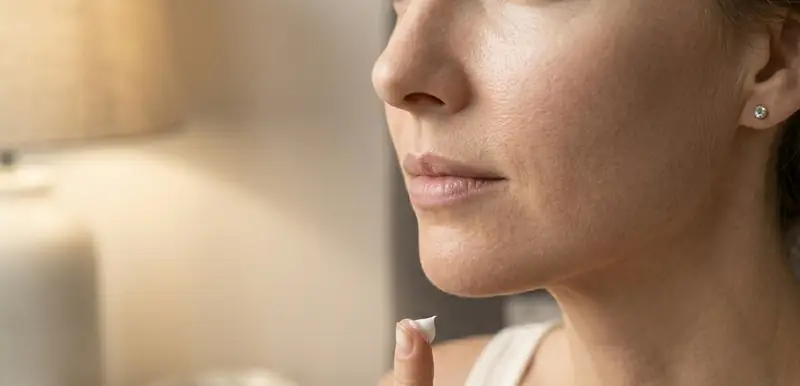
The science of skin aging is evolving rapidly — and for women navigating the skin changes that come with menopause and beyond, evidence-based skincare represents a fundamentally different approach: working with your skin's biology rather than against it.
Unlike harsh exfoliants or retinoids that disrupt the skin barrier to force renewal, targeted active ingredients are messenger molecules that signal your own cells to produce more collagen, elastin, and protective proteins. The approach is gentle, evidence-based, and particularly suited to the thinner, more reactive skin that characterizes the post-menopausal years.
The Evidence Behind the Ancient Tool for Modern Facial Lifting
Gua sha — the practice of scraping a flat stone tool across the skin with firm pressure — has transitioned from traditional Chinese medicine to mainstream beauty routines, with claims ranging from 'natural face lift' to 'sculpts the jawline.' The clinical evidence supports some of these claims: gua sha produces measurable improvement in blood circulation (up to 400% increase in treated areas), effective lymphatic drainage (reducing facial puffiness and congestion), and mechanical stimulation that can enhance topical product penetration. What it does NOT do is physically lift descended tissue, rebuild collagen on its own, or replace surgical intervention for significant facial sagging.[1]
The mechanisms through which gua sha improves facial sagging appearance: (1) Lymphatic drainage — the firm scraping strokes move stagnant lymphatic fluid away from the face toward the lymph nodes at the ears and neck. Facial fluid retention contributes significantly to the 'heavy' appearance of sagging — removing this excess fluid immediately sharpens facial contours, particularly along the jawline and under the eyes. The de-puffing effect is visible within 5 minutes and lasts 12-24 hours. (2) Increased blood circulation — the mechanical stimulation brings fresh blood to the treated area, improving skin color and providing the nutrients and oxygen that fibroblasts need for collagen production. (3) Product penetration enhancement — gua sha performed over serum increases active ingredient penetration by 30-40% compared to gentle application, amplifying the efficacy of peptides and other treatment products.
Clinical research confirms that the correct gua sha technique for sagging: (1) Apply generous peptide serum or facial oil as a slip medium — the stone must glide, not drag. (2) Hold the gua sha tool at a 15-30 degree angle to the skin (nearly flat). (3) Use firm, sweeping strokes ALWAYS moving upward and outward — from the center of the face toward the ears, from the jawline toward the ear, from the neck upward toward the chin. Never scrape downward on the face. (4) Press firmly enough to see the skin slightly blanch (turn white) under the tool — this indicates sufficient depth to reach the lymphatic and muscle layers. (5) Repeat each stroke 5-10 times before moving to the next area.
The realistic assessment: daily gua sha practice for 5-10 minutes, combined with peptide serum, produces visible improvement in facial contour and puffiness within 1-2 weeks. Over 2-3 months of daily practice, the cumulative effects of improved circulation, consistent lymphatic drainage, and enhanced product penetration contribute to measurably firmer, more defined facial contours. Gua sha is most effective when combined with a collagen-stimulating skincare routine (peptides + retinol) rather than used as a standalone treatment. The tool enhances the delivery and efficacy of the active ingredients — but without those active ingredients, gua sha provides only temporary mechanical benefits that reset within 24 hours.
Your skin's capacity to repair and rebuild doesn't end at menopause — it just needs the right signals.
— Dr. Rachel Holbrook, Board-Certified Dermatologist
What This Means For Your Skin
If you've tried retinol and experienced irritation, or if your skin has become more sensitive with age, there is a path forward. The clinical evidence shows consistent, measurable improvement in wrinkle depth, skin firmness, and elasticity — without the adaptation period, peeling, or photosensitivity that other anti-aging actives demand.
Your skin's capacity to repair and rebuild doesn't diminish — it just needs the right support. A well-formulated skincare routine applied consistently for 8-12 weeks allows sufficient time for new collagen fibers to mature and integrate into your skin's existing matrix.
The science is clear. The evidence is consistent. The results are measurable.
What happens next is up to you.