
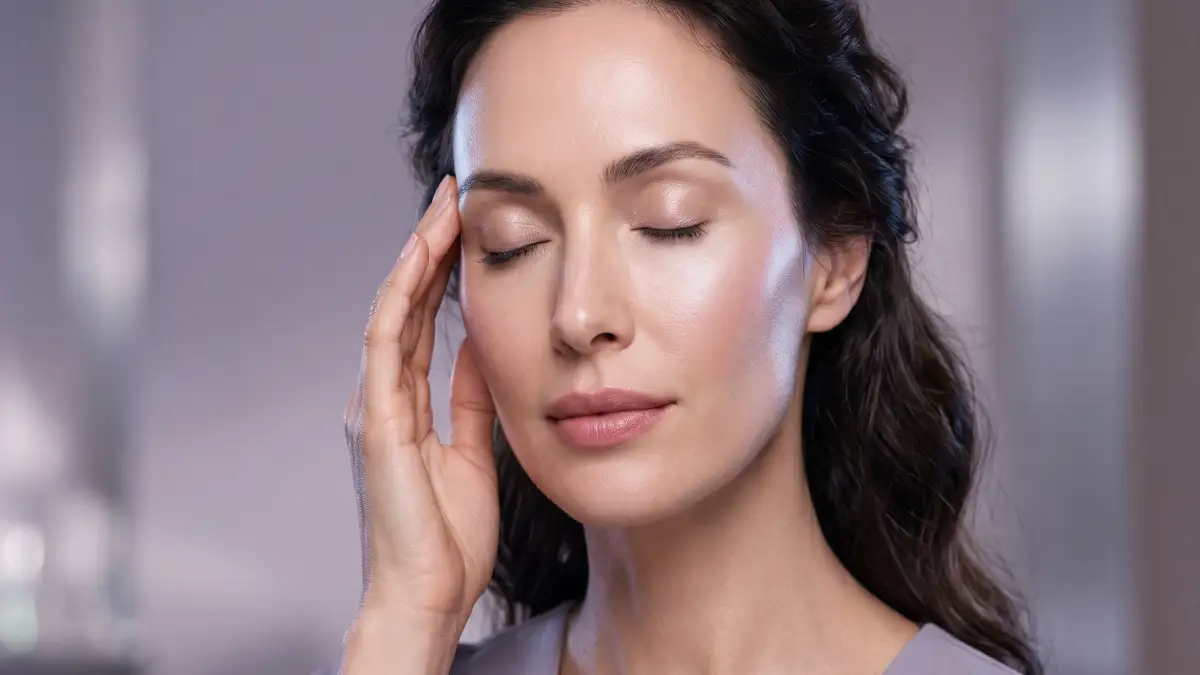
The science of skin aging is evolving rapidly — and for women navigating the skin changes that come with menopause and beyond, evidence-based skincare represents a fundamentally different approach: working with your skin's biology rather than against it.
Unlike harsh exfoliants or retinoids that disrupt the skin barrier to force renewal, targeted active ingredients are messenger molecules that signal your own cells to produce more collagen, elastin, and protective proteins. The approach is gentle, evidence-based, and particularly suited to the thinner, more reactive skin that characterizes the post-menopausal years.
Building a Neuropeptide and Retinoid Protocol Safely
Combining argireline with retinol represents one of the most scientifically rational approaches to comprehensive wrinkle treatment because these two ingredients address entirely different aspects of wrinkle formation. Argireline reduces the mechanical cause — muscle contraction intensity at the neuromuscular junction — while retinol (vitamin A) stimulates collagen synthesis, increases cell turnover, and rebuilds the dermal matrix that gives skin its structural resilience. Together, they target both why wrinkles form and what prevents them from recovering.[1]
The practical challenge of combining these ingredients lies in their different formulation requirements and potential for interaction. Retinol is most stable and effective at acidic pH (4.0-5.5), while argireline functions optimally at neutral pH (5.0-7.0). Applying both in the same formulation can compromise one or both ingredients. The dermatologically recommended approach is temporal separation: argireline serum in the morning (when its muscle-relaxing effect benefits daytime expressions) and retinol at night (when the cell turnover and repair stimulation aligns with the skin's natural nocturnal regeneration cycle).
Clinical research confirms that for women over 40 beginning this combination protocol, a staged introduction prevents overwhelming the skin. Weeks 1-2: introduce argireline serum morning and evening on clean skin. Weeks 3-4: add retinol at low concentration (0.25-0.3%) every third evening, moving argireline to morning only on retinol nights. Weeks 5-8: increase retinol frequency to every other evening as tolerated. This graduated approach allows the skin barrier to adapt to retinol while maintaining consistent argireline application for ongoing neuromuscular modulation.
Clinical observation indicates that the combination produces results superior to either ingredient alone, though no published head-to-head trial has directly compared the combination versus monotherapy. The rationale is mechanistically sound: argireline prevents the repetitive muscle contraction that deepens expression lines while retinol rebuilds the collagen and elastin that would otherwise absorb that mechanical stress. Women using both ingredients consistently report that existing expression lines soften faster than with retinol alone, and the improvement in dynamic wrinkles (visible during expression) is maintained even between retinol applications.
Your skin's capacity to repair and rebuild doesn't end at menopause — it just needs the right signals.
— Dr. Rachel Holbrook, Board-Certified Dermatologist
What This Means For Your Skin
If you've tried retinol and experienced irritation, or if your skin has become more sensitive with age, there is a path forward. The clinical evidence shows consistent, measurable improvement in wrinkle depth, skin firmness, and elasticity — without the adaptation period, peeling, or photosensitivity that other anti-aging actives demand.
Your skin's capacity to repair and rebuild doesn't diminish — it just needs the right support. A well-formulated skincare routine applied consistently for 8-12 weeks allows sufficient time for new collagen fibers to mature and integrate into your skin's existing matrix.
The science is clear. The evidence is consistent. The results are measurable.
What happens next is up to you.