
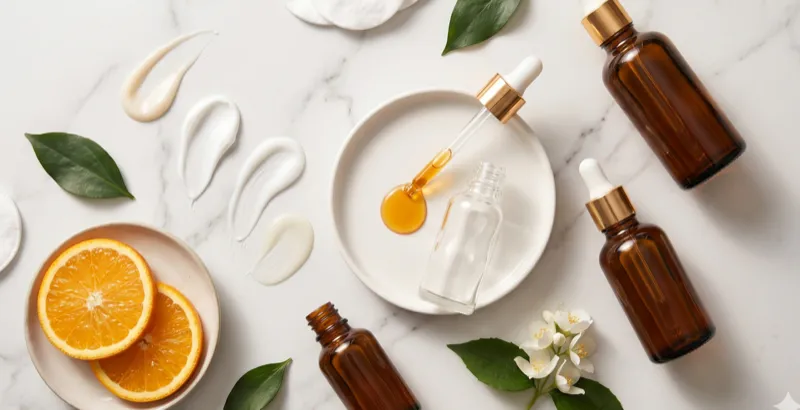
The science of skin aging is evolving rapidly — and for women navigating the skin changes that come with menopause and beyond, evidence-based skincare represents a fundamentally different approach: working with your skin's biology rather than against it.
Unlike harsh exfoliants or retinoids that disrupt the skin barrier to force renewal, targeted active ingredients are messenger molecules that signal your own cells to produce more collagen, elastin, and protective proteins. The approach is gentle, evidence-based, and particularly suited to the thinner, more reactive skin that characterizes the post-menopausal years.
The Underrated Multi-Functional Acid for Mature Skin Concerns
Azelaic acid is one of the most underutilized ingredients in anti-aging skincare, overshadowed by the marketing dominance of retinol, vitamin C, and hyaluronic acid despite having unique properties that make it particularly valuable for aging skin concerns. Azelaic acid is a naturally occurring dicarboxylic acid (found in wheat, rye, and barley) that addresses three common aging skin issues simultaneously: hyperpigmentation (through tyrosinase inhibition), chronic inflammation (through multiple anti-inflammatory pathways), and textural irregularity (through normalization of keratinocyte proliferation). Its tolerability profile is exceptional — it is pregnancy-safe, rosacea-safe, and causes minimal barrier disruption, making it accessible to skin types that cannot tolerate stronger actives.[1]
The three anti-aging mechanisms of azelaic acid: (1) Pigment correction — azelaic acid inhibits tyrosinase, the rate-limiting enzyme in melanin synthesis, with a unique selectivity: it preferentially inhibits abnormally hyperactive melanocytes while leaving normally functioning melanocytes largely unaffected. This selective inhibition makes azelaic acid particularly effective for treating the mottled, irregular hyperpigmentation of photoaged skin without causing the generalized lightening that concerns women with medium-to-dark skin tones. Clinical studies demonstrate significant improvement in solar lentigines (age spots) and post-inflammatory hyperpigmentation with 15-20% azelaic acid over 12-24 weeks. (2) Anti-inflammatory activity — azelaic acid suppresses the production of reactive oxygen species by neutrophils, inhibits thioredoxin reductase (reducing oxidative stress), and modulates the kallikrein-kinin inflammatory cascade. This multi-pathway anti-inflammatory action makes it the treatment of choice for rosacea-associated aging — a common pattern in fair-skinned women over 40 where aging changes are complicated by chronic redness and inflammatory papules.
Clinical research confirms that (3) Keratinocyte normalization — azelaic acid regulates keratinocyte proliferation and differentiation, promoting more uniform cell turnover. In aging skin, disordered keratinization produces rough, irregular texture and contributes to the dull, sallow appearance of photoaged skin. Azelaic acid's normalizing effect improves surface smoothness and radiance without the aggressive exfoliation (and consequent barrier compromise) of glycolic acid or the irritation potential of retinoids. This mechanism also provides modest anti-acne benefit, making azelaic acid useful for the adult hormonal acne that many women experience during perimenopause.
How to use azelaic acid in an anti-aging routine: (1) Concentration — 10% over-the-counter; 15-20% by prescription (available as Finacea or generic). OTC 10% products provide genuine benefit for pigmentation and inflammation but require longer treatment duration. Prescription-strength 15-20% provides faster results. (2) Frequency — twice daily (morning and evening). Azelaic acid does not cause photosensitivity and is safe for daytime use. (3) Application — apply to clean skin before moisturizer and sunscreen. Azelaic acid has a slightly gritty texture in some formulations; allow 1-2 minutes for absorption before layering. (4) Combination with retinol — azelaic acid and retinol can be used in the same routine without interaction concerns. Azelaic acid in the morning and retinol in the evening creates a complementary protocol: daytime anti-inflammatory and pigment correction (azelaic acid) plus nighttime collagen stimulation and MMP suppression (retinol). (5) Combination with vitamin C — both inhibit tyrosinase through different mechanisms. Using both provides additive pigment correction. Apply vitamin C first (lower pH), allow absorption, then apply azelaic acid. Expected results: visible improvement in skin tone evenness at 6-8 weeks, progressive pigmentation correction through 12-24 weeks, ongoing anti-inflammatory and texture benefits with continued use.
Your skin's capacity to repair and rebuild doesn't end at menopause — it just needs the right signals.
— Dr. Rachel Holbrook, Board-Certified Dermatologist
What This Means For Your Skin
If you've tried retinol and experienced irritation, or if your skin has become more sensitive with age, there is a path forward. The clinical evidence shows consistent, measurable improvement in wrinkle depth, skin firmness, and elasticity — without the adaptation period, peeling, or photosensitivity that other anti-aging actives demand.
Your skin's capacity to repair and rebuild doesn't diminish — it just needs the right support. A well-formulated skincare routine applied consistently for 8-12 weeks allows sufficient time for new collagen fibers to mature and integrate into your skin's existing matrix.
The science is clear. The evidence is consistent. The results are measurable.
What happens next is up to you.