
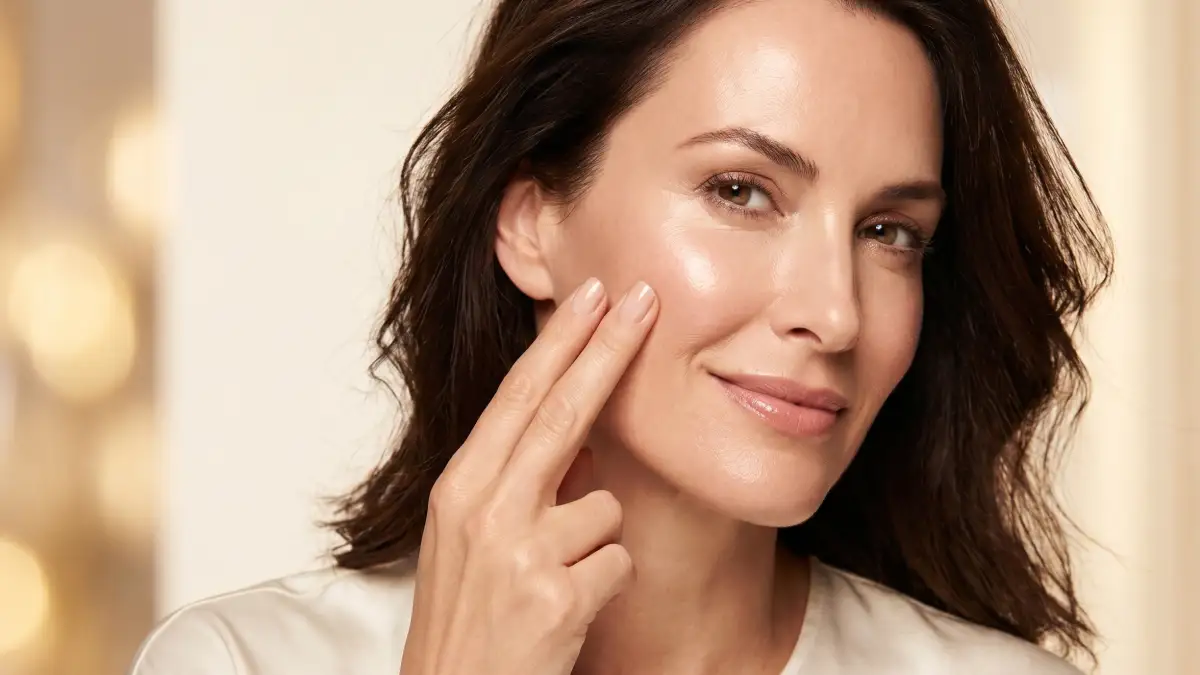
The science of skin aging is evolving rapidly — and for women navigating the skin changes that come with menopause and beyond, evidence-based skincare represents a fundamentally different approach: working with your skin's biology rather than against it.
Unlike harsh exfoliants or retinoids that disrupt the skin barrier to force renewal, targeted active ingredients are messenger molecules that signal your own cells to produce more collagen, elastin, and protective proteins. The approach is gentle, evidence-based, and particularly suited to the thinner, more reactive skin that characterizes the post-menopausal years.
How Sleep, Stress, Sun, and Sugar Impact Your Reserves
Lifestyle factors exert a profound and clinically measurable influence on collagen banking outcomes, often rivaling or exceeding the impact of topical interventions alone. Ultraviolet radiation remains the single most destructive environmental factor for dermal collagen, with Quan's research demonstrating that UV exposure directly downregulates TGF-beta type II receptor expression — the primary signaling pathway for collagen synthesis — creating a persistent deficit in the skin's ability to produce new collagen even after sun exposure ceases.[1]
Chronic psychological stress elevates cortisol levels, which directly suppresses procollagen gene expression and increases matrix metalloproteinase activity. The net effect is simultaneous reduction in collagen production and acceleration of collagen degradation — a dual assault on banking reserves. Sleep deprivation compounds this effect by reducing growth hormone secretion, which normally peaks during deep sleep and plays a critical role in tissue repair and collagen synthesis.
Clinical research confirms that dietary sugar and advanced glycation end products represent an underappreciated threat to collagen reserves. Glucose molecules spontaneously bind to collagen fibers through non-enzymatic glycation, forming permanent cross-links that render collagen rigid, fragmented, and resistant to normal turnover. Shuster's documentation of wide individual variation in collagen density among age-matched subjects suggests that cumulative glycation exposure may account for a significant portion of this variance.
Smoking accelerates collagen degradation through multiple pathways: direct generation of reactive oxygen species, reduction of cutaneous blood flow and oxygen delivery, and upregulation of MMP-1 expression. The evidence supports a hierarchy of lifestyle priorities for collagen banking — daily broad-spectrum photoprotection provides the greatest single protective benefit, followed by stress management, adequate sleep of seven to nine hours nightly, sugar reduction, and smoking cessation.
Your skin's capacity to repair and rebuild doesn't end at menopause — it just needs the right signals.
— Dr. Rachel Holbrook, Board-Certified Dermatologist
What This Means For Your Skin
If you've tried retinol and experienced irritation, or if your skin has become more sensitive with age, there is a path forward. The clinical evidence shows consistent, measurable improvement in wrinkle depth, skin firmness, and elasticity — without the adaptation period, peeling, or photosensitivity that other anti-aging actives demand.
Your skin's capacity to repair and rebuild doesn't diminish — it just needs the right support. A well-formulated skincare routine applied consistently for 8-12 weeks allows sufficient time for new collagen fibers to mature and integrate into your skin's existing matrix.
The science is clear. The evidence is consistent. The results are measurable.
What happens next is up to you.