
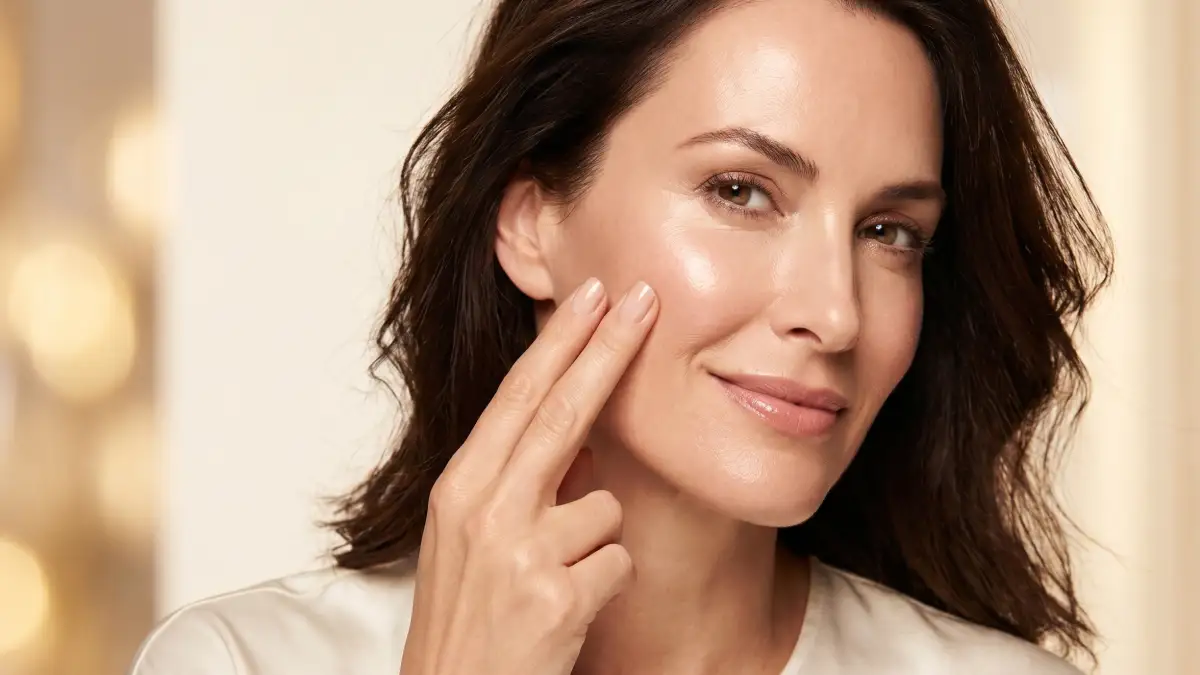
The science of skin aging is evolving rapidly — and for women navigating the skin changes that come with menopause and beyond, evidence-based skincare represents a fundamentally different approach: working with your skin's biology rather than against it.
Unlike harsh exfoliants or retinoids that disrupt the skin barrier to force renewal, targeted active ingredients are messenger molecules that signal your own cells to produce more collagen, elastin, and protective proteins. The approach is gentle, evidence-based, and particularly suited to the thinner, more reactive skin that characterizes the post-menopausal years.
Can Oral Collagen and Nutrition Support Skin Reserves?
Oral collagen supplementation has emerged as a complementary strategy for collagen banking, with a growing body of randomized controlled trials demonstrating measurable improvements in skin collagen density, hydration, and elasticity. Hydrolyzed collagen peptides — typically 2.5 to 10 grams daily — are absorbed as dipeptides and tripeptides that reach the dermis and stimulate fibroblast activity through both substrate provision and signaling mechanisms.[1]
The dietary foundation for collagen banking extends beyond collagen supplements to encompass the full spectrum of cofactors required for endogenous collagen synthesis. Vitamin C from dietary sources provides continuous cofactor availability for prolyl hydroxylase, while zinc and copper support the enzymatic cross-linking that gives collagen fibers their tensile strength. Glycine and proline — the dominant amino acids in collagen — must be available in sufficient quantities for the rate of synthesis achievable with topical stimulation.
Clinical research confirms that nutritional factors that accelerate collagen degradation are equally important to address. Advanced glycation end products formed from excess dietary sugar cross-link with collagen fibers, rendering them rigid and resistant to normal remodeling. Shuster's research on skin collagen density variations between individuals of the same age suggests that lifestyle and dietary factors account for a significant portion of the variance in collagen preservation across the aging population.
The evidence-based approach to nutritional collagen banking combines hydrolyzed collagen peptides with a diet rich in vitamin C, zinc, copper, and sulfur-containing amino acids while minimizing sugar, processed foods, and excessive alcohol — all of which activate inflammatory pathways that upregulate matrix metalloproteinase expression and accelerate collagen breakdown in the dermis.
Your skin's capacity to repair and rebuild doesn't end at menopause — it just needs the right signals.
— Dr. Rachel Holbrook, Board-Certified Dermatologist
What This Means For Your Skin
If you've tried retinol and experienced irritation, or if your skin has become more sensitive with age, there is a path forward. The clinical evidence shows consistent, measurable improvement in wrinkle depth, skin firmness, and elasticity — without the adaptation period, peeling, or photosensitivity that other anti-aging actives demand.
Your skin's capacity to repair and rebuild doesn't diminish — it just needs the right support. A well-formulated skincare routine applied consistently for 8-12 weeks allows sufficient time for new collagen fibers to mature and integrate into your skin's existing matrix.
The science is clear. The evidence is consistent. The results are measurable.
What happens next is up to you.