
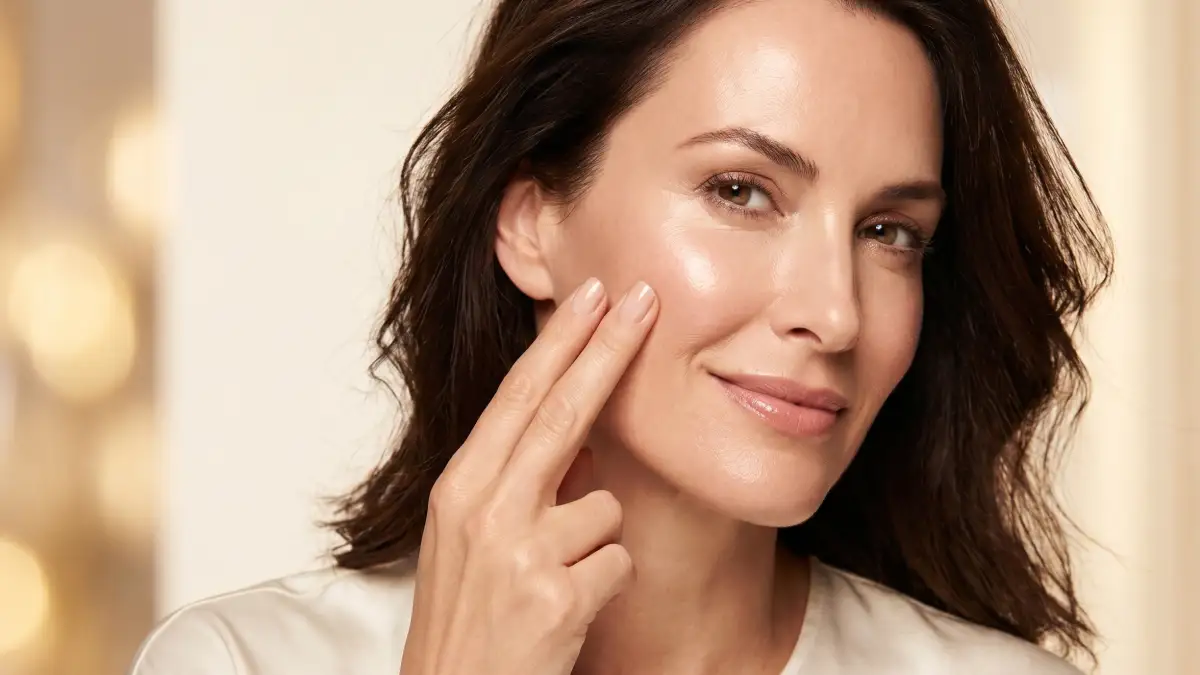
The science of skin aging is evolving rapidly — and for women navigating the skin changes that come with menopause and beyond, evidence-based skincare represents a fundamentally different approach: working with your skin's biology rather than against it.
Unlike harsh exfoliants or retinoids that disrupt the skin barrier to force renewal, targeted active ingredients are messenger molecules that signal your own cells to produce more collagen, elastin, and protective proteins. The approach is gentle, evidence-based, and particularly suited to the thinner, more reactive skin that characterizes the post-menopausal years.
Rebuilding Collagen Reserves Post-Hormonal Shift
Post-menopausal collagen banking is both possible and clinically meaningful, though the biological dynamics differ fundamentally from pre-menopausal strategies. Varani's research demonstrated that even chronologically aged fibroblasts retain the capacity for procollagen synthesis when appropriately stimulated — achieving up to 80% of youthful production rates with retinoid treatment. The key difference is that post-menopausal banking operates against a higher baseline rate of degradation.[1]
The dramatic estrogen decline of menopause triggers a cascade of dermal changes: reduced procollagen gene expression, increased matrix metalloproteinase activity, decreased hyaluronic acid synthesis, and compromised microvascular perfusion. Brincat documented that women lose approximately 2.1% of skin collagen per year in the early post-menopausal period — a rate that gradually stabilizes but never returns to pre-menopausal levels without intervention.
Clinical research confirms that effective post-menopausal protocols must address both the synthesis deficit and the accelerated degradation simultaneously. Retinoids remain effective at stimulating procollagen production regardless of menopausal status, but the dosing strategy shifts toward sustained daily use rather than periodic intensive treatments. Peptide-based growth factor mimetics provide additional stimulatory signaling through pathways that are less estrogen-dependent.
Clinical evidence supports a multi-modal approach combining topical retinoids, stabilized ascorbic acid for collagen cross-linking support, niacinamide for barrier function and anti-inflammatory effects, and rigorous photoprotection. Fisher's research showed that fragmented collagen in aged skin actively promotes further degradation through oxidative stress pathways — meaning that any successful post-menopausal strategy must break this cycle to achieve net collagen gains.
Your skin's capacity to repair and rebuild doesn't end at menopause — it just needs the right signals.
— Dr. Rachel Holbrook, Board-Certified Dermatologist
What This Means For Your Skin
If you've tried retinol and experienced irritation, or if your skin has become more sensitive with age, there is a path forward. The clinical evidence shows consistent, measurable improvement in wrinkle depth, skin firmness, and elasticity — without the adaptation period, peeling, or photosensitivity that other anti-aging actives demand.
Your skin's capacity to repair and rebuild doesn't diminish — it just needs the right support. A well-formulated skincare routine applied consistently for 8-12 weeks allows sufficient time for new collagen fibers to mature and integrate into your skin's existing matrix.
The science is clear. The evidence is consistent. The results are measurable.
What happens next is up to you.