
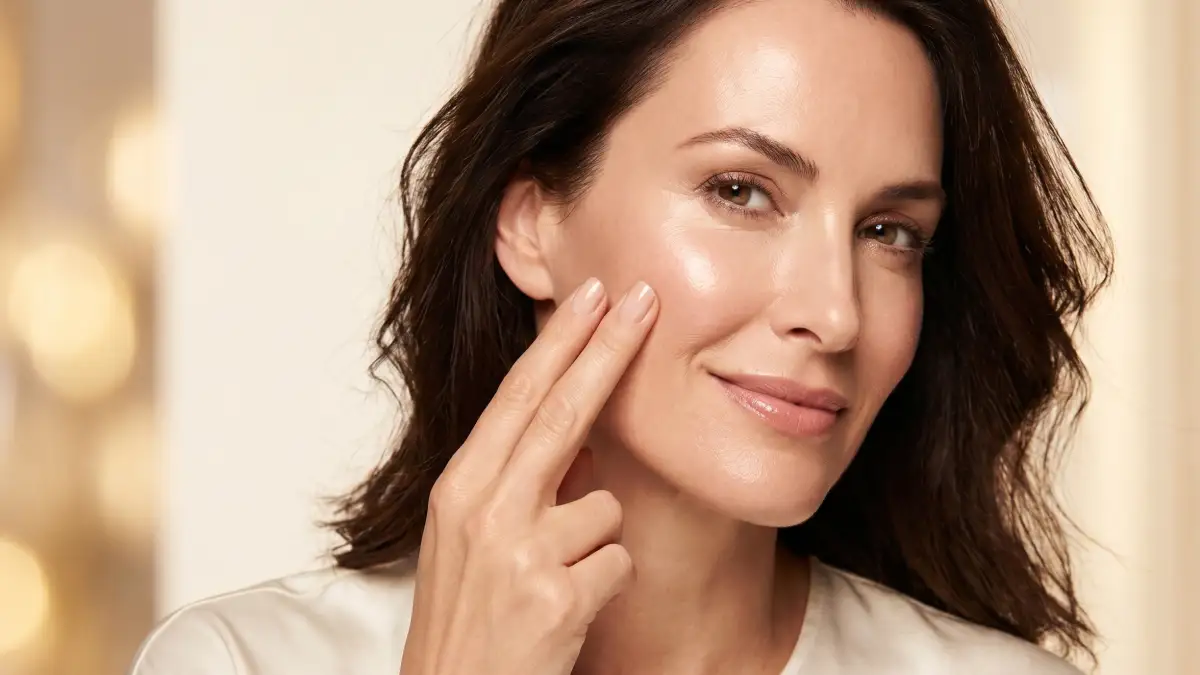
The science of skin aging is evolving rapidly — and for women navigating the skin changes that come with menopause and beyond, evidence-based skincare represents a fundamentally different approach: working with your skin's biology rather than against it.
Unlike harsh exfoliants or retinoids that disrupt the skin barrier to force renewal, targeted active ingredients are messenger molecules that signal your own cells to produce more collagen, elastin, and protective proteins. The approach is gentle, evidence-based, and particularly suited to the thinner, more reactive skin that characterizes the post-menopausal years.
Realistic Expectations and Milestones by Month
Collagen banking results follow a well-characterized timeline that requires patience and consistency, with the earliest biochemical changes occurring weeks before visible improvements manifest. Within the first four weeks of a retinoid-based collagen banking protocol, histological studies detect increased procollagen mRNA expression and early accumulation of procollagen type I precursors in the papillary dermis — changes that are measurable by biopsy but not yet visible to the eye.[1]
Visible improvements typically emerge between weeks 8 and 12 as newly synthesized collagen fibers integrate into the dermal matrix in sufficient quantity to affect skin texture and fine line depth. Varani's research showed that retinoid-treated skin demonstrated statistically significant increases in procollagen synthesis by week 12, with continued improvement through week 24. Skin appears smoother, more luminous, and subtly firmer as collagen density in the superficial dermis increases.
Clinical research confirms that the six-to-twelve-month window represents the transition from initial response to meaningful structural remodeling. During this period, collagen fiber organization improves as new fibrils align along tension lines and cross-link with existing matrix. Clinical assessments at 12 months typically show measurable improvements in skin thickness, elasticity, and wrinkle depth. These changes are cumulative and persistent — unlike temporary hydration effects, structural collagen gains are maintained as long as the stimulatory protocol continues.
Long-term collagen banking over two or more years produces the most dramatic clinical outcomes, though improvements follow a logarithmic curve with diminishing visible returns over time. The critical understanding is that perceived plateaus in visible improvement do not indicate biochemical plateau — ongoing collagen synthesis continues to add reserves that provide future protection. Fisher's research confirms that consistently stimulated skin maintains significantly higher procollagen production rates than untreated age-matched controls, even after years of treatment.
Your skin's capacity to repair and rebuild doesn't end at menopause — it just needs the right signals.
— Dr. Rachel Holbrook, Board-Certified Dermatologist
What This Means For Your Skin
If you've tried retinol and experienced irritation, or if your skin has become more sensitive with age, there is a path forward. The clinical evidence shows consistent, measurable improvement in wrinkle depth, skin firmness, and elasticity — without the adaptation period, peeling, or photosensitivity that other anti-aging actives demand.
Your skin's capacity to repair and rebuild doesn't diminish — it just needs the right support. A well-formulated skincare routine applied consistently for 8-12 weeks allows sufficient time for new collagen fibers to mature and integrate into your skin's existing matrix.
The science is clear. The evidence is consistent. The results are measurable.
What happens next is up to you.