
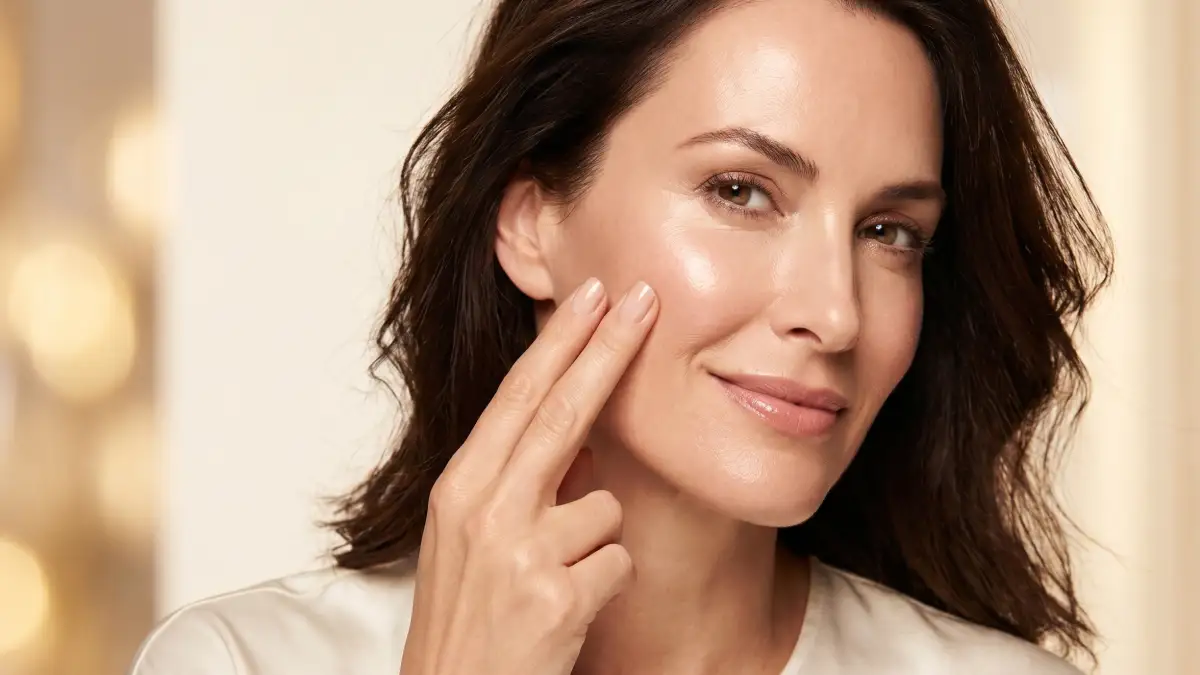
The science of skin aging is evolving rapidly — and for women navigating the skin changes that come with menopause and beyond, evidence-based skincare represents a fundamentally different approach: working with your skin's biology rather than against it.
Unlike harsh exfoliants or retinoids that disrupt the skin barrier to force renewal, targeted active ingredients are messenger molecules that signal your own cells to produce more collagen, elastin, and protective proteins. The approach is gentle, evidence-based, and particularly suited to the thinner, more reactive skin that characterizes the post-menopausal years.
The Two Most Proven Ingredients for Collagen Synthesis
Retinol and vitamin C represent the two most extensively validated topical agents for collagen synthesis stimulation, each operating through distinct and complementary molecular mechanisms. Retinol, converted to retinoic acid in the skin, binds nuclear retinoic acid receptors that directly upregulate procollagen type I and III gene transcription. Varani demonstrated that retinoid-treated aged skin recovered procollagen synthesis to near-youthful levels — an effect no other topical ingredient has replicated at comparable magnitude.[1]
L-ascorbic acid serves a fundamentally different but equally essential role in collagen banking. As the required cofactor for prolyl and lysyl hydroxylase enzymes, vitamin C is biochemically necessary for the post-translational modification that stabilizes the collagen triple helix. Without adequate ascorbic acid, newly synthesized procollagen cannot form stable cross-links and is rapidly degraded intracellularly. Additionally, vitamin C independently stimulates collagen gene expression through non-retinoid pathways.
Clinical research confirms that the synergistic value of combining these agents lies in their complementary mechanisms: retinoids increase the quantity of procollagen produced, while vitamin C ensures the quality and structural stability of each collagen molecule. Clinical studies using combined retinoid and ascorbic acid protocols have demonstrated greater improvements in dermal collagen density than either agent alone, with histological evidence of increased collagen fiber organization and reduced fragmentation.
Practical application requires separating these ingredients into morning and evening routines. Vitamin C is applied in the morning because its antioxidant function provides photoprotective synergy with sunscreen, neutralizing reactive oxygen species that activate collagen-degrading MMPs. Retinoids are reserved for evening application due to UV-mediated degradation. Fisher's research on collagen fragmentation supports this dual approach — morning protection prevents the oxidative stress cycle that degrades existing collagen, while evening stimulation builds new deposits.
Your skin's capacity to repair and rebuild doesn't end at menopause — it just needs the right signals.
— Dr. Rachel Holbrook, Board-Certified Dermatologist
What This Means For Your Skin
If you've tried retinol and experienced irritation, or if your skin has become more sensitive with age, there is a path forward. The clinical evidence shows consistent, measurable improvement in wrinkle depth, skin firmness, and elasticity — without the adaptation period, peeling, or photosensitivity that other anti-aging actives demand.
Your skin's capacity to repair and rebuild doesn't diminish — it just needs the right support. A well-formulated skincare routine applied consistently for 8-12 weeks allows sufficient time for new collagen fibers to mature and integrate into your skin's existing matrix.
The science is clear. The evidence is consistent. The results are measurable.
What happens next is up to you.